
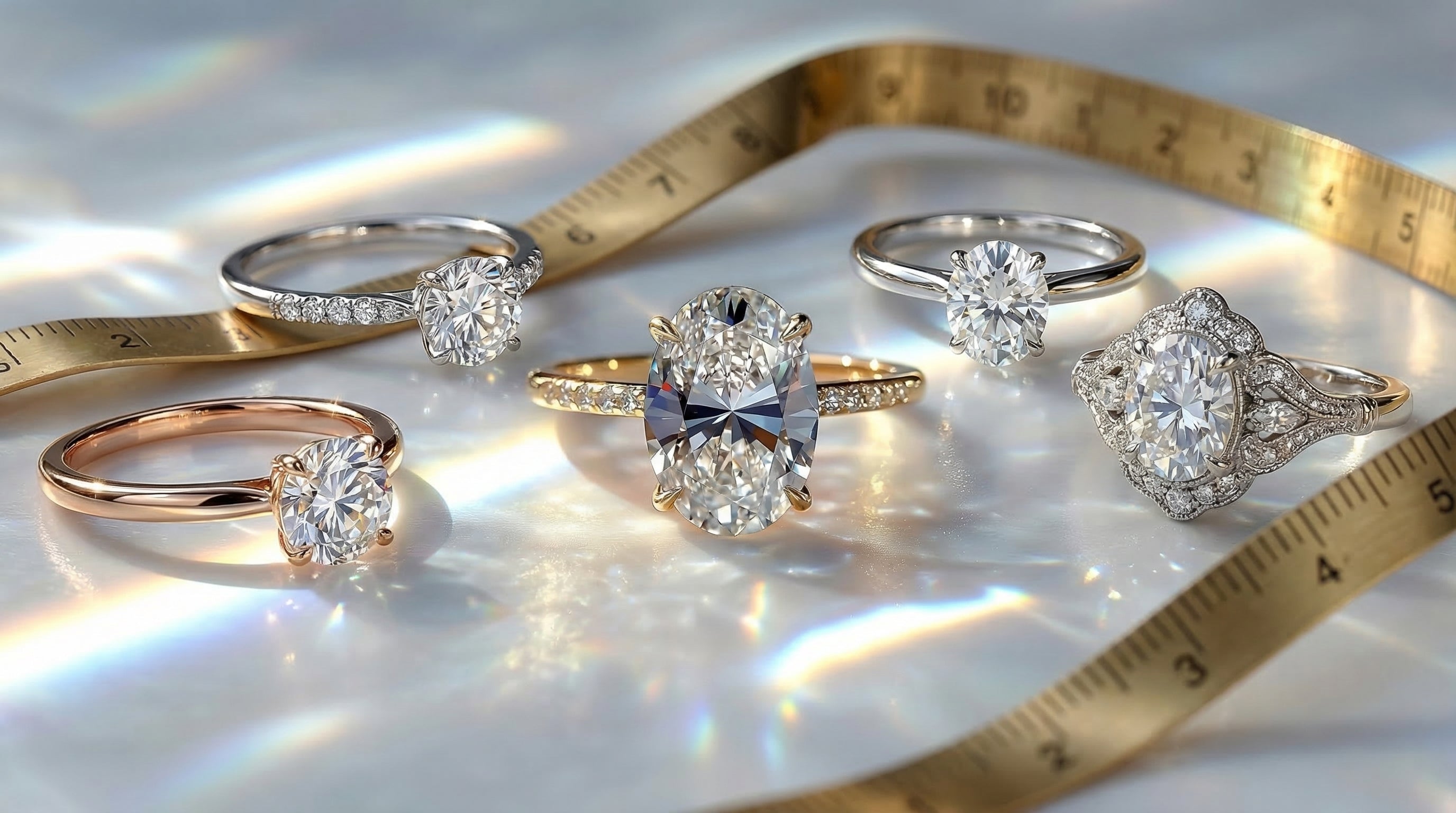
Tienes una regla, un trozo de cuerda y un dedo que necesitas medir. ¿Y ahora qué? Si estás tratando de averiguar cómo usar un conversor de cm a talla de anillo, estás exactamente en el lugar correcto. Una fracción de centímetro es la diferencia entre un anillo que se siente como una extensión natural de tu mano y uno que aprieta, gira o, en el peor de los casos, se desliza por completo. Hemos ayudado a más de 250,000 clientes a encontrar su ajuste perfecto, y esta guía te ofrece todas las herramientas, tablas y técnicas que necesitas para hacerlo bien la primera vez.

La talla de los anillos parece un idioma extranjero al principio. Estados Unidos utiliza una escala numérica. El Reino Unido se basa en letras. Europa mide en milímetros directos. Navegar por este laberinto requiere un enfoque claro y matemáticamente sólido, y un error de dos milímetros en un dedo anular determina si una banda se siente como una extensión natural de tu cuerpo o una distracción constante e irritante.
Cómo usar un conversor de cm a talla de anillo con precisión
Para usar un conversor de cm a talla de anillo con precisión, envuelve una cinta métrica flexible alrededor de la base de tu dedo, anota la medida exacta en centímetros y compárala con una tabla de tallas de anillos estandarizada. Mide siempre la circunferencia interior para un ajuste más preciso y cómodo.
La precisión comienza con las herramientas adecuadas. Muchas personas intentan medir el diámetro exterior de un anillo existente utilizando una regla de escritorio. Ese método casi garantiza un error de tamaño. Las reglas carecen de la microprecisión requerida para la joyería fina, donde las medias tallas se determinan por fracciones de milímetro. Concéntrate en la circunferencia interior de la banda o en la circunferencia directa del propio dedo.
¿Empezando desde cero sin un anillo de referencia? Una cinta métrica flexible es tu mejor amiga. Envuélvela alrededor de la base del dedo deseado. Tírala ajustada, no apretada; quieres imitar la sensación de una banda de metal bien ajustada, no un torniquete. Lee la medida en centímetros. Si tu cinta solo muestra pulgadas, necesitarás un conversor de pulgadas a talla de anillo, aunque trabajar en el sistema métrico es mucho más preciso. Los centímetros y milímetros ofrecen un gradiente más fino, lo que reduce considerablemente tu margen de error.
Una vez que tengas tu medida en centímetros, la conversión es sencilla. Multiplica tu lectura en centímetros por diez para obtener tu circunferencia en milímetros. Una medida de 5.5 cm se convierte en 55 mm. Luego, localiza esos 55 mm en una tabla estándar de tallas de anillos en cm y mm para encontrar tu talla US, UK o EU correspondiente. Si estás midiendo un anillo existente, mide el diámetro interior, la línea recta a través de la parte más ancha del interior de la banda. No incluyas las paredes de metal en tu medida.
Para una certeza absoluta antes de comprar en nuestra impresionante colección de anillos de compromiso, invierte unos pocos dólares en un medidor de anillos dedicado. Estas pequeñas herramientas calibradas, estilo brida, están diseñadas específicamente para las tallas de anillos de EE. UU. y eliminan por completo la conversión manual. Tienen en cuenta el grosor de la banda y te dan una sensación real de cómo pasará el anillo por tu nudillo.
La tabla definitiva de tallas de anillos (cm, mm y pulgadas)
Una tabla estándar de tallas de anillos traduce la circunferencia o el diámetro de tu dedo a una talla numérica específica. Por ejemplo, una circunferencia de 6 cm equivale aproximadamente a una talla 9 de EE. UU., mientras que una circunferencia de 7 cm se traduce en una talla 13 de EE. UU. Usa esta tabla para encontrar tu ajuste exacto.
La siguiente tabla es tu guía de conversión definitiva. Hemos incluido centímetros, milímetros y las tallas de EE. UU. correspondientes para que tengas todos los datos que necesitas en un solo lugar.
| Talla de anillo EE. UU. | Circunferencia (CM) | Circunferencia (MM) | Diámetro interior (MM) |
|---|---|---|---|
| Talla 4 | 4.68 cm | 46.8 mm | 14.9 mm |
| Talla 4.5 | 4.80 cm | 48.0 mm | 15.3 mm |
| Talla 5 | 4.93 cm | 49.3 mm | 15.7 mm |
| Talla 5.5 | 5.06 cm | 50.6 mm | 16.1 mm |
| Talla 6 | 5.19 cm | 51.9 mm | 16.5 mm |
| Talla 6.5 | 5.31 cm | 53.1 mm | 16.9 mm |
| Talla 7 | 5.44 cm | 54.4 mm | 17.3 mm |
| Talla 7.5 | 5.57 cm | 55.7 mm | 17.7 mm |
| Talla 8 | 5.70 cm | 57.0 mm | 18.1 mm |
| Talla 8.5 | 5.83 cm | 58.3 mm | 18.5 mm |
| Talla 9 | 5.95 cm | 59.5 mm | 18.9 mm |
| Talla 9.5 | 6.08 cm | 60.8 mm | 19.4 mm |
| Talla 10 | 6.21 cm | 62.1 mm | 19.8 mm |
| Talla 10.5 | 6.34 cm | 63.4 mm | 20.2 mm |
| Talla 11 | 6.46 cm | 64.6 mm | 20.6 mm |
| Talla 11.5 | 6.59 cm | 65.9 mm | 21.0 mm |
| Talla 12 | 6.72 cm | 67.2 mm | 21.4 mm |
| Talla 12.5 | 6.85 cm | 68.5 mm | 21.8 mm |
| Talla 13 | 6.97 cm | 69.7 mm | 22.2 mm |
Analicemos las dos consultas de medición más comunes que recibimos de los clientes que utilizan esta tabla.
Descifrando la talla de anillo de 6 cm
Si tu cinta métrica marca exactamente 6 centímetros, comienza con la conversión de 6 cm a mm para la talla del anillo: multiplica por 10, lo que te da 60 mm. En nuestra tabla, 59.5 mm es una talla 9 de EE. UU. y 60.8 mm es una talla 9.5. Debido a que 60 mm cae justo entre ellos, redondea hacia abajo a la talla 9 para una banda estándar de 2 mm, o redondea hacia arriba a la talla 9.5 si estás comprando una banda más ancha que desplaza más piel. Esa es tu talla de anillo de 6 cm, resuelta.
Entendiendo qué talla de anillo es 7 cm
Para manos más grandes o anillos para el pulgar, la pregunta es: ¿qué talla de anillo es 7 cm? Aplica la misma lógica. La conversión de 7 cm a mm para la talla del anillo te da 70 mm. Revisando la tabla, una circunferencia de 69.7 mm se alinea con una talla 13 de EE. UU., una talla estándar para hombres y una opción común para anillos llamativos que se usan en el dedo índice o medio.
Errores comunes de medición y cómo evitarlos
Los errores más comunes al medir anillos incluyen hacerlo cuando los dedos están fríos, usar cuerda elástica en lugar de un medidor de anillos adecuado y olvidar considerar las bandas anchas. Mide siempre a temperatura ambiente por la noche para obtener el resultado más preciso.
Incluso con el conversor de cm a talla de anillo más preciso, los errores durante la fase de medición física pueden arruinar tu compra. Tus dedos no son cilindros estáticos, se expanden y contraen según la temperatura, la hidratación y la hora del día. Comprender estas variables es la diferencia entre un anillo que se ajusta perfectamente los 365 días del año y uno que es constantemente incómodo.
El clima frío hace que los vasos sanguíneos se contraigan, encogiendo tus dedos hasta media talla. Mide inmediatamente después de entrar de una caminata invernal y el anillo resultante se sentirá asfixiantemente apretado en julio. Por el contrario, medir después de un ejercicio intenso o una comida salada arroja una lectura artificialmente grande. La regla de oro: mide al final del día, a temperatura ambiente, cuando tu cuerpo está en su estado de reposo más neutro.
Cuidado con el método de la cuerda. Innumerables tutoriales sugieren envolver una cuerda alrededor de tu dedo, marcarla y medir la longitud. La cuerda se estira. Se retuerce. Comprime la piel de manera diferente a una banda de metal sólido. Un solo milímetro de estiramiento se traduce en una talla de anillo completamente equivocada. Si debes usar un artículo del hogar, utiliza una tira de papel: no se estira, lo que te da una medida mucho más fiable. Para técnicas infalibles, lee nuestra guía completa sobre cómo medir la talla de un anillo en casa.
Y no te olvides del nudillo. Algunas personas tienen los dedos delgados pero las articulaciones prominentes. Si solo mides la base del dedo, el anillo nunca se deslizará. Mide tanto el nudillo como la base, y luego elige una talla que caiga entre los dos. El anillo debe deslizarse sobre el nudillo con una ligera resistencia, la fricción suficiente para evitar que se caiga, pero asentarse cómodamente en la base sin girar libremente.
¿Difiere el tamaño de los anillos de moissanita de los diamantes?
El tamaño de los anillos de moissanita es completamente idéntico al de los anillos de diamante. La gema que elijas no afecta el diámetro interior ni la circunferencia de la banda de metal. Un anillo de moissanita talla 7 se ajusta exactamente igual que un anillo de diamante talla 7.
Aquí está la cuestión: un mito persistente en la alta joyería es que diferentes gemas requieren diferentes cálculos de tamaño. Los clientes nos preguntan si necesitan aumentar o disminuir la talla porque la moissanita tiene una gravedad específica diferente a la de un diamante extraído. Aclarémoslo de forma permanente: la piedra no tiene ningún impacto en el tamaño del anillo.
El tamaño del anillo está dictado enteramente por la circunferencia interior de la banda de metal, ya sea oro macizo de 14k, platino o plata de ley 925. Una talla 7 de EE. UU. es una talla 7 de EE. UU., ya sea que contenga una circonita cúbica de 1 quilate o una impresionante moissanita de 4 quilates. El único elemento de diseño que afecta el ajuste es el ancho de la banda. Una banda delicada de 1.5 mm se sentirá ligeramente más holgada que una banda gruesa de 5 mm del mismo tamaño numérico exacto, porque una banda más ancha desplaza más piel y crea más fricción. ¿Comprando una banda ancha? Aumenta la talla en un cuarto o medio número.
Lo que sí cambia con la moissanita es el impacto visual. La moissanita tiene un índice de refracción de 2.65 a 2.69, en comparación con el 2.42 de un diamante, lo que significa que dobla la luz de manera más dramática y produce un brillo de arcoíris que los diamantes no pueden replicar. Su índice de dispersión de 0.104 es 2.4 veces el de un diamante (0.044), por lo que verás esos vívidos destellos espectrales bajo la luz solar directa. También se sitúa en 9.25 en la escala de dureza de Mohs, lo que la convierte en una de las gemas más duraderas del planeta para el uso diario. Cada piedra es creada éticamente en laboratorio y cuenta con certificación GRA. Puedes explorar la historia óptica completa en nuestro análisis a fondo sobre moissanita vs. diamante.

Nuestras principales recomendaciones de anillos de moissanita para cada talla
Armado con los resultados precisos de tu conversor de cm a talla de anillo, estás listo para comprar con verdadera confianza. En Awareness Avenue, cada anillo está diseñado para un rendimiento óptico impresionante y una comodidad ergonómica durante todo el día, respaldado por una garantía de por vida y devoluciones en 30 días. Aquí tienes algunos de nuestros diseños más queridos, disponibles en una amplia gama de tallas.
The Opaline: Elegancia alargada
¿Quieres un anillo que alargue el dedo y ofrezca el máximo brillo en la superficie? The Opaline es una obra maestra absoluta. Con una moissanita de corte ovalado de 2 quilates, atrae la vista hacia arriba y hacia abajo del dedo de la manera más favorecedora. La banda se estrecha elegantemente cerca de la piedra central, por lo que se ajusta a la talla y se siente ingrávida a pesar del considerable peso en quilates. Bajo la luz solar directa, las facetas ovaladas emiten fuego de arcoíris por toda la habitación. Es una opción brillante para quienes aman la estética clásica con un toque contemporáneo.

La Adelina Rae: Geometría vintage
Para la mujer que aprecia las líneas arquitectónicas y el lujo discreto, The Adelina Rae es una opción espectacular. Esta moissanita de corte esmeralda de 2 quilates utiliza facetas escalonadas para producir destellos de luz amplios y dramáticos, el famoso efecto de "salón de espejos", en lugar del brillo tipo hielo triturado de un brillante redondo. El engaste de bordes rectos requiere un ajuste preciso para evitar que la piedra, pesada en la parte superior, gire, lo que hace que tu conversión precisa de cm a talla de anillo sea absolutamente vital aquí.

La Luna en Oro Rosa: Cálida y romántica
Los metales importan tanto como la piedra. The Luna - Rose Gold ofrece una alternativa cálida y rosada a los metales blancos tradicionales. El oro rosa complementa prácticamente todos los tonos de piel, creando un contraste impresionante con el fuego blanco y gélido de la moissanita central. ¿Y honestamente? La banda de ajuste cómodo es lo que la distingue para el uso diario. El interior es ligeramente abovedado, lo que le permite deslizarse suavemente sobre el nudillo y asentarse suavemente contra la piel, reduciendo la fricción y haciéndola ideal para un uso continuo durante todo el día.

The Bethany: Un toque de azul brillante
¿Quién dice que los anillos de compromiso tienen que ser transparentes? The Bethany presenta una moissanita azul brillante de corte redondo de 1.5 quilates que captura la profundidad del océano y la vitalidad de un cielo claro de verano. El clásico corte redondo maximiza el retorno de la luz, por lo que ese tono azul irradia desde el otro lado de la habitación. Con 9.25 en la escala de Mohs, está diseñado para el uso diario sin compromiso. Engastado en una banda segura y atemporal, es una pieza audaz para la novia no tradicional que quiere algo verdaderamente inolvidable.
Explora estos diseños y muchos más en nuestra colección seleccionada de anillos de moissanita más vendidos, donde cada pieza está elaborada según estándares de tamaño exactos para un ajuste impecable.
La anatomía de un ajuste perfecto: Comodidad vs. ajustado
Un anillo perfectamente ajustado debe deslizarse sobre el nudillo con una ligera resistencia, pero asentarse cómodamente en la base del dedo sin girar. Debe ser lo suficientemente ajustado como para no caerse, pero lo suficientemente holgado como para adaptarse a la hinchazón diaria de los dedos.
Comprender los números en una tabla de tallas de anillos en cm es solo la mitad de la batalla. La otra mitad es comprender cómo esos números se traducen en sensaciones físicas. Un anillo que se ajusta perfectamente se siente casi ingrávido después de unos días de uso; olvidas que está ahí hasta que miras hacia abajo y lo ves brillar.
Agita tu mano vigorosamente. Si el anillo parece que podría deslizarse más allá de tu nudillo, está demasiado flojo. Un anillo flojo es un riesgo. Corres el peligro de perder una joya preciosa, y una banda floja girará constantemente. En un anillo pesado en la parte superior, digamos, un solitario de 3 quilates, una banda floja significa que la piedra cae hacia un lado o hacia la parte inferior de tu dedo, ocultando su brillo y rozando las puntas contra pomos de puertas y volantes.
Por el contrario, si necesitas jabón o loción para quitarte el anillo, o si deja una marca roja profunda en tu piel, está demasiado apretado. Un anillo apretado restringe el flujo sanguíneo y se vuelve doloroso durante los meses de verano o después de comidas saladas. Si estás entre dos tallas en la tabla de conversión, elige la talla superior. Es mucho más fácil, y más barato, para un joyero añadir bolitas de ajuste al interior de un anillo ligeramente holgado que estirar o cortar y expandir uno que es demasiado pequeño.
Preguntas frecuentes
¿Qué talla de anillo es 6 cm?
Una circunferencia de dedo de 6 cm (60 mm) se traduce en una talla 9 de EE. UU. Si estás comprando una banda ancha de más de 4 mm, sube a una talla 9.5 para un ajuste más cómodo.
¿Cómo convierto 7 cm a talla de anillo en mm?
Para convertir 7 cm a mm, multiplica por 10, lo que te da 70 mm. En una tabla estándar de tallas de anillos de EE. UU., una circunferencia de 70 mm corresponde a una talla 13 de EE. UU., una talla común para alianzas de hombre o anillos para el pulgar.
¿Es precisa una tabla de tallas de anillos imprimible en cm?
Una tabla de tallas de anillos imprimible puede ser precisa, pero solo si tu impresora está configurada exactamente al 100% de escala. Si escala automáticamente para "ajustar a la página", las medidas se distorsionarán y tu talla de anillo será incorrecta. Siempre verifica la tabla impresa con una regla física antes de usarla.
¿Debo aumentar la talla para una banda más ancha?
Sí. Las bandas anchas cubren más superficie en tu dedo, creando más fricción y atrapando más calor. Una talla 7 en una banda delgada de 1.5 mm se siente notablemente más suelta que una talla 7 en una banda gruesa de 6 mm. Aumenta la talla en un cuarto o medio número para bandas más anchas de 4 mm.
¿Se pueden ajustar los anillos de moissanita?
Sí, los anillos de moissanita se ajustan exactamente igual que los anillos de diamante. El proceso implica cortar la banda de metal y añadir o quitar material. La dureza de Mohs de 9.25 de la moissanita significa que la piedra resiste el soplete del joyero durante el ajuste sin ningún problema.
Consejos finales para encontrar tu ajuste perfecto
Asegurar la talla de anillo perfecta garantiza que tus joyas permanezcan cómodas, seguras y brillantes para toda la vida. Tómate tu tiempo para medir, utiliza tablas de conversión fiables y verifica tu talla antes de realizar la compra final.
El viaje para encontrar el anillo perfecto debe estar lleno de anticipación, no de ansiedad por los milímetros. Al usar un conversor preciso de cm a talla de anillo, midiendo en el momento adecuado del día y comprendiendo cómo el ancho de la banda afecta la sensación, eliminas por completo las conjeturas. Conviertes una decisión estresante en una inversión segura.
Tu anillo está destinado a ser usado, vivido y apreciado cada día. Estará ahí cuando escribas en tu escritorio, agarres un volante y tomes las manos de las personas que más quieres. Un ajuste impecable asegura que se convierta en una parte perfecta de tu historia, no en una distracción de ella.
Ahora que tienes el conocimiento exacto para encontrar tu talla perfecta, comienza la diversión. Explora nuestra impresionante colección de anillos finos. Ya sea que busques un anillo de compromiso atemporal, un significativo regalo de aniversario o una impresionante pieza de lujo para el día a día, nuestros nuevos anillos de moissanita ofrecen el brillo ético y la calidad duradera que mereces. Mide dos veces, compra con confianza y prepárate para deslumbrarte.


Dejar un comentario
Este sitio está protegido por hCaptcha y se aplican la Política de privacidad de hCaptcha y los Términos del servicio.