
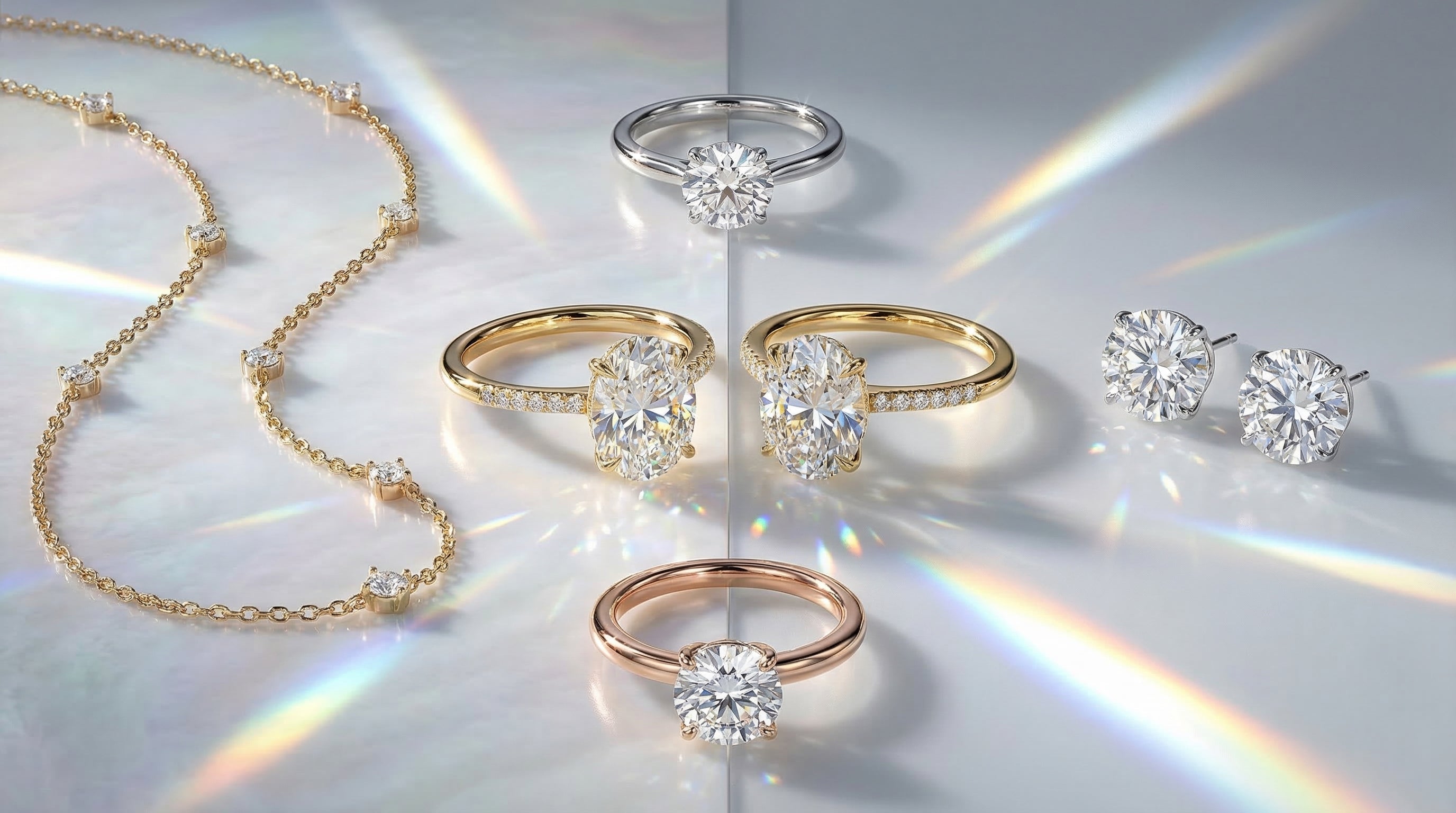
Si colocas una moissanita y un diamante juntos bajo luz natural, ocurre algo inesperado: la moissanita gana en brillo. Siempre. Ese fuego de arco iris que brota de sus facetas no es un defecto, es física. Con un índice de refracción de 2.65 a 2.69 frente al 2.42 del diamante, la moissanita desvía la luz de forma más agresiva, proyectando destellos brillantes por la habitación que un diamante simplemente no puede igualar. Si estás sopesando estas dos piedras para un anillo de compromiso, esta guía desglosa cada diferencia significativa (brillo, dureza, precio, ética y valor a largo plazo) para que puedas tomar la decisión con total confianza.

Hemos ayudado a más de 250,000 clientes a encontrar su joya perfecta. ¿Y la pregunta que más escuchamos? "¿Por qué la moissanita parece más brillante que el diamante?" La respuesta está en la ciencia. Pero el panorama completo (precio, durabilidad, ética y qué piedra realmente se adapta a tu pareja) es lo que estamos aquí para desglosar.
Qué saber antes de comprar: las diferencias fundamentales
Antes de comprar, comprende que los diamantes son carbono puro formado durante miles de millones de años o cultivados en laboratorios, mientras que la moissanita es carburo de silicio creado en laboratorio. Esta diferencia en la composición le da a la moissanita un fuego superior y un precio dramáticamente más bajo, lo que la convierte en una gema distinta y ética, no un sustituto del diamante, sino una alternativa legítima con sus propias propiedades notables.
Orígenes y composición
La moissanita tiene una historia de origen verdaderamente cósmica. En 1893, el científico francés Henri Moissan examinaba muestras de rocas de un cráter de meteorito en Arizona cuando descubrió pequeños cristales brillantes que inicialmente confundió con diamantes. Le tomó más de una década confirmar que no eran carbono en absoluto, eran carburo de silicio. La moissanita natural es tan rara que es esencialmente imposible de obtener para joyería. Literalmente cayó del espacio.
Debido a que la moissanita natural es prácticamente inexistente en la Tierra, los científicos pasaron décadas perfeccionando una forma de sintetizarla. Hoy en día, toda la moissanita de calidad gema se cultiva en entornos de laboratorio altamente controlados a través de semanas de intenso calor y presión. El resultado es una gema que es óptica y físicamente distinta de cualquier otra cosa en el mercado, y completamente rastreable.
Los diamantes se forman a partir de carbono puro. Los diamantes extraídos se forjan en las profundidades del manto terrestre durante miles de millones de años y son empujados a la superficie por la actividad volcánica. Los diamantes cultivados en laboratorio replican ese proceso exacto sobre el suelo, lo que los hace química, física y ópticamente idénticos a las piedras extraídas. Aquí es donde los compradores se confunden: muchos preguntan, ¿es la moissanita un diamante cultivado en laboratorio? La respuesta es un rotundo no. Son minerales completamente diferentes con diferentes propiedades ópticas, diferentes composiciones y diferentes precios.
El impacto ético y ambiental
La minería tradicional de diamantes mueve enormes cantidades de tierra, causa deforestación, destruye hábitats y genera importantes emisiones de carbono. Más allá del costo ambiental, la industria tiene una historia bien documentada de abusos a los derechos humanos y financiación de conflictos. Esa historia importa a los compradores modernos, y debería importar.
La moissanita es completamente creada en laboratorio. No se movió tierra. No se interrumpieron ecosistemas. Riesgo cero de financiación de conflictos. Cada piedra viene con un origen ético garantizado. Pones ese anillo en su dedo sabiendo que su historia es tan limpia como su brillo, y eso no es poca cosa. Nuestras piedras de moissanita tienen certificación GRA, lo que te brinda una prueba documentada de calidad y origen.
Moissanita vs. Diamante uno al lado del otro: la comparación definitiva
Cuando colocas moissanita vs. diamante uno al lado del otro, la moissanita muestra un 10 % más de brillo y 2.4 veces más fuego colorido que un diamante. Los diamantes obtienen un 10 perfecto en la escala de dureza de Mohs; la moissanita le sigue con 9.25, más dura que los rubíes y zafiros, lo que ofrece una durabilidad excepcional de por vida a una fracción del costo.
Aquí están los datos concretos. Comprender las propiedades físicas y ópticas de estas piedras es la única forma de tomar una decisión genuinamente informada. Hemos compilado una comparación completa que muestra exactamente cómo la moissanita se compara con los diamantes extraídos, los diamantes de laboratorio y los simulantes inferiores como la circonita cúbica.
| Característica | Diamante extraído | Diamante cultivado en laboratorio | Moissanita | Zirconita cúbica (CZ) |
|---|---|---|---|---|
| Composición | Carbono puro | Carbono puro | Carburo de silicio | Dióxido de zirconio |
| Índice de refracción (Brillo) | 2.42 | 2.42 | 2.65 - 2.69 | 2.15 - 2.18 |
| Fuego (Dispersión) | 0.044 | 0.044 | 0.104 | 0.058 - 0.066 |
| Dureza (Escala de Mohs) | 10 | 10 | 9.25 | 8 - 8.5 |
| Origen | Extraído de la Tierra | Creado en laboratorio | Creado en laboratorio | Creado en laboratorio |
| Precio promedio de 1 quilate | $4,000 - $8,000 | $1,000 - $3,000 | $300 - $600 | $20 - $50 |
Brillo y fuego (el factor de destello)
El brillo es la luz blanca que se refleja en tus ojos. El fuego, o dispersión, es cómo una piedra divide esa luz en los colores del espectro. La centellez es el destello que ves cuando la piedra se mueve. La moissanita domina las tres categorías. Su índice de refracción de 2.65 a 2.69 desvía la luz de manera más eficiente que el 2.42 del diamante, y su índice de dispersión de 0.104 es 2.4 veces mayor que el 0.044 del diamante.
En la tenue iluminación de un restaurante, la moissanita brilla. Bajo la luz solar directa, estalla en un fuego de arco iris que se proyecta por las paredes de una habitación. Algunos lo llaman el "efecto bola de discoteca". ¿Y honestamente? Eso no es una crítica, es una característica. Si a ella le encanta un anillo que llama la atención y proyecta color por todas partes, la moissanita supera a un diamante en todo momento.
Los diamantes reflejan principalmente luz blanca con sutiles toques de color. Su brillo es más nítido, más frío, más sobrio. Ninguno es objetivamente superior, es una cuestión de preferencia estética. ¿Destello blanco hielo clásico? Diamante. ¿Fuego vibrante máximo? Moissanita. Saber cuál prefiere ella es la pregunta más importante que puedes responder antes de comprar.

Durabilidad y dureza (la escala de Mohs)
Un anillo de compromiso no es una pieza de museo. Se usa al lavar platos, en el gimnasio, en el jardín y en todo lo demás. Tiene que ser resistente. La escala de Mohs mide la resistencia de un mineral al rayado: los diamantes obtienen un 10 perfecto y solo pueden ser rayados por otros diamantes. La moissanita obtiene un 9.25.
Para ponerlo en perspectiva: los rubíes y zafiros, considerados durante mucho tiempo el estándar de oro para la joyería duradera, obtienen un 9.0. La moissanita es más dura que casi cualquier otra gema en la Tierra. No se rayará, nublará ni perderá su brillo a lo largo de décadas de uso diario. Puedes pasar con confianza un anillo de moissanita como una reliquia impecable.
Aquí es donde la comparación entre moissanita y circonita cúbica se vuelve crítica. La CZ obtiene entre 8 y 8.5 en la escala de Mohs. Se ve bonita en un expositor, pero es porosa y relativamente blanda. Después de un año de uso diario, un anillo de CZ acumula microarañazos, absorbe aceites de lociones y jabones, y se vuelve permanentemente turbio. La moissanita es carburo de silicio estable. No se nublará. No se opacará. Un lavado rápido con agua tibia y jabón para platos restaura su brillo original dentro de cincuenta años, tan eficazmente como lo hace hoy.
Color y claridad
Los diamantes extraídos se clasifican en una escala de color GIA de D (completamente incoloro) a Z (amarillo claro o marrón). Encontrar un diamante naturalmente impecable e incoloro es excepcionalmente raro, por lo que cuesta una fortuna. Debido a que la moissanita se cultiva en un entorno de laboratorio controlado, el proceso se puede gestionar con precisión para producir piedras casi perfectas en todo momento.
La moissanita premium se clasifica en el rango incoloro DEF. Se muestra blanca como el hielo, igualando la apariencia visual de los diamantes de gama alta más caros. Las condiciones de laboratorio también garantizan una excelente claridad: la mayoría de las moissanitas de alta calidad se clasifican como VS (muy ligeramente incluidas) o mejores. Sin inclusiones de carbono negro visibles, sin parches nublados, sin debilidades estructurales. Obtienes una piedra visualmente impecable, de forma consistente.
Moissanita vs. Precio del diamante: entendiendo el verdadero valor
La brecha de precios entre la moissanita y el diamante es asombrosa. La moissanita cuesta entre un 40% y un 90% menos que un diamante comparable. Una moissanita de alta calidad de un quilate cuesta entre $300 y $600; un diamante extraído equivalente cuesta entre $4,000 y $8,000. Esa diferencia no representa un compromiso en la belleza, sino una asignación más inteligente de tu presupuesto.
La pregunta de los $4,500
Hablemos de la economía del amor. Se proyecta que el mercado global de moissanita superará los $100 millones para 2026, y la razón es simple: las parejas están haciendo cálculos. Elegir una moissanita de 1.5 quilates en lugar de un diamante extraído comparable ahorra un promedio de $4,500. Eso no es un error de redondeo. Eso es dinero real.
Piensa en lo que significan $4,500 al comienzo de una vida juntos. Una parte significativa del pago inicial de una casa. Una luna de miel en Bali o en la costa de Amalfi. Una ventaja en una cartera de inversiones. Elegir moissanita no es un compromiso, es una estrategia financiera. Aseguras un anillo impresionante, digno de ser una reliquia, mientras conservas el capital para construir tu vida.
Incluso al comparar moissanita vs. diamante de laboratorio, los ahorros son sustanciales. Un diamante cultivado en laboratorio de 2 quilates cuesta alrededor de $2,500. Una impresionante moissanita de 2 quilates cuesta cerca de $800. Mismo impacto visual. Mismo origen ético. Un número muy diferente en el recibo.
¿Es la moissanita un diamante cultivado en laboratorio?
Este es el punto más común de confusión, y queremos ser completamente claros: la moissanita no es un diamante cultivado en laboratorio. Los diamantes cultivados en laboratorio son carbono puro, diamantes reales, solo que cultivados en una máquina en lugar de la tierra. La moissanita es carburo de silicio. Es un mineral completamente diferente, con diferentes propiedades ópticas, diferente composición y una historia de origen diferente.
Si tu pareja ha dicho específicamente que quiere un diamante y prefiere el brillo más nítido y blanco del carbono, un diamante cultivado en laboratorio es una fantástica opción ética. Pero si ella quiere una piedra masiva, brillante y duradera que atrape la luz maravillosamente, y le encanta la idea de ahorrar miles, la moissanita es la respuesta. Para una mirada más profunda a los matices financieros, explora nuestro análisis detallado de la diferencia de precio entre moissanita y diamante cultivado en laboratorio.
Cómo identificar la calidad en los anillos de compromiso de moissanita
Para identificar la calidad en los anillos de compromiso de moissanita, busca piedras clasificadas como DEF incoloras con claridad VS o superior. El corte debe ser preciso para explotar completamente el alto índice de refracción de la moissanita. Siempre verifica que el joyero proporcione un abastecimiento transparente, engastes de oro macizo o platino, certificación GRA y una garantía de por vida integral.
El corte y la forma importan
Debido a que la moissanita tiene un índice de refracción tan alto, la calidad del corte no es negociable. Una moissanita mal cortada se oscurece en el centro y no refleja la luz correctamente. Una piedra magistralmente cortada desata un torrente de fuego desde todos los ángulos.
El corte brillante redondo es el rey indiscutible del brillo, diseñado específicamente para maximizar el retorno de la luz. Si quieres el fuego más intenso, el redondo es tu forma. Los cortes ovalados son enormemente populares en este momento, ofreciendo una silueta alargada que favorece el dedo mientras mantiene un brillo excepcional. Los cortes esmeralda ofrecen un efecto más tenue de "salón de espejos" a través de facetas largas, lineales y escalonadas. Debido a que los cortes esmeralda no ocultan las inclusiones, la claridad impecable inherente a la moissanita creada en laboratorio la convierte en una candidata ideal para esta elegante forma.

Cómo evitar errores comunes del comprador
La creciente popularidad de la moissanita ha inundado el mercado de revendedores baratos y de baja calidad. El mayor error que comete un comprador es comprar a un dropshipper no verificado en las redes sociales. Estos anillos suelen tener piedras mal cortadas engastadas en metales chapados que se empañan y ponen la piel verde en cuestión de semanas.
Busca siempre marcas establecidas con especificaciones detalladas: composición exacta del metal (oro macizo de 14k, oro de 18k o plata esterlina 925), una garantía de por vida clara, piedras certificadas por GRA y reseñas verificadas de clientes. Si una oferta parece demasiado buena para ser verdad, como un anillo de 3 quilates por $40, es circonita cúbica que se comercializa falsamente como moissanita. Para proteger tu inversión, lee nuestra guía completa sobre cómo evaluar la calidad de un anillo de compromiso de moissanita. También respaldamos cada compra con una política de devolución de 30 días y un pago seguro, porque comprar un anillo para toda la vida debería sentirse tan bien como usarlo.
Nuestras principales recomendaciones para anillos de compromiso de moissanita asequibles
Nuestras principales recomendaciones para anillos de compromiso de moissanita asequibles combinan piedras incoloras DEF, certificadas por GRA, con engastes de metal sólido elaborados artesanalmente. Desde solitarios redondos clásicos hasta audaces cortes esmeralda y románticas bandas de oro rosa, estas piezas ofrecen un brillo impresionante a nivel de diamante, siendo completamente libres de conflicto y conscientes del presupuesto.
Hemos seleccionado una colección de nuestras piezas más impresionantes, cada una elaborada según estándares exigentes, diseñada para ser usada y atesorada toda la vida. Esto es lo que está cautivando corazones en este momento.
Lo clásico y lo contemporáneo
Para la mujer que ama la elegancia atemporal con un toque moderno, The Opaline es una obra maestra absoluta. Una moissanita de corte ovalado de 2 quilates se asienta en su centro, alargando el dedo de forma hermosa. El ovalado es actualmente la forma más buscada en joyería nupcial; su mayor superficie hace que la piedra parezca aún más sustancial que un corte redondo del mismo peso en quilates, y la luz baila a través de sus facetas de una manera que es realmente difícil de ignorar.
Si ella se inclina por el romance vintage, The Luna - Rose Gold es una elección impresionante. Los tonos cálidos y rosados del engaste de oro rosa crean un contraste sorprendente con el brillo blanco helado de la piedra central de moissanita, favoreciendo cualquier tono de piel, con un toque de encanto antiguo superpuesto a una gema completamente moderna. ¿Prefieres una paleta de metales más fría? La Luna original ofrece el mismo diseño delicado e intrincado con un acabado blanco nítido y clásico.

Formas audaces y elegancia arquitectónica
Algunas mujeres quieren un anillo que hable con una autoridad arquitectónica tranquila. Las facetas escalonadas ofrecen exactamente eso. The Adelina Rae presenta una imponente moissanita de corte esmeralda de 2 quilates: destellos profundos y fascinantes de luz en lugar de un brillo tipo hielo picado. Sofisticada, audaz e innegablemente glamurosa.
Para una declaración aún más sustancial, The Bella Jewel aumenta el dramatismo con una piedra de corte esmeralda de 3 quilates. El tamaño de esta gema, combinado con la claridad impecable inherente a la moissanita creada en laboratorio, crea un anillo que parece sacado de una alfombra roja. Debido a que la moissanita es tan accesible, una piedra central de 3 quilates deja de ser un sueño imposible y se convierte en una opción real.
Un toque de color
Las piedras incoloras son tradicionales. Pero la moissanita de color está ganando terreno rápidamente entre las novias que quieren algo genuinamente suyo. The Camilla es un espectáculo: una moissanita rosa de corte esmeralda de 3 quilates que combina un color suave y romántico con líneas geométricas nítidas. Dulce y llamativa al mismo tiempo.
Si el azul es su color, destacan dos opciones. The Bethany ofrece una moissanita azul brillante de corte redondo de 1.5 quilates perfectamente proporcionada: tonos oceánicos profundos que captan la luz de formas inesperadas, una alternativa vibrante a un zafiro tradicional. Para un impacto máximo, The Faye ofrece una llamativa moissanita azul de corte redondo de 3 quilates. Audaz. Confiada. Inconfundible.
Bandas únicas y lujo cotidiano
A veces, la magia reside en el engaste mismo. El Anillo de Moissanita de Corte Redondo de 1CT con Banda Trenzada toma una piedra central brillante de 1 quilate y la eleva con una banda bellamente entrelazada. El metal trenzado capta la luz desde múltiples ángulos, añadiendo textura y profundidad visual a una silueta de solitario clásica. Es el tipo de anillo que se ve diferente, y mejor, cada vez que cambia la luz.
Para aquellos que buscan un punto de entrada elegante a la joyería fina de moissanita, The Alina es una clase magistral de belleza discreta. Engastada en plata de primera calidad con un diseño elegante y minimalista, ofrece la durabilidad y el brillo deslumbrante de la moissanita en una forma perfecta para el uso diario o como un impresionante anillo de promesa.
Preguntas frecuentes
Aquí están las preguntas que los compradores hacen con más frecuencia al comparar moissanita y diamantes uno al lado del otro. Comprender las diferencias en longevidad, identificación visual y métodos de prueba le ayudará a tomar una decisión segura e informada para su anillo de toda la vida.
¿La moissanita se nubla con el tiempo?
No. La moissanita de alta calidad no se nublará, opacará ni cambiará de color con el tiempo. A diferencia de la circonita cúbica, que es porosa y absorbe aceites, la moissanita es carburo de silicio estable. Si su anillo parece ligeramente opaco después de meses de uso, es suciedad superficial, nada más. Una limpieza rápida con agua tibia, jabón suave para platos y un cepillo de dientes suave restaura su brillo original al instante, ya sea que se haya usado durante seis meses o sesenta años.
¿Un joyero puede diferenciar entre moissanita y diamante?
Sí, un joyero capacitado puede notar la diferencia, pero generalmente solo bajo aumento. La moissanita es doblemente refractiva, lo que significa que la luz que entra en la piedra se divide en dos rayos. Bajo una lupa de joyero, las uniones de las facetas aparecen duplicadas. Sin embargo, para el ojo desnudo de un observador promedio, una moissanita DEF de alta calidad se ve prácticamente idéntica a un diamante premium, solo con un fuego notablemente más colorido.
¿La moissanita es un diamante cultivado en laboratorio?
No. Los diamantes cultivados en laboratorio son carbono puro y químicamente idénticos a los diamantes extraídos. La moissanita es carburo de silicio, un mineral completamente diferente. La moissanita tiene un índice de refracción más alto (más brillo) y una clasificación de dureza ligeramente inferior (9.25 frente a 10) que un diamante cultivado en laboratorio. Comparten un origen ético y creado en laboratorio, pero ahí terminan las similitudes.
¿La moissanita pasa la prueba del diamante?
Los probadores básicos de diamantes miden la conductividad térmica. Debido a que la moissanita conduce el calor de manera muy similar a un diamante, a menudo da positivo en probadores más antiguos o básicos. Los probadores avanzados modernos que miden la conductividad eléctrica pueden distinguir entre los dos. Puede obtener más información en nuestro artículo sobre si la moissanita pasa la prueba del diamante.
Consejos finales para su anillo de compromiso
Elegir entre moissanita y diamante se reduce a sus valores, las preferencias estéticas de su pareja y sus objetivos financieros. La moissanita ofrece un fuego incomparable, un origen ético garantizado, certificación GRA y un precio que le permite invertir en la vida que está construyendo, no solo en el anillo en su dedo.
No tiene que endeudarse para probar su amor. No tiene que comprometer el tamaño o el brillo. La moissanita le brinda la belleza impresionante, la durabilidad de por vida y la libertad financiera para comenzar su vida juntos sobre una base sólida. El peso satisfactorio de un anillo bellamente elaborado en su dedo, ese recordatorio diario de su compromiso, no se preocupa si la piedra fue extraída de la tierra o nació en un laboratorio. Lo que importa es que sea real, hermoso y duradero.
¿Listo para encontrar el anillo que la haga decir sí? Explore nuestra selección curada de anillos de compromiso de moissanita para descubrir su combinación perfecta. Vea lo que eligen más de 250,000 clientes en nuestros anillos de moissanita más vendidos, o descubra los últimos diseños en nuestra colección de nuevos anillos de moissanita. Su para siempre comienza aquí.

Dejar un comentario
Este sitio está protegido por hCaptcha y se aplican la Política de privacidad de hCaptcha y los Términos del servicio.