
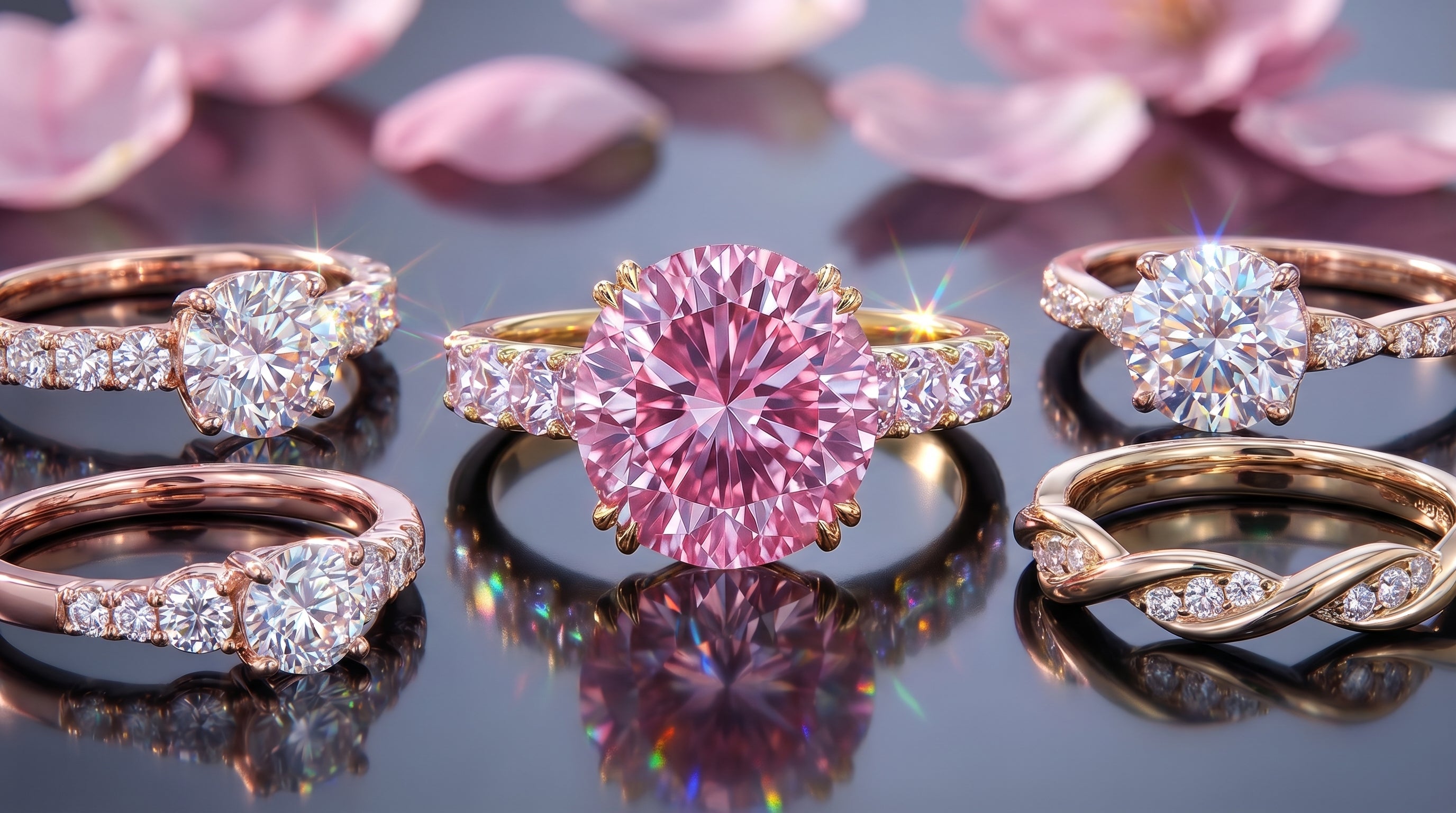
Cuando colocas un anillo de moissanita junto a un diamante bajo una luz brillante, la diferencia en el brillo es inmediata e inconfundible. El brillo de la moissanita frente al del diamante no es una distinción sutil, es una diferencia fundamental en cómo cada piedra interactúa con la luz. Una emite destellos blancos, nítidos y gélidos. La otra descompone la luz en un vívido fuego de arcoíris. Ninguna es incorrecta. Pero una de ellas te robará el aliento. Aquí te explicamos cómo averiguar cuál es.

La Ciencia del Brillo: Cómo la Luz Baila a Través de las Piedras Preciosas
Al comparar el brillo de la moissanita con el del diamante, la diferencia principal radica en la refracción de la luz. La moissanita tiene un índice de refracción de 2.65–2.69, significativamente más alto que el 2.42 del diamante. También tiene una tasa de dispersión de 0.104 —2.4 veces el 0.044 del diamante—, razón por la cual la moissanita emite un fuego tan intenso y colorido. Los diamantes reflejan un brillo más limpio y blanco. La moissanita refleja un destello de fuego de colores de arcoíris.
Para apreciar verdaderamente la alta joyería, es necesario comprender los tres pilares de la óptica de las piedras preciosas: el brillo, el fuego y la centelleo. El brillo es la luz blanca pura que entra en la piedra, rebota en las facetas internas y regresa a tu ojo. El fuego es la dispersión de esa luz en los colores del espectro. El centelleo es el patrón dinámico y danzante de luz y oscuridad que destella a medida que mueves la piedra.
Los diamantes son famosos por su alto brillo y fuego moderado. Su naturaleza de refracción única significa que la luz pasa a través de la estructura cristalina del carbono de forma limpia, creando destellos nítidos y distintivos de luz blanca, esa elegancia gélida y sutil tan característica. La moissanita nace del carburo de silicio y posee doble refracción. Cuando la luz entra en una piedra de moissanita, se divide en dos rayos separados. Esa duplicación óptica, combinada con una tasa de dispersión casi dos veces y media mayor que la de un diamante, crea una explosión de color espectral que se puede ver desde el otro lado de la habitación.
Diamante vs Moissanita bajo la Luz Solar
Si quieres ver la verdadera personalidad de una gema, sácala al exterior. Observar diamante vs moissanita bajo la luz solar revela sus caracteres más auténticos. Bajo la luz natural de espectro completo, un diamante mantiene su brillo blanco y nítido con ocasionales y sutiles toques de azul o naranja. La moissanita reacciona a la luz solar como un prisma a toda marcha: capta los rayos del sol y los descompone en vívidos destellos de azul, verde, amarillo y rojo. Observa cómo la luz incide en las facetas, proyectando pequeños arcoíris por las paredes de tu coche mientras agarras el volante. Para quienes aman las joyas dramáticas y llamativas, este intenso rendimiento bajo la luz solar es exactamente la razón por la que eligen la moissanita.
Moissanita vs Diamante Lado a Lado: Las Diferencias Visuales
Ver moissanita vs diamante lado a lado revela dos personalidades ópticas distintas. Los diamantes emiten destellos de luz blancos y nítidos: brillo. La moissanita muestra intensos y coloridos destellos de arcoíris: fuego. Esta diferencia se vuelve especialmente pronunciada en piedras más grandes y bajo una iluminación brillante y directa, donde la tasa de dispersión de 0.104 de la moissanita produce un drama visual que los diamantes simplemente no pueden igualar.
Cuando colocas estas dos piedras una al lado de la otra, el contraste es inmediato. En una iluminación interior estándar, un diamante bien tallado luce nítido y geométricamente preciso; el contraste entre las facetas oscuras y claras se siente estructurado, casi arquitectónico. La moissanita se siente más suave, más onírica y infinitamente más colorida. Algunos amantes de las joyas llaman al intenso retorno de luz de la moissanita el "efecto bola de discoteca". Eso no es un defecto. Es la firma óptica natural de la piedra.
¿Y honestamente? Si prefieres un anillo que llame la atención desde el otro lado de la habitación, la moissanita ofrece un nivel inigualable de drama visual que ningún diamante, a cualquier precio, puede replicar.
¿Es la moissanita un diamante falso?
Abordemos ahora mismo el concepto erróneo más común: ¿es la moissanita un diamante falso? Absolutamente no. La moissanita es una gema distinta y legítima con una rica historia: fue descubierta por primera vez en el cráter de un meteorito por el químico galardonado con el Premio Nobel, el Dr. Henri Moissan, en 1893. Debido a que la moissanita natural es extraordinariamente rara (literalmente nacida de las estrellas), la moissanita utilizada hoy en la joyería fina se fabrica meticulosamente en entornos de laboratorio controlados. No es un simulante de diamante que intenta imitar el carbono. Es una gema de carburo de silicio celebrada por sus propias propiedades ópticas únicas y superiores.
Para dejar bien claras las diferencias, aquí están los datos concretos que separan estas dos magníficas piedras.
| Característica | Moissanita | Diamante |
|---|---|---|
| Composición | Carburo de Silicio (SiC) | Carbono Puro (C) |
| Índice de Refracción (Brillo) | 2.65 - 2.69 | 2.42 |
| Dispersión (Fuego) | 0.104 | 0.044 |
| Dureza (Escala de Mohs) | 9.25 | 10.0 |
| Retorno de Luz | Destellos de arcoíris (ígneo) | Destellos blancos (helado) |
Moissanita vs Diamante Creado en Laboratorio: Lo que Necesitas Saber
La comparación entre moissanita y diamante de laboratorio confunde a muchos compradores. Los diamantes de laboratorio son carbono puro, química y ópticamente idénticos a los diamantes extraídos: mismo índice de refracción de 2.42, mismo brillo blanco, mismos estándares de clasificación GIA. La moissanita es una gema completamente diferente hecha de carburo de silicio. Ambos son creados en laboratorio y de origen ético, pero ofrecen perfiles visuales y químicos completamente diferentes.
El mercado de la joyería en 2026 ha experimentado un cambio masivo hacia opciones éticas y sostenibles. Esto nos lleva a una encrucijada crucial. Si estás debatiendo moissanita vs diamante de laboratorio uno al lado del otro, en realidad estás eligiendo entre dos caminos muy diferentes hacia el lujo sostenible, y la respuesta correcta depende enteramente del tipo de brillo que quieras lucir todos los días.
¿Es la moissanita un diamante cultivado en laboratorio?
Esta pregunta la escuchamos a diario. La respuesta es no. Un diamante cultivado en laboratorio es un diamante, creado replicando el calor y la presión intensos del manto terrestre para cristalizar carbono puro. Tiene la misma dureza de 10.0 en la escala de Mohs, el mismo índice de refracción de 2.42 y el mismo brillo blanco que un diamante extraído de una mina. La moissanita se cultiva en un laboratorio, pero se cultiva a partir de carburo de silicio. Es un mineral completamente diferente. Elegir entre moissanita y diamante cultivado en laboratorio se reduce a si quieres el brillo blanco tradicional del carbono o el brillo ígneo y de arcoíris del carburo de silicio.
Moissanita vs Zirconia Cúbica vs Diamante
Para comprender completamente la calidad de las gemas, la comparación entre moissanita, circonita cúbica y diamante es esencial. La circonita cúbica (CZ) es un material sintético altamente poroso que se raya fácilmente y absorbe los aceites, lociones y jabones de uso diario. En uno o dos años de uso diario, un anillo de CZ se vuelve permanentemente opaco y sin brillo. Los diamantes y la moissanita son piedras eternas. Con una clasificación de dureza de 9.25 en la escala de Mohs, la moissanita resiste arañazos, astillados y roturas. Nunca se empañará, desvanecerá o perderá su brillo característico de forma permanente. Una limpieza rápida con agua tibia y jabón siempre devuelve a una piedra de moissanita su brillo original e impresionante, y nuestras piezas vienen con una garantía de por vida que lo respalda.
Precio de la moissanita vs el diamante: Entendiendo el valor real en 2026
La diferencia de precio entre la moissanita y el diamante es asombrosa. Un diamante de un quilate de primera calidad a menudo supera los $4,000, mientras que una moissanita visualmente comparable cuesta entre $300 y $800. Eso es un ahorro del 85-90%, suficiente para permitirse una piedra significativamente más grande, un engaste más intrincado o simplemente un comienzo sin deudas para su vida juntos.
Aquí está la cuestión: la claridad financiera es el sello distintivo del comprador de joyas moderno. En 2026, los consumidores están cuestionando activamente las narrativas tradicionales en torno al gasto en anillos de compromiso. ¿Por qué asignar una gran parte de sus ahorros a una sola piedra cuando puede lograr un impacto visual igual, o posiblemente mayor, por una fracción del costo? La conversación sobre el precio de la moissanita vs el diamante no se trata de encontrar una alternativa "barata". Se trata de reasignar su riqueza hacia cosas que importan: un pago inicial de una casa, una luna de miel de ensueño o simplemente vivir sin deudas desde el primer día.
El Desglose de Costos
Debido a que los diamantes tienen un precio basado en la oferta controlada y décadas de marketing, su costo aumenta exponencialmente a medida que se sube en el peso en quilates. Un diamante impecable de dos quilates puede costar fácilmente decenas de miles de dólares. La moissanita tiene un precio basado en el costo de producción y la precisión del corte, lo que significa que puede aumentar el tamaño de su piedra sin salirse de su presupuesto. Una impresionante moissanita de tres quilates con un color D-E-F perfecto y una claridad VVS1 cuesta menos de $1,000.
Una nota técnica importante: la moissanita es menos densa que el diamante. Un diamante de 6.5 mm pesa exactamente 1.00 quilate, mientras que una moissanita de 6.5 mm pesa aproximadamente 0.93 quilates. Debido a esto, los joyeros expertos siempre recomiendan comparar estas piedras por sus dimensiones en milímetros en lugar del peso en quilates para asegurarse de obtener el tamaño visual exacto que busca.
Cómo Detectar la Calidad y Elegir tu Anillo Perfecto
Detectar la moissanita de alta calidad implica verificar dos cosas primero: color y corte. Siempre busca grados incoloros (D-E-F) para evitar tintes amarillos o verdes indeseados. Combina eso con un corte excelente, que maximiza el fuego natural y evita que el centro se vea oscuro o plano. Estos dos factores determinan el 90% de cómo se verá tu anillo en tu dedo.
No todas las moissanitas son iguales. Al igual que los diamantes, la moissanita se clasifica por su talla, color y claridad. Si quieres una piedra que rivalice con los diamantes más finos del mundo, necesitas saber qué buscar y qué evitar.
Corte, Color y Claridad
El color es el factor más crítico. Las generaciones anteriores de moissanita a menudo presentaban un ligero tinte amarillento o verdoso, especialmente con luz cálida. En 2026, las técnicas avanzadas de laboratorio nos permiten cultivar moissanita perfectamente incolora. Siempre insiste en grados de color D, E o F. Estas piedras son de un blanco helado y proporcionan el lienzo perfecto para que el fuego natural de arcoíris de la moissanita rinda al máximo.
La claridad rara vez es un problema con la moissanita premium, ya que el proceso de crecimiento en laboratorio está estrictamente controlado. Busca grados VVS1 o VVS2 (Muy, Muy Ligeramente Incluida). Estas piedras son completamente limpias a simple vista; nunca verás una imperfección sin una lupa de joyero. Cada pieza que vendemos viene con certificación GRA que confirma estos grados, para que sepas exactamente lo que estás obteniendo.
Finalmente, el corte es lo que libera el brillo. Una piedra mal cortada se ve plana y sin vida, independientemente de sus propiedades químicas. Un corte "Excelente" o "Ideal" asegura que las facetas estén perfectamente anguladas para que la luz rebote hacia su ojo. Ya sea que elija un brillante redondo clásico o un radiante moderno tipo "hielo picado", el facetado de precisión es la clave para desatar ese fuego hipnotizante.
Nuestras Mejores Recomendaciones para un Brillo Inigualable
Encontrar el anillo perfecto significa combinar tu estilo personal con una artesanía excepcional. Nuestras principales recomendaciones de moissanita para 2026 presentan piedras incoloras D-E-F de primera calidad, engastes de metal precioso sólido y cortes de precisión diseñados para maximizar ese brillo ígneo característico. Hemos ayudado a más de 250,000 clientes a encontrar su pieza perfecta, y cada una se envía con garantía de por vida, pago seguro y devoluciones en 30 días.
Hemos seleccionado una colección de piezas que demuestran a la perfección las asombrosas propiedades ópticas de la moissanita. Cada anillo está elaborado para ofrecer el máximo retorno de luz y una belleza duradera.

Para los amantes de la elegancia atemporal, The Camilla - Round Cut es una obra maestra absoluta. El corte brillante redondo es universalmente reconocido como la forma más brillante disponible. Debido al alto índice de refracción de la moissanita, este corte específico crea una profundidad hipnotizante que atrae la mirada hacia el interior antes de emitir luz brillante blanca y de arcoíris. Es el estilo de anillo de compromiso por excelencia, elevado por la ciencia moderna de las piedras preciosas.
Si prefieres una estética más cálida y romántica, El Anillo de Compromiso Bethany de Oro Rosa ofrece un contraste impresionante. Los tonos ruborizados del engaste de oro rosa interactúan hermosamente con la piedra central de moissanita incolora de color blanco hielo. La calidez del metal realza sutilmente el fuego de la piedra, haciendo que la dispersión del arcoíris destaque bajo la luz ambiental interior de una manera que se siente verdaderamente mágica.

Para aquellos que desean un anillo que parezca sacado de un cuento de hadas, The Ethereal - Moissanite es una elección impresionante. El delicado engaste de inspiración natural permite que la luz incida en el pabellón de la piedra desde múltiples ángulos simultáneamente. Este efecto de iluminación cruzada es lo que maximiza el centelleo, ese efecto danzante y brillante que se ve al mover la mano bajo una lámpara de araña.
A veces, la banda en sí misma juega un papel crucial en el brillo general de la pieza. El Anillo de Moissanita de 1 CT con Corte Redondo y Banda Trenzada presenta un vástago dinámico y entrelazado que dirige la mirada directamente hacia la piedra central. El movimiento en el diseño del metal complementa el rendimiento dinámico de la luz de la moissanita, creando una experiencia cohesiva y visualmente activa de la que es difícil apartar la vista. Su contraparte de oro rosa, el Anillo de Moissanita de Oro Rosa con Banda Trenzada, ofrece la misma energía con un acabado más cálido y romántico.
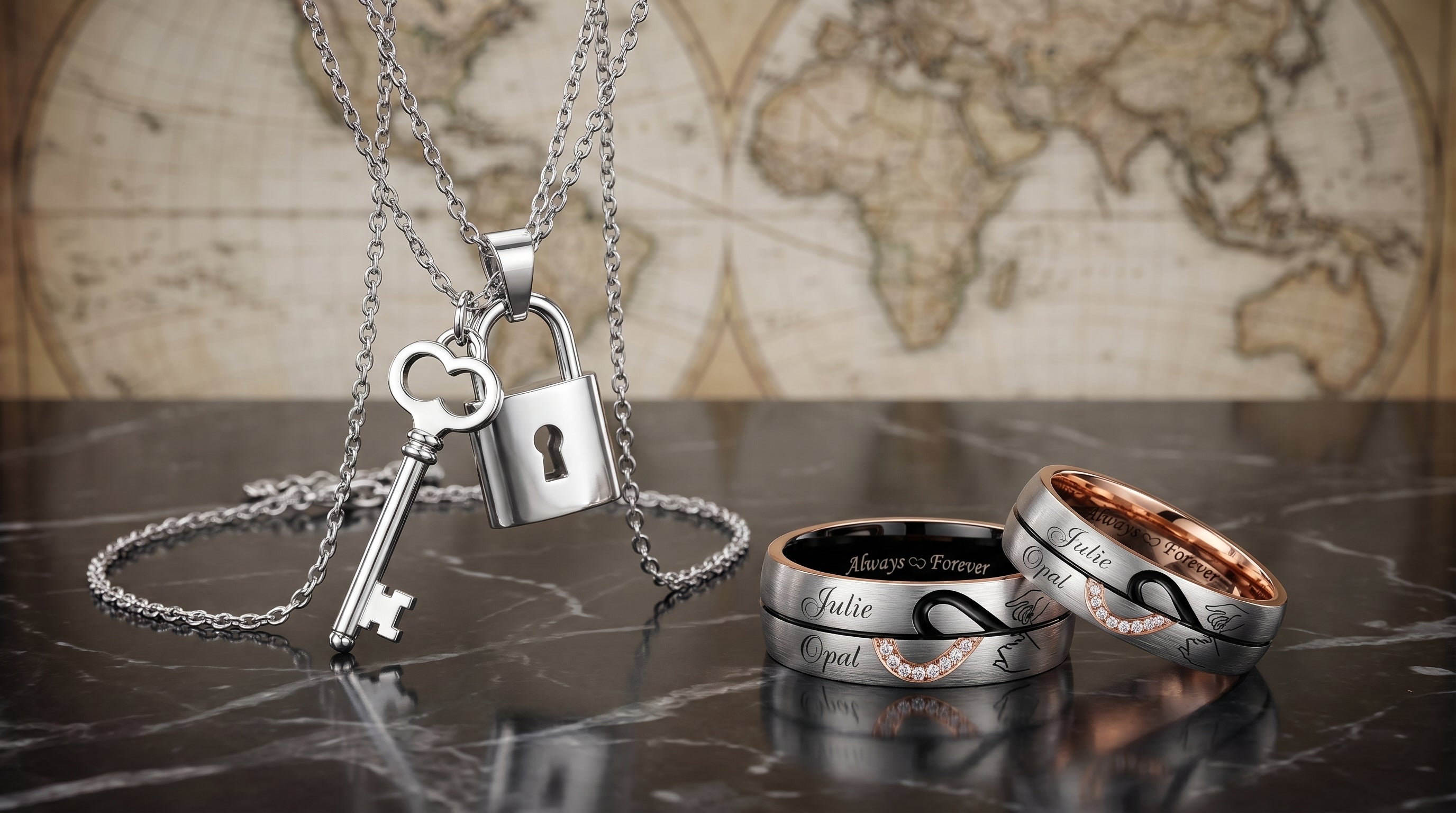
Pero aquí es donde se pone interesante: la moissanita no es solo para anillos de compromiso. Los Anillos de Pareja de Moissanita Curvados y los Anillos de Pareja con Contraste de Esmalte aportan ese mismo brillo ígneo a conjuntos a juego, mientras que el Anillo Vintage de Moissanita de 3 Piedras con Corte Redondo triplica el retorno de luz con tres piedras de corte preciso que crean una pared en cascada de fuego en su dedo.

Para la novia moderna que busca una silueta única, The Celestine - Marquise Cut es un espectáculo. Los cortes alargados como el marquesa manejan la doble refracción de la moissanita de manera hermosa. El efecto "hielo triturado" en las puntas crea una apariencia brillante y estrellada que es completamente distinta de los destellos voluminosos de un corte redondo. Alarga el dedo, proporciona una cobertura visual masiva y ofrece una experiencia de brillo de moissanita vs diamante que se siente verdaderamente única. Y si te encanta la geometría audaz del corte radiante, The Camilla - Radiant Cut canaliza esa misma energía con esquinas afiladas y un interior de "hielo triturado" que capta la luz desde todos los ángulos posibles.
Preguntas Frecuentes
¿La moissanita pierde su brillo con el tiempo?
No, la moissanita nunca perderá su brillo de forma permanente, se empañará o cambiará de color. Con un 9.25 en la escala de Mohs, resiste los micro-arañazos que hacen que las piedras más blandas como la circonita cúbica se opaquen con el tiempo. Si tu moissanita se ve un poco menos brillante, solo necesita una limpieza rápida para eliminar los aceites diarios y los residuos de jabón; agua tibia y un cepillo suave la restaurarán a todo su fuego en minutos.
¿Un joyero puede diferenciar entre moissanita y diamante?
Sí, un gemólogo capacitado puede notar la diferencia usando una lupa de joyero. Buscan la doble refracción característica de la moissanita, que hace que las uniones de las facetas parezcan duplicadas cuando se ven desde ciertos ángulos. Sin embargo, a simple vista de un observador promedio, una moissanita incolora de alta calidad se parece sorprendentemente a un diamante premium, solo que con un fuego notablemente más colorido.
¿Es la moissanita tan duradera como un diamante para el uso diario?
A efectos prácticos, sí. Aunque los diamantes puntúan 10 en la escala de Mohs y la moissanita puntúa 9.25, ambos son excepcionalmente resistentes a los arañazos. La moissanita tiene una mayor clasificación de tenacidad que el diamante, lo que significa que es ligeramente menos propensa a astillarse si se golpea accidentalmente contra una superficie dura. Es la piedra perfecta para toda una vida de uso diario, razón por la cual respaldamos cada pieza con una garantía de por vida.
¿Por qué mi moissanita parece una bola de discoteca?
El efecto "bola de discoteca" es causado por la alta tasa de dispersión de la moissanita de 0.104, más del doble que la de un diamante de 0.044. Esta propiedad óptica descompone la luz blanca en colores espectrales, creando intensos destellos de arcoíris. El efecto es más notorio bajo luces brillantes y directas, como las luces LED de una joyería o la luz solar directa. Muchos de nuestros más de 250,000 clientes eligen específicamente la moissanita porque les encanta esta vibrante y colorida exhibición de luz.
Tomando tu Decisión Final para un Brillo Duradero
Elegir entre estas dos impresionantes gemas se reduce a tu preferencia estética y tus valores. Si anhelas un fuego intenso y colorido y un valor excepcional, la moissanita es tu elección. Si prefieres un brillo blanco sutil y la tradición del carbono, un diamante podría ser tu elección ideal. Ambas son hermosas. Solo una de ellas se sentirá como tuya.
El panorama de la joyería en 2026 le permite tomar decisiones basadas en lo que realmente valora, no en lo que dicta la tradición. No tiene que comprometer el tamaño, la claridad o el abastecimiento ético para mantenerse dentro de su presupuesto. La moissanita ofrece una alternativa brillante, duradera y de una belleza impresionante que se sostiene por sus propios méritos, respaldada por la certificación GRA, una garantía de por vida y una marca familiar que ha atendido a más de 250.000 clientes en todo el mundo. No es solo una decisión financiera inteligente. Es una elección para un brillo ardiente inigualable que le llama la atención todos los días.
¿Listo para encontrar el anillo que capture perfectamente su historia única? Explore nuestros anillos de compromiso de moissanita para descubrir piedras de corte de precisión que maximizan el brillo y el fuego. O explore nuestros más vendidos para ver los diseños que nuestra comunidad de amantes de la joyería está eligiendo para celebrar sus momentos más significativos.

Dejar un comentario
Este sitio está protegido por hCaptcha y se aplican la Política de privacidad de hCaptcha y los Términos del servicio.