
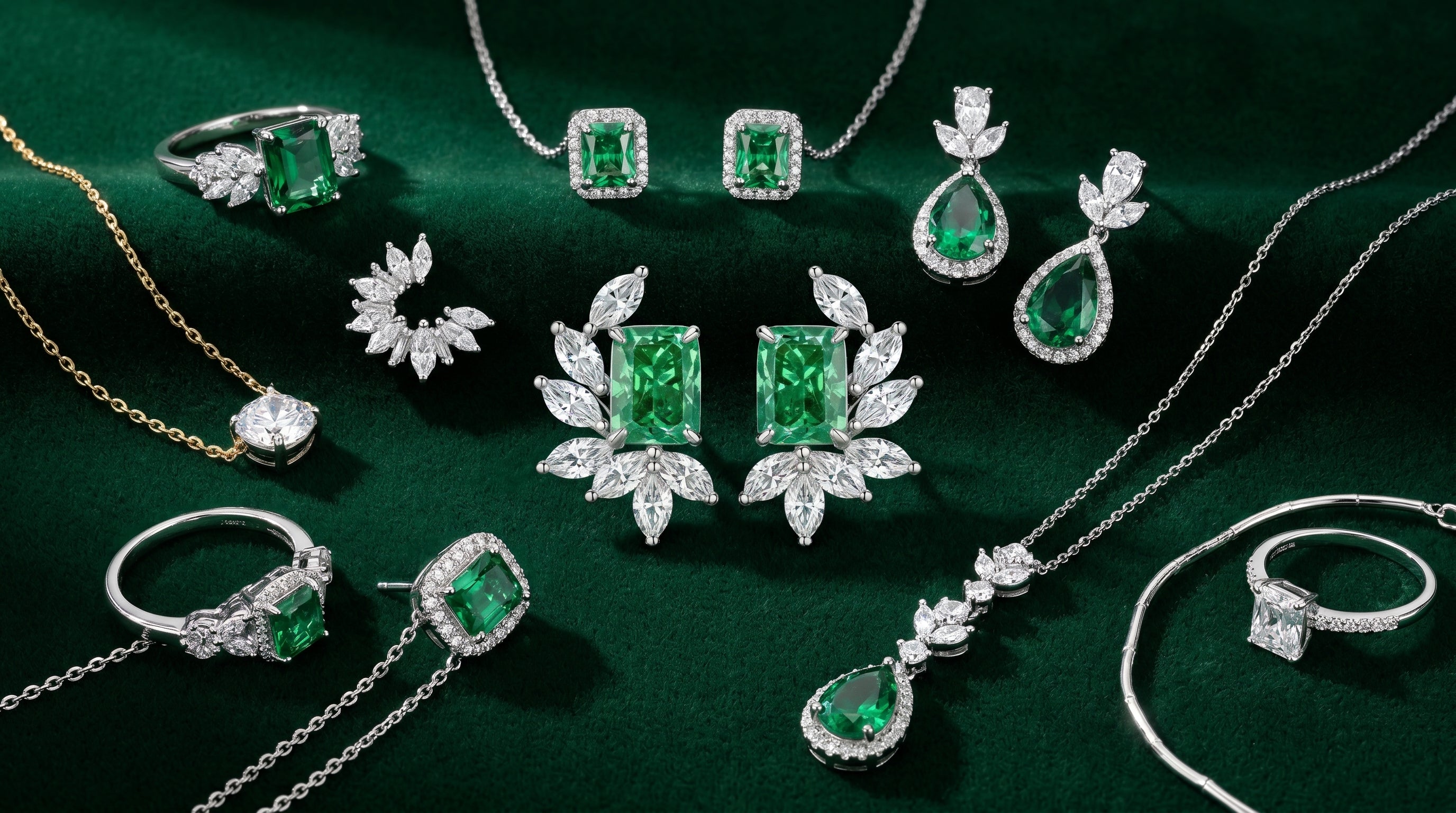
You already know what you're looking for. That deep, vivid green. The kind of color that stops a room. If you're shopping for emerald earrings, this guide is built specifically for you — covering everything from gemstone durability and treatment realities to the modern lab-created alternatives that are quietly outperforming traditional stones in every measurable way. We've helped over 250,000 customers find their perfect piece, and we're going to help you find yours.

Green is the color of renewal, of spring, of enduring love. It's no wonder May's birthstone has remained one of the most sought-after gems in human history. But the jewelry landscape has shifted dramatically. Today's buyers are more educated, more focused on ethical sourcing, and more demanding of durability. You want pieces that keep up with your life — not sit locked away in a safe waiting for a special occasion. This guide walks you through the science of green gemstones, the realities of traditional emerald care, and the breathtaking modern alternatives redefining luxury in 2026.
What to Know Before Buying Emerald Earrings
Before buying emerald earrings, understand that natural emeralds are Type III gemstones — meaning visible inclusions are entirely normal, and over 99% undergo clarity enhancements like oiling. Knowing these facts upfront helps you set realistic expectations for clarity, durability, and long-term care before you spend a single dollar.
The Truth About Emerald Clarity and Inclusions
If you're accustomed to shopping for diamonds, you might expect your gemstones to be flawlessly clear. Leave that expectation at the door when evaluating natural emeralds. In the gemological community, emeralds are classified as Type III gemstones — meaning they almost always form in nature with inclusions visible to the naked eye. These inclusions are so common and accepted that the French coined a romantic term for them: jardin, meaning garden.
The jardin inside an emerald consists of tiny internal fractures, trapped minerals, and microscopic liquid-filled cavities. These are the birthmarks of the stone, proving its natural origin. But they also present a structural challenge. Because emeralds are inherently fractured, they're more brittle than other precious stones. They rank between 7.5 and 8 on the Mohs scale — reasonably resistant to scratching — but their internal fissures make them vulnerable to chipping or cracking if struck against a hard surface. That's a crucial consideration for earrings, especially larger drop styles that might swing and catch against a phone or shoulder.
Understanding Treatments and Enhancements
Because almost all natural emeralds have surface-reaching fractures, the jewelry industry developed standard practices to improve their appearance. Over 99% of natural emeralds on the market have been clarity-enhanced. Traditionally, this involves submerging the rough or cut stone in cedar oil under pressure. The oil seeps into microscopic cracks, replacing the air. Because cedar oil has a refractive index similar to the emerald itself, the fractures seemingly disappear — making the stone look significantly clearer and more vibrant.
Modern enhancements use synthetic resins or polymers instead of traditional oils. These treatments are entirely standard and accepted by gemological authorities, but they aren't permanent. Heat, harsh chemicals, and ultrasonic cleaners strip the oil or resin from the stone, suddenly revealing a web of white fractures that were previously hidden. You can't toss natural emerald earrings into a jewelry cleaning machine. Full stop.
This inherent fragility is exactly why many modern buyers are turning to highly durable alternatives. Understanding moissanite vs diamond hardness reveals why silicon carbide (moissanite) is becoming the go-to choice for daily wear. With a Mohs hardness of 9.25, green moissanite offers the lush, vibrant color of an emerald with structural integrity that withstands the rigors of daily life — zero oiling, zero special treatments, zero anxiety.
Key Factors in Choosing Your Perfect Pair
The most critical factors when choosing emerald earrings are the vividness of the green color, the precision of the cut, and the durability of the metal setting. Balancing these three elements ensures your earrings deliver maximum visual impact while remaining secure enough for your specific lifestyle.
Color is King
When evaluating any colored gemstone, color is the single most important determinant of value and beauty. Gemologists break color into three components: hue, tone, and saturation. The ideal hue for an emerald is a pure, vibrant green — perhaps with a very slight bluish undertone. If the stone leans too far toward yellow, it loses its premium status immediately.
Tone refers to how light or dark the stone appears. The most prized emeralds feature a medium to medium-dark tone. Too light, and the stone looks washed out. Too dark, and it appears inky — failing to catch the light, looking almost black from a distance. Saturation is the intensity of the color. You want strong, vivid saturation that practically glows. And here's something most guides won't tell you: when selecting earrings specifically, remember they're viewed from a distance, often in indoor lighting. A slightly lighter, intensely saturated stone will outperform a very dark stone on the ear every single time.
Cut and Shape
The way a green gemstone is cut dramatically affects how it displays color and handles light. The most iconic shape is, of course, the emerald cut. Originally developed specifically for emeralds, this step-cut design features rectangular facets running parallel to the stone's edges, with truncated corners — clipped because the sharp points of a standard rectangle would be too fragile and prone to chipping in a natural stone.
Choosing emerald cut emerald earrings offers a sophisticated, hall-of-mirrors effect. Instead of crushed-ice sparkle, step cuts provide broad flashes of light that emphasize the stone's clarity and depth of color. But because step cuts don't hide inclusions well, you need excellent clarity for this shape to truly shine. If you prefer maximum sparkle to mask minor inclusions, round brilliant or oval cuts are excellent alternatives.
Metal Choices
The metal you choose does more than hold the stone — it actively influences how the gem's color is perceived. Yellow gold is the traditional and arguably most popular choice for green gems. The warm, buttery tones contrast beautifully with cool green, making the color appear richer and more luxurious.
When shopping for 14k gold emerald earrings, you're making a highly practical choice. 14k gold contains 58.3% pure gold, alloyed with stronger metals like copper, silver, and zinc — making it significantly more scratch-resistant than 18k gold, which is 75% pure gold and therefore softer. For earrings you plan to wear frequently, 14k gold hits the perfect intersection of rich color and everyday resilience. White gold or platinum settings, on the other hand, create a sleek, modern aesthetic. The bright white metal provides a stark contrast that makes the green hue look sharper and more icy.
Earring Styles
Your lifestyle and personal aesthetic should dictate the style you choose. Classic emerald stud earrings are the ultimate staple. They sit snugly against the earlobe, offering a pop of color that transitions effortlessly from a morning meeting to an evening dinner. Because they're tucked safely against the ear, studs are also the safest way to wear natural emeralds — far less likely to catch on clothing or take a direct impact.
If you want more drama and movement, emerald drop earrings gold settings are breathtaking. The gentle sway of a drop earring catches the light beautifully, drawing attention to the jawline and neck. These are perfect for special occasions or for those who prefer their jewelry to make a bolder statement. Just know that drop styles expose the gemstone to more potential hazards — which makes durable alternatives like green moissanite especially appealing for this silhouette.
| Feature | Natural Emerald | Lab-Created Emerald | Green Moissanite |
|---|---|---|---|
| Origin | Mined from the earth | Grown in a laboratory | Lab-created silicon carbide |
| Hardness (Mohs) | 7.5 - 8.0 | 7.5 - 8.0 | 9.25 |
| Clarity | Usually heavily included | Very few inclusions | Flawless to VVS |
| Treatments | Oiled/Resin filled (>99%) | Rarely treated | Never treated |
| Durability | Brittle, requires care | Brittle, requires care | Tough enough for daily wear |
| Price Point | Highest ($$$$) | Moderate ($$) | Accessible Luxury ($) |
Price Ranges and Understanding True Value
Emerald earring prices range from around $500 for basic commercial quality to tens of thousands for untreated Colombian stones. True value lies in finding the right balance of vibrant color, acceptable clarity, and durable settings that fit your budget — or choosing a high-quality lab-created alternative that delivers more visual performance for less.
The pricing of natural emeralds is notoriously complex. Unlike diamonds, which have a highly standardized grading system and predictable pricing matrices, colored gemstones are evaluated much more subjectively. A pair of small, heavily included natural emerald studs in sterling silver might cost a few hundred dollars. Step up to vibrant, moderately included stones in 14k gold, and you're easily looking at $1,500 to $3,000. Large, untreated Colombian emeralds with exceptional clarity set in platinum? The price escalates into the tens of thousands fast.
And here's where it gets interesting. Are you paying for the visual beauty of the piece, or are you paying a massive premium for geological rarity? For many modern consumers, the answer is shifting. The visual impact of a vivid green gemstone is what draws us in — not the fact that it was pulled from a specific mine in South America.
This is where green moissanite completely disrupts the market. Moissanite carries a refractive index of 2.65–2.69 — higher than diamond's 2.42 — meaning it produces more fire and brilliance than any natural emerald ever could. Its dispersion rating of 0.104 is 2.4 times that of a diamond (0.044), creating rainbow flashes in direct sunlight that are genuinely jaw-dropping. When crafted in a rich emerald green hue, it delivers a visual performance that natural emeralds can't match, due to their inherent inclusions. You get a flawless, intensely colored, GRA-certified stone for a fraction of the cost of a mid-tier natural emerald — which means you can invest your budget into heavier, higher-quality solid gold settings rather than compromising on metal just to afford the stone.
How to Spot Quality and Avoid Costly Mistakes
To spot quality in emerald earrings, look for even color distribution and secure settings like bezels or sturdy prongs. Avoid stones that appear flawlessly clear but are priced suspiciously low — these are often heavily treated, synthetic imitations, or lack proper gemological certification from a recognized authority.
The colored gemstone market is difficult to navigate, and mistakes are expensive. The most common error buyers make is applying diamond standards to natural emeralds. If you demand a completely eye-clean natural emerald, you'll either pay an astronomical sum or — more likely — get duped into buying a synthetic stone or green glass marketed with vague, misleading terms.
Beware of marketing jargon that lacks standardized meaning. Terms like "AAA Quality" or "Investment Grade" are completely unregulated. Any seller can slap these labels on their products. Instead, focus on tangible facts. Ask directly: Has this stone been clarity enhanced? What substance was used? Is the enhancement considered minor, moderate, or significant? A reputable jeweler answers these questions transparently. If they claim a natural emerald is completely untreated and flawless but the price is under $5,000, walk away.
Inspect the craftsmanship of the setting too. Because green gems can be brittle, the metal holding them must be robust. Look for thick, well-formed prongs that securely grip the stone without applying uneven pressure. Bezel settings — which wrap a continuous rim of metal around the gem's perimeter — are the safest option, offering excellent protection against side impacts. If you're shopping digitally, reading a comprehensive guide on how to buy jewelry online helps you identify trustworthy brands that offer high-resolution imagery, clear return policies, and robust warranties. At Awareness Avenue, every purchase comes with a lifetime warranty, a 30-day return window, and secure checkout — because confidence shouldn't stop at the gemstone.
Our Top Recommendations for 2026
Our top recommendations for 2026 feature brilliant green moissanite and lab-created designs that deliver the luxurious look of natural emeralds with superior durability. These carefully curated pieces offer exceptional fire, ethical sourcing, and everyday wearability — without the fragility of traditional Type III gemstones.
At Awareness Avenue, you shouldn't have to choose between breathtaking color, everyday durability, and ethical sourcing. Our collection of green gemstone jewelry leverages the incredible properties of moissanite and premium lab-created stones to give you the aesthetic you crave with the performance you deserve. Here are our standout pieces for 2026.
The Green Radiant Cut Diamond Earrings

For those who want maximum sparkle combined with a rich green hue, the Green Radiant Cut Diamond Earrings are an absolute triumph. The radiant cut applies a brilliant-cut facet pattern to a rectangular shape — meaning it carries the elegant outline of an emerald cut but with dozens of extra facets designed to bounce light in every direction. These earrings catch the light from across the room. Vibrant, energetic, and unmistakably modern. They're perfect for the woman who loves traditional colors but demands contemporary brilliance.
The Teardrop Emerald Earrings

There's something inherently romantic about a pear-shaped gemstone. The Teardrop Emerald Earrings capture this elegance perfectly. Designed to sit just below the earlobe, the teardrop shape naturally draws the eye downward, elongating the neck and framing the face beautifully. Because these utilize highly durable lab-created stones, you can enjoy the delicate, dangling aesthetic without the constant anxiety of chipping a fragile natural emerald against your collarbone. Wear them. Actually wear them.
The Amarylla - 18K Gold Vermeil

If you're a purist who loves the architectural beauty of step cuts, The Amarylla - 18K Gold Vermeil is your ideal match. These earrings feature a pristine emerald cut that showcases deep, mesmerizing green color without the distraction of brilliant facets. The 18K gold vermeil setting provides that rich, buttery warmth that pairs so flawlessly with green — creating a look of vintage luxury. Understated enough for the office. Commanding enough for a formal event.
The Aurelienne Emerald Cut - 18K Gold Vermeil

For those who believe more is more, The Aurelienne Emerald Cut - 18K Gold Vermeil delivers breathtaking glamour. A stunning emerald-cut green center stone surrounded by a halo of brilliant white moissanite accents. The contrast between the icy white halo and the deep green center creates a visual pop that's genuinely spectacular. And honestly? The halo serves a functional purpose too — acting as a protective bumper around the edges of the center stone during daily wear.
The Calysara - 18K Gold Vermeil
Sometimes the most striking statements are the most subtle. The Calysara - 18K Gold Vermeil utilizes sleek baguette cuts to create a streamlined, contemporary look. Baguettes are a type of step cut — long and narrow, offering clean flashes of light rather than all-over sparkle. These earrings are perfect for the minimalist who wants to incorporate rich green into their wardrobe without a traditional, oversized stud. They also stack beautifully if you have multiple ear piercings.
Frequently Asked Questions
Our frequently asked questions cover the most common concerns about buying and caring for green gemstone jewelry. From daily wearability and cleaning protocols to understanding the differences between natural stones and modern alternatives, these answers will help you make a confident, informed purchase.
Are emerald earrings safe for daily wear?
Natural emerald earrings can be worn frequently, but they require mindfulness. Because they're brittle and often contain internal fractures, avoid wearing them during physical activities, sleeping, or showering. If you want green earrings you never have to take off, green moissanite — with its 9.25 Mohs hardness — is a far safer choice for true daily wear.
How should I clean my emerald jewelry?
Never put natural emeralds in an ultrasonic cleaner or use steam — this strips the oils used to enhance their clarity and can cause the stone to fracture. Clean them gently using only lukewarm water, a drop of mild dish soap, and a very soft brush. Rinse carefully and pat dry with a microfiber cloth.
Why choose green moissanite over natural emerald?
Green moissanite offers several distinct advantages: it's significantly harder (9.25 vs 7.5–8 on the Mohs scale), so it won't scratch or chip easily. It's completely free of the heavy inclusions found in natural emeralds, requires no oiling or special treatments, and delivers superior fire and brilliance — with a refractive index of 2.65–2.69 versus a natural emerald's 1.57–1.58 — at a much more accessible price point.
Do lab-created emeralds look real?
Yes. Lab-created emeralds have the exact same chemical composition, crystal structure, and optical properties as natural emeralds. The main visual difference is that lab-created stones are usually much cleaner, lacking the heavy jardin typical of mined stones. To the naked eye, they look like top-tier, exceptionally expensive natural emeralds.
What metal color looks best with green gemstones?
Yellow gold is the traditional favorite because its warm tones beautifully complement and enrich the green hue. White gold and platinum are excellent choices if you prefer a modern, high-contrast look that makes the green appear cooler and sharper. The choice ultimately comes down to your skin tone and wardrobe — both are stunning.
Final Advice for Your Jewelry Journey
Choosing the perfect green earrings comes down to matching your aesthetic desires with your lifestyle needs. By understanding gemstone durability, treatment realities, and modern alternatives, you can confidently select a pair that brings you joy and brilliant sparkle for decades to come.
The journey to finding your perfect jewelry should be exciting, not stressful. While the history and lore of natural emeralds are undeniably romantic, the reality of their care and fragility isn't suited for everyone. In 2026, you have the luxury of choice. You can embrace the breathtaking color you love through advanced, ethical, and highly durable alternatives like green moissanite — stones that are ethically lab-created, GRA-certified, and built to look just as brilliant ten years from now as they do the day you unbox them.
Whether you're drawn to the architectural elegance of an emerald cut, the classic versatility of a brilliant stud, or the dramatic sweep of a teardrop design, prioritize pieces that make you feel powerful and beautiful. We invite you to explore our full collection of earrings to find the silhouette that speaks to you. If you're looking for pieces that have already captured the hearts of over 250,000 customers, browse our best sellers, or discover the pinnacle of our craftsmanship in our fine jewelry collection. And if you're shopping for a birthstone gift, our birthstone jewelry collection is a beautiful place to start. Your perfect brilliant green statement is waiting.

Laat een reactie achter
Deze site wordt beschermd door hCaptcha en het privacybeleid en de servicevoorwaarden van hCaptcha zijn van toepassing.