
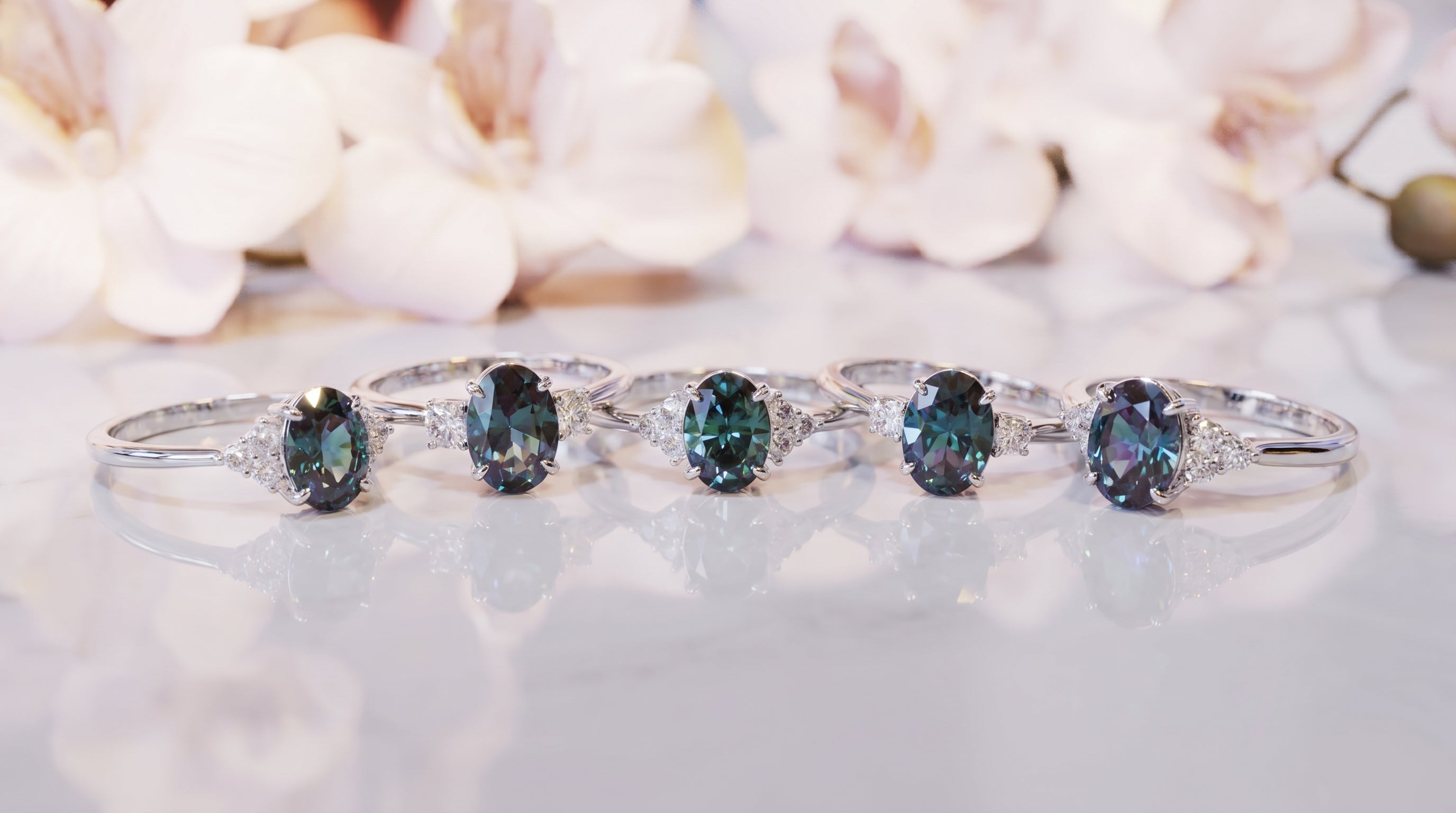
If you're searching for natural alexandrite rings for sale, here's what nobody tells you upfront: the market is a minefield. Genuine mined alexandrite is rarer than diamonds, more expensive than rubies, and routinely faked by sellers who count on buyers not knowing the difference. We've helped over 250,000 customers navigate exactly this confusion—and this guide gives you everything you need to shop with confidence in 2026. Within the next few minutes, you'll know how to spot quality, understand true pricing, and find a ring that delivers that legendary green-to-red color shift without the five-figure sticker shock.

You catch a glimpse of your hand in bright morning sun, and the stone flashes a vivid, electric green. Hours later, seated at a candlelit table, you glance down to find that same stone has transformed into a deep, passionate purplish-red. That breathtaking optical illusion has captivated jewelry lovers for nearly two centuries.
But here's where it gets interesting: the smartest buyers in 2026 aren't just hunting for mined stones. They're educating themselves on the full spectrum of options—natural alexandrite, lab-grown alexandrite, and premium moissanite—and making choices that align with their values, their budget, and their desire for a ring that genuinely lasts a lifetime.
What to Know Before Buying Natural Alexandrite Rings
Before buying natural alexandrite rings, you must understand their extreme rarity and price. Genuine mined alexandrite is one of the world's most expensive gems, often costing tens of thousands per carat. Many buyers today choose lab-grown alexandrite or moissanite for identical beauty and superior durability at accessible prices.
Alexandrite is a chromium-bearing variety of the mineral chrysoberyl, first discovered in the 1830s in Russia's Ural Mountains. Because it flashed red and green—the military colors of imperial Russia—it was named after the future Czar Alexander II. Those original Russian deposits produced stones with a legendary, dramatic color shift, but they were largely depleted decades ago. Today, small amounts are mined in Brazil, Sri Lanka, and parts of East Africa. Fine-quality stones remain extraordinarily scarce.
The "emerald by day, ruby by night" phenomenon is caused by trace chromium ions trapped within the crystal lattice during formation millions of years ago. These ions absorb light in the yellow-green region of the spectrum. In balanced daylight—which human vision is wired to read as green—the stone appears green. Under incandescent light, rich in red wavelengths, those warm tones reflect back to your eye instead. It's a brilliant trick of physics and human biology working in concert.
Because the geological conditions required to bring beryllium, aluminum, and chromium together in exactly the right proportions are so unusual, natural alexandrite is astonishingly rare. Most mined stones are heavily included or display a weak, muddy color change. Finding a clean stone over one carat with a strong shift is like finding a needle in a global haystack. This is exactly why so many couples searching for a natural alexandrite engagement ring experience sticker shock when they see prices at high-end boutiques.
Lab-grown alexandrite has surged in popularity as a result. Using advanced techniques like the Czochralski pull method or flux growth, scientists recreate the exact high-heat, high-pressure environments found deep within the earth. The resulting stones share the same chemical composition, crystal structure, and optical properties as mined alexandrite. They are real alexandrite—grown in a laboratory over months rather than in the earth over millions of years. For buyers who want the magic without the environmental cost of mining or the five-figure price tag, lab-grown stones are a revelation.
Key Factors in Choosing an Alexandrite Ring
The most critical factor in choosing an alexandrite ring is the strength of its color change. You want a distinct shift from daylight green to incandescent red. Secondary factors include clarity, cut quality, and carat weight, as natural stones rarely exceed one carat without astronomical price tags.
Your first priority must always be the color change. Gemologists grade this based on the percentage of the stone that shifts and the intensity of the hues. A top-tier stone exhibits an 80–100% color change, moving from rich teal or emerald green to deep raspberry red. Lesser stones might only shift 30%, drifting from brownish-green to muddy purple. Always ask to see the ring under multiple lighting conditions—natural sunlight, fluorescent office light, and warm candlelight—before committing.
Clarity is your second consideration. Unlike diamonds, where flawless clarity is prized and relatively common, natural alexandrite is almost expected to carry some inclusions. If a seller offers you a massive, perfectly flawless "natural" alexandrite for a few hundred dollars, it's a fake. You still want an eye-clean stone—one where inclusions don't distract from the brilliance or the color shift. Lab-grown alexandrite delivers exceptional clarity because the growth environment is perfectly controlled.
Cut is genuinely challenging with this gemstone. Alexandrite is strongly pleochroic, showing different colors when viewed from different angles. A master gem cutter must orient the raw crystal to maximize the face-up color change, often sacrificing significant carat weight in the process. You'll frequently see alexandrite fashioned into mixed cuts—brilliant-cut crowns to maximize sparkle, step-cut pavilions to deepen the color.
To help you navigate your options, here's a breakdown of natural alexandrite, lab-grown alexandrite, and premium moissanite—which many buyers ultimately choose for its superior brilliance and durability.
| Feature | Natural Alexandrite | Lab-Grown Alexandrite | Premium Moissanite |
|---|---|---|---|
| Origin | Mined from the earth (Brazil, Sri Lanka, Africa) | Created in a laboratory environment | Created in a laboratory environment |
| Color Change | Green to Red (varies wildly by stone quality) | Vivid Green to Red (highly consistent) | No color change (brilliant white/colorless) |
| Hardness (Mohs) | 8.5 (Excellent for daily wear) | 8.5 (Excellent for daily wear) | 9.25 (Superior durability, second only to diamond) |
| Clarity | Often included; flawless stones are exceptionally rare | Typically eye-clean to flawless | VVS clarity (virtually flawless) |
| Refractive Index | 1.746–1.755 | 1.746–1.755 | 2.65–2.69 (higher than diamond's 2.42) |
| Price per Carat | $15,000 – $70,000+ | $100 – $500+ | $400 – $1,000+ |
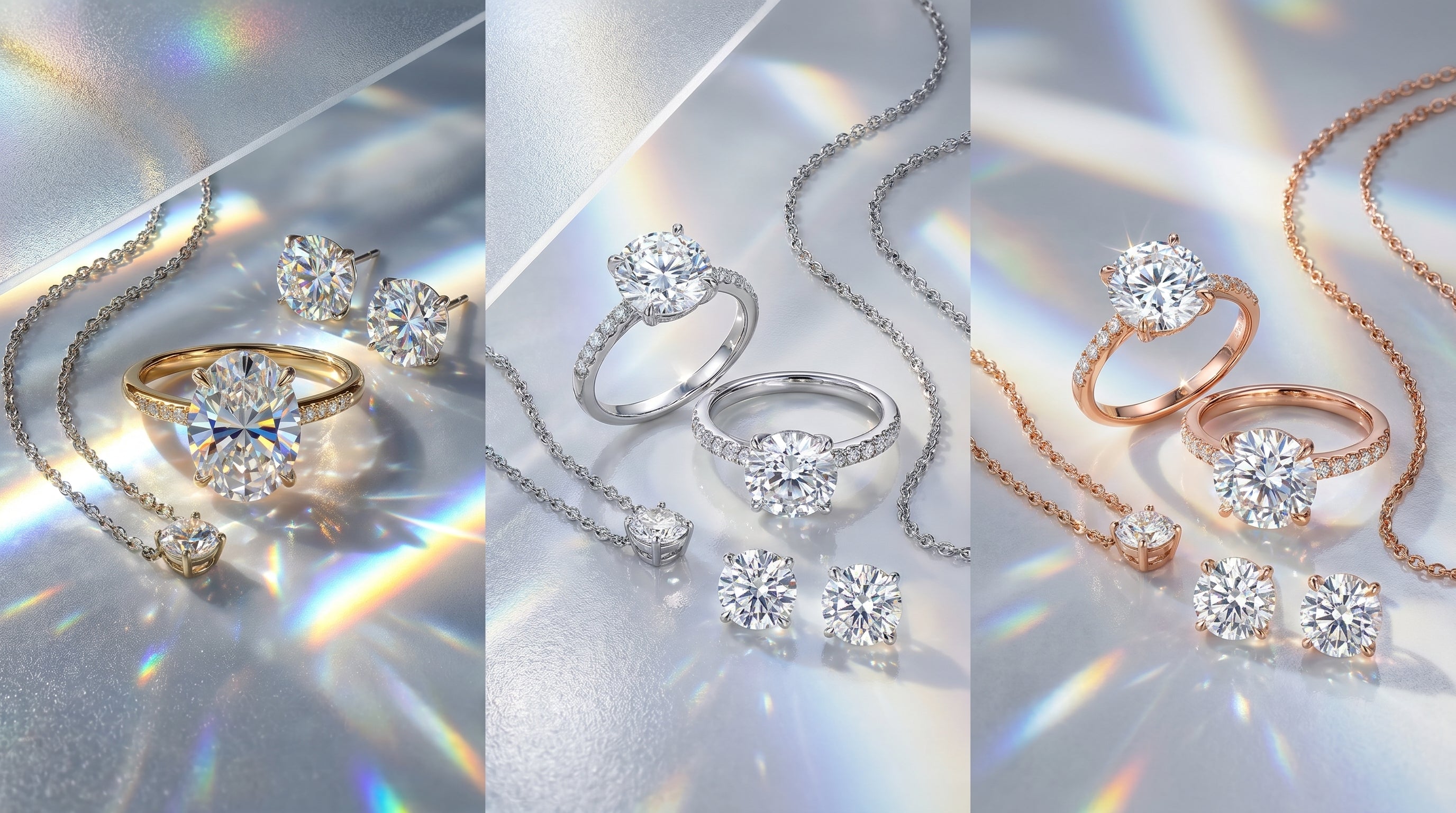
Moissanite's refractive index of 2.65–2.69 outperforms diamond's 2.42, which is why it throws that distinctive rainbow fire in direct sunlight—a dispersion rate of 0.104, compared to diamond's 0.044. That's 2.4 times more fire. Combined with a Mohs hardness of 9.25 and GRA certification on every stone we sell, it's a genuinely compelling alternative. If you want to go deeper on the comparison, our Moissanite Rings vs Diamond: The Complete 2026 Guide covers it thoroughly.
Price Ranges and True Value in 2026
In 2026, high-quality natural alexandrite prices range from $15,000 to over $70,000 per carat. Mid-quality stones cost between $5,000 and $15,000. Because of these steep costs, lab-grown alexandrite and brilliant moissanite alternatives offer the smartest value for engagement rings and fine jewelry.
Let's be completely transparent about budget. A genuine mined alexandrite ring with a strong color change and decent clarity is an investment-grade purchase. A one-carat natural stone from Brazil with excellent characteristics retails for $20,000 to $30,000. Find a stone larger than two carats with museum-quality color change, and the price clears $100,000.
Why so expensive? Basic supply and demand. The global supply of gem-quality natural alexandrite is minuscule—there aren't enough stones coming out of the ground to satisfy demand from collectors, investors, and couples seeking unique engagement rings. This scarcity drives prices to the absolute upper echelon of the colored gemstone market.
And honestly? That's exactly why the market has shifted so dramatically toward lab-grown alternatives. A lab-grown alexandrite ring delivers the same chemical and optical properties—the same mesmerizing color shift, the same 8.5 Mohs hardness—for a fraction of the cost. A breathtaking, flawless two-carat lab-grown stone in a solid gold setting can be yours for under $1,000. Modern science has democratized access to one of nature's most beautiful visual phenomena.
Many buyers who start out searching for natural alexandrite rings for sale ultimately pivot to moissanite once they understand the value proposition. At 9.25 on the Mohs scale, moissanite is more durable than alexandrite—making it the superior choice for a ring worn every single day. Explore our solid gold pieces to see how beautifully these lab-created stones pair with premium metals.
How to Spot Quality and Avoid Fakes
To spot quality and avoid fakes, always demand independent certification from reputable labs like GIA or AGL. Be suspicious of large, flawless stones priced under a few thousand dollars. True natural alexandrite typically contains minor inclusions, while flawless cheap stones are usually glass or synthetic simulants.
The high price of natural alexandrite makes it a prime target for imitation. Online marketplaces are full of listings for "natural alexandrite" priced at $50 or $100. These are not natural alexandrite. They're not even lab-grown alexandrite. They're cheap simulants—and the distinction matters enormously.
The most common simulant is synthetic corundum (sapphire) laced with vanadium. It does change color, but it shifts from grayish-blue to purplish-pink—entirely missing the vibrant green-to-red shift of true chrysoberyl. Another common fake is "zandrite," which is simply color-changing glass. These materials are soft, easily scratched, and hold zero intrinsic value.
If you're determined to buy a natural stone, your only real protection is a certificate from a major, internationally recognized gemological laboratory. The Gemological Institute of America (GIA) and the American Gemological Laboratories (AGL) are the gold standards. Their reports explicitly state whether a stone is natural or synthetic, and whether it has undergone any treatments. Never accept an in-house appraisal from the seller as proof of authenticity for a high-value natural stone.
For those choosing lab-grown alexandrite, transparency is equally important. Reputable brands label their stones clearly as lab-created. No confusing marketing jargon. Our Lab Grown Alexandrite Ring: The Complete Buyer's Guide 2026 shows exactly how we approach honest, clear communication about gemstone origins—because you deserve to know precisely what you're buying.
Our Top Alexandrite and Alternative Ring Recommendations
Our top ring recommendations combine the mesmerizing color-change beauty of alexandrite with the enduring brilliance of premium metals. From vintage-inspired halos to modern geometric cuts, these carefully curated pieces offer exceptional craftsmanship, ethical sourcing, and breathtaking sparkle for every unique love story and personal style.
Whether you're looking for a breathtaking engagement ring, a meaningful June birthstone gift, or a statement piece to elevate your everyday wardrobe, our alexandrite jewelry collection offers something extraordinary. We've designed each of these rings to showcase the unique properties of lab-grown alexandrite—maximum color change, flawless clarity, and ethical origins. Here are ten of our absolute favorite designs available right now.
The Ophelia: Classic Oval Elegance
There's a reason the oval cut remains one of the most requested shapes in fine jewelry. It elongates the finger, maximizes the perceived carat weight of the stone, and delivers brilliant, fiery sparkle from every angle. The Ophelia features a 1-carat oval cut lab-grown alexandrite set in premium S925 sterling silver. The precision-cut facets capture light at every angle, ensuring the transition from daylight green to evening red is nothing short of spectacular. Delicate and feminine, it works beautifully as a promise ring or a sophisticated everyday accessory.
The Gianna: Modern Geometric Edge
For those who crave something entirely unique, The Gianna delivers a bold architectural statement. The 1-carat hexagon cut breaks away from traditional round and oval silhouettes—its sharp, clean lines create a mesmerizing hall-of-mirrors effect within the stone, amplifying the color change in a distinctly modern way. We often see buyers searching for natural alexandrite rings for men drawn to these stronger geometric shapes, though The Gianna's sleek silver setting makes it a striking, gender-neutral piece for anyone with an avant-garde sense of style.
The Martha: Timeless Round Brilliance
Sometimes simplicity is the ultimate sophistication. The Martha centers on a perfectly proportioned 0.8-carat round cut alexandrite. The round brilliant cut is engineered to maximize light return—this stone flashes and fires with remarkable intensity. Available in gold, rose gold, and silver, you can match the metal to your skin tone. The rose gold option pulls out the warm, purplish-red tones of the alexandrite under incandescent light, creating a deeply romantic aesthetic that feels both timeless and personal.

The Aerina: The Ultimate Halo Design
If you're searching for a piece that captures that iconic, high-society elegance—the kind often associated with natural alexandrite rings Tiffany style—The Aerina is your match. A 1.5-carat pear cut alexandrite sits surrounded by a brilliant halo of accent stones. The halo creates a visual boundary that makes the center stone appear even larger and more vibrant, while the teardrop shape of the pear cut is flattering on virtually every hand. This is an exceptional choice for a dramatic, unforgettable natural alexandrite engagement ring.
The Alexandria: Bold and Breathtaking
When you want to make a statement, you need carat weight. The Alexandria boasts a magnificent 2-carat oval cut center stone. In the world of mined gems, a 2-carat natural alexandrite with high clarity would be a museum-grade piece costing a small fortune. Through lab-grown technology, we offer this substantial, flawless stone in a setting that allows light to flood in from all sides. The sheer surface area means the green-to-red color shift is visible from across the room. It's a true showstopper—and one of the most searched natural alexandrite rings for sale in our entire catalog.
The Alvana: A Unique Pear Engagement Ring
Engagement rings should reflect the wearer's personality. The Alvana is designed for the modern bride who wants something distinct from the sea of traditional diamonds. The 1-carat pear cut balances vintage appeal with a sleek, contemporary setting. The asymmetrical shape can be worn with the point facing up or down, giving you versatility in how you style your hand. It pairs beautifully with curved wedding bands for a cohesive bridal stack.
The Amy: Stackable Versatility
Fine jewelry doesn't have to be reserved for special occasions. The Amy is a delicate 0.5-carat pear cut ring designed for stacking. The low-profile setting and slender S925 sterling silver band nestle perfectly against other rings in your collection. Stack it with moissanite eternity bands for a textured, multi-stone look, or wear it alone for a whisper of color-changing magic. It's the ideal entry point into alexandrite jewelry—and at this price point, it makes a genuinely thoughtful gift.
The Chiara: The Kite Cut Masterpiece
For the true jewelry aficionado, The Chiara offers an aesthetic rarely seen in mainstream boutiques. This 2-piece bridal set features a spectacular 2-carat kite cut alexandrite. The elongated, diamond-shaped kite cut draws the eye along the length of the finger, while the step-cut facets create deep, mesmerizing flashes of color rather than splintery sparkle. The contoured band fits perfectly against the sharp angles of the center stone, creating a cohesive, custom-designed look that reads as pure luxury.
The Claudia: Vintage-Inspired Charm
Demand for natural alexandrite rings vintage styles has never been stronger—buyers want to capture the romance of bygone eras without paying antique prices. The Claudia answers that call beautifully. The 0.1-carat round cut center stone is modest, but the magic is in the intricate metalwork: milgrain edges, delicate filigree, and craftsmanship that evokes the Art Deco period. It feels like a treasured family heirloom. It wears like one too.

The Dora: The Perfect Balance
Torn between classic simplicity and modern presence? The Dora strikes the balance. A 1-carat oval cut stone offers enough surface area to display a brilliant color change without feeling bulky on the hand. Available in gold, rose gold, and silver, the open setting allows maximum light penetration—so the scintillation is visible in everything from harsh office fluorescents to the warm glow of a dinner candle. It transitions effortlessly from a day at the office to an elegant evening out.

If you're captivated by these designs, explore our full alexandrite rings collection. You can also browse our new arrivals to see how we're constantly innovating with ethical, lab-grown gemstones and premium moissanite.
Frequently Asked Questions
Navigating the world of color-changing gemstones raises a lot of questions. Here are the most common ones we hear from our 250,000+ customers—answered directly.
Are natural alexandrite rings durable enough for daily wear?
Yes. Alexandrite ranks 8.5 on the Mohs scale, making it harder than emeralds and aquamarines—though not quite as hard as sapphires (9) or diamonds (10). That hardness means it resists scratching and abrasion well, making it a strong choice for engagement rings or daily-wear jewelry. Like all gemstones, it can chip if struck hard against a solid surface, so remove your ring during heavy physical labor or workouts.
Why is natural alexandrite so expensive?
The price is driven entirely by extreme rarity. The geological conditions required to form chrysoberyl with the exact trace amounts of chromium needed for the color change are vanishingly scarce. Most mined stones are small and heavily included. A clean, natural stone over one carat with a vivid green-to-red shift is exceptionally rare, and collectors pay tens of thousands of dollars per carat for such specimens.
How can I tell if my alexandrite is real?
To the naked eye, it's nearly impossible to distinguish a high-quality lab-grown alexandrite from a natural one—they share the exact same chemical and optical properties. If you're evaluating a stone claimed to be natural, look for minor inclusions, as flawless natural stones are virtually nonexistent. The only definitive proof of natural origin is advanced testing at a reputable gemological laboratory like the GIA or AGL. Beware of cheap simulants like color-changing glass or vanadium-doped sapphire, which typically show a blue-to-purple shift rather than true green-to-red.
Will the color change fade over time?
No. The color change in genuine alexandrite—both natural and lab-grown—is a permanent optical property caused by the stone's internal crystal structure and chemical composition. It's not a surface treatment or a dye. As long as the stone remains intact, it will continue to shift colors under different lighting conditions for generations. That enduring magic is a core reason alexandrite is so prized for heirloom jewelry.
Is lab-grown alexandrite considered a "fake" gemstone?
Absolutely not. Lab-grown alexandrite is real alexandrite. It has the exact same chemical formula (beryllium aluminum oxide), the same crystal structure, the same hardness, and the same color-changing properties as a stone pulled from the earth. The only difference is its origin. Because it's grown in a controlled environment, it's more ethical, far more affordable, and typically boasts better clarity than mined stones. That's not a compromise—that's an upgrade.
Final Advice for Your Ring Journey
Choosing a piece of fine jewelry is a deeply personal experience. Whether you're drawn to the historical romance of a mined stone, the ethical and financial brilliance of lab-grown alexandrite, or the unmatched fire of premium moissanite, the most important thing is that the ring speaks to you. You're not just buying metal and stone. You're investing in a symbol of your unique story—a marker of a milestone, or a daily reminder of your own personal style.
We believe luxury should be transparent, ethical, and accessible. You shouldn't have to compromise on beauty or durability to stay within a budget. Our family-run brand backs every purchase with a lifetime warranty, a 30-day return policy, and secure checkout—because confidence in your purchase matters as much as the ring itself. By understanding the science behind the stones and the realities of the market, you're empowered to make a choice that aligns with your values and your aesthetic. If you're intrigued by a ring that transforms with the light, explore our June birthstone alexandrite jewelry and discover the magic for yourself.
Take your time. Ask questions. Trust your instincts. A truly great ring makes your heart skip a beat every time you look down at your hand. If you're ready to find that piece, browse our best sellers to see the designs our community of jewelry lovers has embraced most. Your perfect ring is waiting.

Laat een reactie achter
Deze site wordt beschermd door hCaptcha en het privacybeleid en de servicevoorwaarden van hCaptcha zijn van toepassing.