


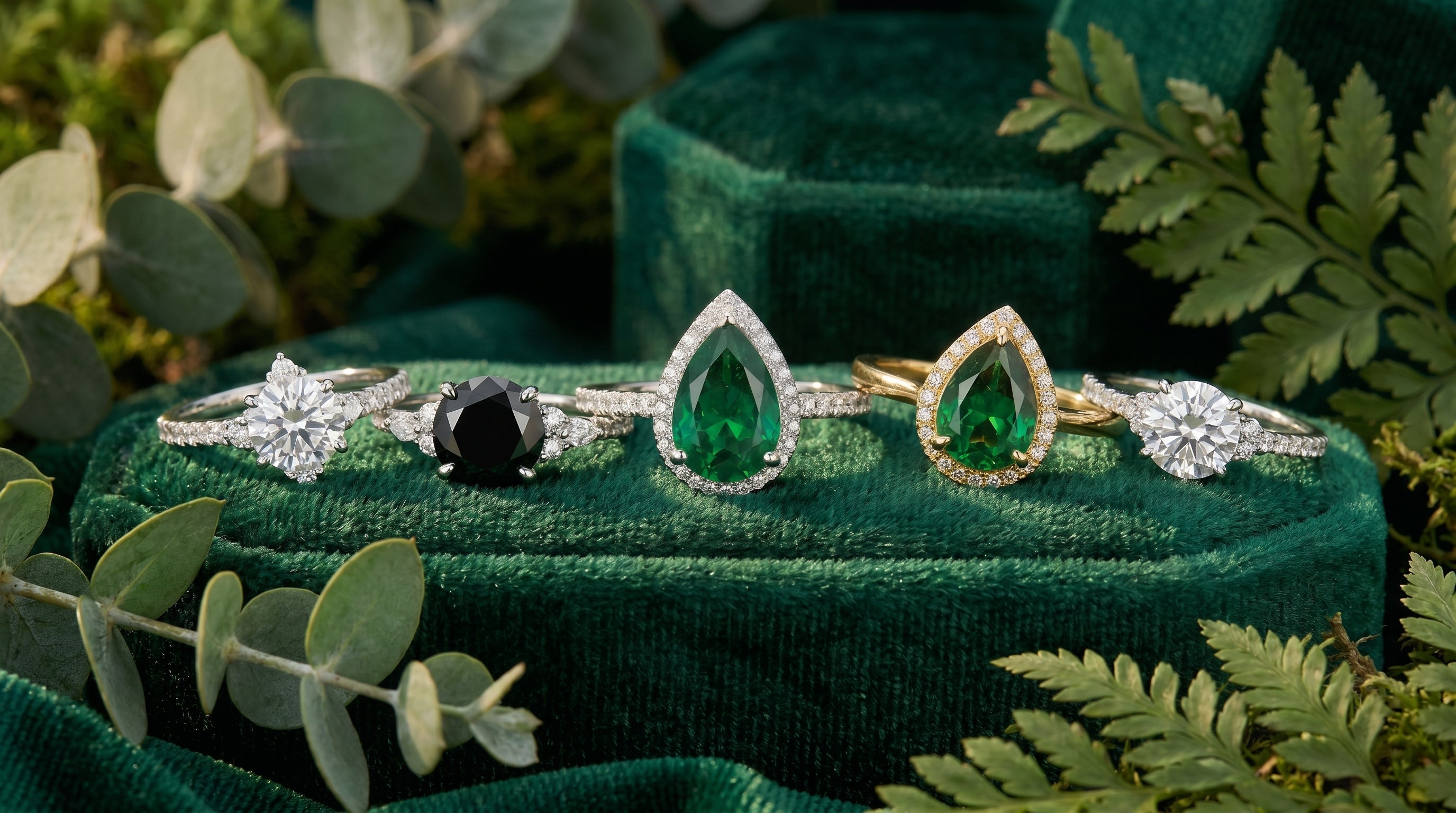
You already know what you want: a green emerald engagement ring that stops people mid-sentence. That deep, forest-green brilliance that catches light from across the room and signals something far more personal than a traditional clear stone. But here's the thing — before you fall in love with a ring you'll wear every single day for the rest of your life, there are a few critical facts about natural emeralds that most jewelers won't volunteer upfront. This guide covers all of it, honestly.

We've helped over 250,000 customers find their perfect piece, and the green engagement ring category is one where we see the most buyer's remorse — not because people chose the wrong style, but because they didn't know what they were getting into with the stone itself. Natural emeralds are gorgeous. They're also fragile, almost universally treated with oils or resins, and genuinely difficult to maintain. Green moissanite changes that equation entirely. Same vivid color. Dramatically better durability. A fraction of the cost.
What to Know Before Buying a Green Emerald Engagement Ring
Before buying a green emerald engagement ring, understand that natural emeralds rate just 7.5 to 8 on the Mohs hardness scale and carry natural internal fractures that make them prone to chipping. Over 99% are clarity-enhanced with oils or resins. For daily wear, green moissanite — rated 9.25 Mohs — delivers the same vivid aesthetic with far superior durability and zero treatment anxiety.
The allure of the emerald dates back millennia. Cleopatra adorned herself in them. Royalty across the globe used the stone to project wealth and power. The color itself carries deep psychological weight — green represents harmony, balance, and the vitality of nature. Slipping a green stone onto your finger feels like a promise of continuous growth within your relationship.
But the reality of geology means that beauty comes with structural compromises. Emeralds are a variety of the mineral beryl. During their formation deep within the earth, traces of chromium and vanadium infuse the crystal with that coveted green color. Simultaneously, this volatile geological process creates a network of internal inclusions and surface-reaching fractures. Gemologists call these inclusions the "jardin" — French for garden — framing them as unique birthmarks. They're also structural vulnerabilities.
The modern jewelry market demands transparency. The flawless, vivid natural emeralds you see in museum exhibits cost hundreds of thousands of dollars. The natural emerald rings available at accessible price points have almost universally undergone clarity enhancement — jewelers submerge the stones in cedarwood oil or polymer resins under vacuum pressure, masking fractures and deepening apparent color. Drop one of those into an ultrasonic cleaner and the vibrations strip the oil away, leaving you with a cloudy, heavily fractured stone. That's not a hypothetical. We hear that story regularly.
The Durability Reality: Natural Emerald vs. Moissanite
Natural emeralds are fragile for daily wear, prone to chipping along internal fractures upon impact. Green moissanite offers a superior alternative for everyday engagement rings, with a 9.25 Mohs hardness that resists scratches and impacts while delivering the same vivid green aesthetic — no maintenance anxiety, no hidden treatments, no compromises.
Durability is the single most critical factor for an engagement ring. You need a stone that survives accidentally knocking against a granite countertop, gripping a steering wheel, or rummaging through a heavy bag. The Mohs scale measures scratch resistance: diamonds sit at a perfect 10, moissanite follows at 9.25, sapphires at 9, and emeralds hover between 7.5 and 8.
And honestly? That gap is bigger than it sounds. The Mohs scale isn't linear — a diamond is exponentially harder than an emerald. More importantly, hardness only measures scratch resistance, not toughness. Toughness is a gemstone's ability to resist chipping and breaking. Because natural emeralds are riddled with microscopic fault lines, a seemingly minor tap at the wrong angle can cause the stone to cleave or shatter entirely. Many bench jewelers refuse to recommend natural emeralds for daily-wear engagement rings because they see too many heartbroken clients returning with damaged stones.
This is exactly why green moissanite has transformed the colored gemstone market. Moissanite is composed of silicon carbide — a material born from the stars and recreated in advanced laboratories. Its crystalline structure is tough and resistant to chipping. With a refractive index of 2.65 to 2.69 (compared to diamond's 2.42) and a dispersion of 0.104 — that's 2.4 times diamond's 0.044 — a brilliant-cut green moissanite throws rainbow fire that a natural emerald ring simply can't replicate. In direct sunlight, the colored flashes are genuinely breathtaking. And unlike a natural emerald ring, you never have to worry about oils drying out, resins discoloring, or a gentle bump shattering your center stone.
| Feature | Natural Emerald | Lab-Grown Emerald | Green Moissanite |
|---|---|---|---|
| Mohs Hardness | 7.5 - 8.0 | 7.5 - 8.0 | 9.25 |
| Toughness (Chipping) | Poor to Fair (due to inclusions) | Fair (fewer inclusions) | Excellent |
| Typical Treatments | Oiling, Resin Filling (99%+) | Usually None | None |
| Brilliance & Fire | Low (Subdued glow) | Low (Subdued glow) | Exceptional (2.4× diamond's dispersion) |
| Everyday Wearability | Requires extreme caution | Requires moderate caution | Ideal for continuous daily wear |
| Price per Carat (High Quality) | $2,000 - $8,000+ | $500 - $1,500 | Highly accessible and consistent |
Key Factors in Choosing Your Perfect Ring
The perfect green engagement ring balances vivid color saturation with a protective setting and a durable metal. Prioritize rich, even hues over raw carat size, select bezel or halo settings to protect stone corners, and choose a metal color that complements your green center stone — yellow gold for warmth, white gold or platinum for crisp contrast.
Selecting the right ring involves much more than pointing at a pretty stone. You're building a piece of micro-architecture designed to sit on your hand for decades. Every element — from the cut of the gem to the alloy of the band — plays a role in the ring's longevity and visual impact.
Color and Clarity
Color is the undisputed priority in colored gemstones. The ideal green is saturated, vivid, and evenly distributed — neither too pale (washed out) nor too dark (muddy and near-black in low light). The finest stones show a pure green with a very slight bluish undertone. Because natural emeralds are so heavily included, finding one that's both highly saturated and transparent is rare and expensive. Green moissanite bypasses this entirely. Lab creation means gemologists control the growth environment to produce perfect, vivid saturation and flawless clarity every time — GRA certified, consistent, and stunning.
Cut and Shape
The way a stone is cut dictates how light dances through its facets. The most famous shape is, unsurprisingly, the emerald cut. Emerald cut engagement rings feature a rectangular step-cut with truncated corners — gem cutters invented this shape specifically for natural emeralds because removing the sharp 90-degree corners reduced chipping risk during cutting. The long, linear facets create a "hall of mirrors" effect, producing broad flashes of light rather than the crushed-ice sparkle of a round brilliant.
If you prefer intense sparkle, oval and pear shapes are spectacular choices. An oval cut elongates the finger and maximizes perceived carat weight, while a pear cut offers a distinctive teardrop silhouette that feels both vintage and modern. Because moissanite's refractive index of 2.65 to 2.69 surpasses diamond's 2.42, a brilliant-cut green moissanite throws colored fire that a natural emerald rings engagement piece can't match.
Metal Choice and Setting Style
The metal you choose frames your entire piece. An emerald ring gold setting — specifically 18k or 14k yellow gold — has seen a massive resurgence in 2026. The warm, buttery tones of yellow gold create a stunning contrast against a rich green stone, evoking the glamour of vintage emerald ring designs from the Art Deco era. White gold or platinum provides a crisp, icy backdrop that makes the green pop with intensity. For a deeper dive into metal durability, explore The Complete 18k Gold Engagement Ring Buying Guide (2026).
Your setting style is your first line of defense against damage. Bezel settings — which encircle the entire perimeter of the stone in a rim of metal — offer the highest level of security. Halo settings are also excellent; the surrounding ring of smaller stones acts as a physical bumper, absorbing impacts before they reach the center stone. With green moissanite, its superior hardness gives you the freedom to choose delicate solitaire settings or thin claw prongs without fear of shattering your gem.
Price Ranges and True Value in 2026
Fine natural emeralds cost between $2,000 and $8,000 per carat in 2026, making large stones prohibitively expensive for most buyers. Green moissanite delivers exceptional value — a flawless, vivid 3-carat or 4-carat stone for a price that wouldn't buy a low-quality, heavily fractured 1-carat natural emerald, without sacrificing durability or ethical standards.
Natural emerald pricing operates on an exponential curve. A heavily included, pale one-carat stone might cost a few hundred dollars. A three-carat, vivid Colombian emerald with minimal treatments can exceed $50,000. This extreme price dispersion forces most couples into painful compromises — sacrifice size to get good color, or sacrifice clarity to afford a larger stone.
Lab-grown emeralds offer a middle ground, typically costing 60% to 80% less than mined counterparts. They share the same chemical composition as natural emeralds, which means the same 7.5 to 8 Mohs hardness and the same careful-wear requirements — but they're more affordable and free from mining's ethical concerns.
Green moissanite disrupts this pricing model entirely. Because it isn't constrained by geological scarcity, you're paying for craftsmanship, precision cutting, and the premium setting — not an artificially inflated commodity price. That frees up your budget for a heavier gold setting, intricate side stones, or simply your future together. True value is a ring that looks spectacular, aligns with your ethics, and survives the rigors of daily life. Our pieces come with a lifetime warranty and a 30-day return policy, backed by secure checkout and the trust of 250,000+ customers worldwide.
How to Spot Quality and Avoid Common Buyer Mistakes
The most common mistake is pairing a fragile stone with a delicate, high-set, thin-prong design. Always ask about clarity enhancements, demand transparent grading documentation, and ensure your ring design protects the gemstone's vulnerable edges. For maximum peace of mind, choose a durable stone like green moissanite from the start.
The jewelry market can be treacherous for the uneducated buyer. Couples fall in love with a delicate, high-set design and drop a natural emerald into it. Within a year, a minor bump against a doorframe results in a chipped corner or a lost stone. Always match the setting to the stone's durability — it's not a style preference, it's structural logic.
Be skeptical of retailers using phrases like "AAA quality" or "investment grade" without independent laboratory certification. These terms have no standardized meaning in the industry and are routinely used to justify high prices for mediocre stones. If you're buying a natural emerald ring, ask explicitly: "What type of clarity enhancement has this stone received?" If the jeweler claims it's 100% untreated but the price is accessible, that's a red flag.
Maintenance mistakes ruin countless rings. Owners assume they can clean their emerald rings the same way they clean diamonds. Dropping an oiled natural emerald into an ultrasonic cleaner strips the fracture fillings, instantly turning a vibrant gem into a cloudy, cracked-looking stone. Green moissanite has no such vulnerability — scrub it, steam it, ultrasonically clean it without ever altering its internal structure or color. For a detailed breakdown of how moissanite holds up to daily life, read our Moissanite vs Diamond Side by Side: The Full 2026 Guide.
Our Top Recommendations for 2026
Our curated selection combines breathtaking design with the unmatched durability of premium moissanite. From classic emerald cuts to bold vintage-inspired halos, these pieces deliver the vivid color and brilliant fire you want — for a lifetime of worry-free, everyday wear. Every ring is GRA certified, ethically lab-created, and backed by our lifetime warranty.
At Awareness Avenue, you shouldn't have to choose between breathtaking color and daily durability. Our Emerald Collection and Colored Gems Rings offer the perfect solution for the modern bride. Here are our top picks for achieving that coveted green aesthetic with zero stress.
The Leila - 2ct Green Emerald Cut Moissanite Engagement Ring
If you're searching for the quintessential green emerald engagement ring, The Leila is an absolute masterpiece. A flawless 2-carat green moissanite center stone in the classic step-cut creates mesmerizing flashes of deep, forest-green light. Watch it in direct sunlight and the dispersion — 0.104, more than twice a diamond's — throws colored fire across the room. The architectural lines of the emerald cut are framed by a hidden halo of brilliant white moissanite, adding a secret layer of sparkle visible only from the side. Vintage glamour. Modern indestructibility.

The Keira - 4ct Emerald Cut 18K Gold Moissanite Ring
For maximum visual impact and the classic step-cut shape, The Keira delivers unparalleled luxury. A massive 4-carat emerald cut center stone in an 18K gold setting — the warm metal warms the crisp facets, creating pure opulence. If you love the geometry of emerald cut engagement rings but prefer the diamond-like fire of clear moissanite, The Keira commands attention in any room. You can learn more about styling this exact look in our guide to Emerald Cut Engagement Rings in Gold: 10 Best Picks.
The Emera Pear - 18K Gold Vermeil
Stepping away from rectangular cuts, The Emera Pear offers a softer, more romantic silhouette. The pear shape elongates the finger while delivering intense, brilliant-cut sparkle — and the 18K gold vermeil setting provides that rich, buttery yellow tone that pairs beautifully with colored and clear stones alike. The teardrop silhouette is inherently unique. It's the ring that makes people ask where you got it.

The Marcella Pear Ring - S925 Sterling Silver
For a cooler, more contemporary aesthetic, The Marcella Pear Ring in premium S925 Sterling Silver is a striking choice. The icy white metal creates contrast that amplifies the moissanite's brilliance, and the pear cut is secured beautifully — the vulnerable tip of the stone protected during daily wear. Accessible luxury that still feels bespoke.
The Camilla - Black Moissanite Ring
If you're drawn to colored gemstones but want something even more unconventional than green, The Camilla offers a bold, dramatic alternative. A striking black moissanite center stone. The same 9.25 Mohs hardness. Dark, mysterious beauty that won't scratch or fade. It's the ultimate statement piece for the bride who writes her own rules.
Frequently Asked Questions
Are natural emeralds okay for everyday wear?
Natural emeralds require extreme caution for everyday wear. With a Mohs hardness of 7.5 to 8 and numerous internal fractures, they're prone to chipping and cracking if knocked against hard surfaces. Protective settings like bezels or halos are strongly recommended, and removing the ring during physical activities is essential — not optional.
Why is green moissanite a better alternative to a natural emerald ring?
Green moissanite delivers the exact vivid green aesthetic of a fine emerald with vastly superior durability. At 9.25 Mohs hardness, it resists scratches and chips that would damage a natural stone. It's 100% conflict-free, requires no clarity-enhancing oil treatments, carries GRA certification, and costs a fraction of the price of a comparable natural emerald ring.
How do I clean my green engagement ring?
For a natural emerald, use only warm water, mild soap, and a soft cloth. Never use ultrasonic cleaners or steam — this strips the oils used to treat the stone. For a green moissanite ring, ultrasonic cleaners, jewelry steaming, and standard commercial jewelry dips are all completely safe. No restrictions, no anxiety.
What metal looks best with a green stone?
Yellow gold is the most popular choice in 2026 — its warm tones complement rich green hues and create a classic, vintage-inspired look that references the great emerald gold engagement rings of the Art Deco era. White gold and platinum are excellent if you prefer a crisp, modern contrast that makes the green color pop with intensity.
Final Advice for Your Forever Ring
Choosing your forever ring balances breathtaking aesthetics with practical daily wearability. By prioritizing durable, ethically crafted alternatives like green moissanite, you secure a vibrant, lasting symbol of your love that will sparkle brilliantly for decades — backed by a lifetime warranty and the confidence of 250,000+ satisfied customers.
Your engagement ring is a testament to your unique love story. It should bring you joy every time you glance down at your hand, not anxiety about potential damage or expensive maintenance. The romance of a natural emerald is undeniable. But daily life demands a stone that keeps up with you. Green moissanite bridges that gap — the lush, symbolic color you want with the diamond-grade durability you need.
Take the time to explore different shapes, from the architectural elegance of an emerald cut to the romantic curves of a pear. Consider how the metal color interacts with your wardrobe and skin tone. Demand transparency and GRA-certified quality from your jeweler. You deserve a ring as strong and enduring as the commitment it represents.
Ready to find the piece that speaks to your soul? Explore our full range of stunning, ethically crafted pieces in our Engagement Rings Collection, discover vibrant alternatives in our Colored Gems Rings, or browse our Emerald Collection to find the brilliant green masterpiece you've been dreaming of.

Leave a comment
This site is protected by hCaptcha and the hCaptcha Privacy Policy and Terms of Service apply.