


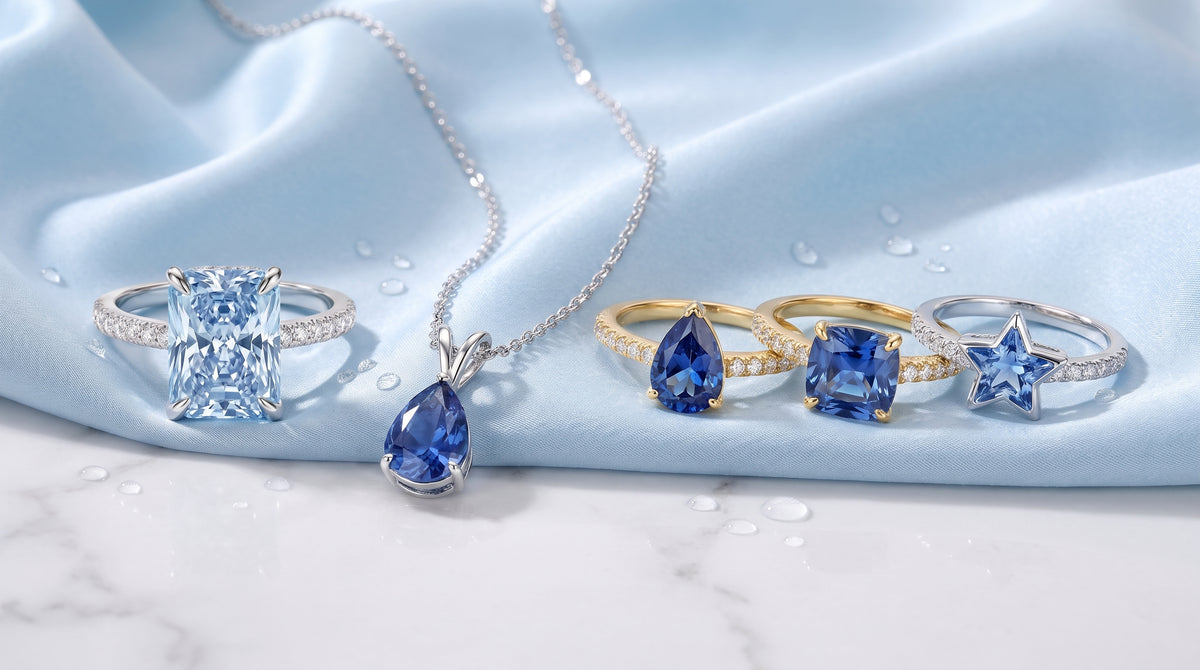
Most sapphire advice online is written for one product at a time: a guide to engagement rings here, a guide to gold pendants there. That leaves a real gap, because women rarely shop that way. You want a ring you can wear to work, earrings that don't fight with the ring, maybe a September birthstone piece for a daughter or a sister — and you want all of it to look intentional together. This guide is built for that reality. It covers the gemological fundamentals that determine whether a sapphire looks alive or muddy, the metal decisions that quietly control both style and longevity, and the practical logic of assembling a coordinated set across rings, necklaces, earrings, and bracelets.
One framing note before we start, because it saves a lot of confusion later: the word “sapphire” is used in the market to describe three different things — mined natural corundum, lab-grown corundum, and simulated sapphire (a stone chosen for its sapphire-blue color rather than its mineral identity). All three appear in women's jewelry, at very different price tiers. Knowing which one you're looking at is the single most useful skill in this category, and it's the skill most category pages never teach you.
What Sapphire Actually Is — and Why That Matters for Daily Wear
Sapphire is a variety of the mineral corundum, composed of aluminum oxide, and it sits at 9 on the Mohs hardness scale — directly below diamond. That hardness is the reason sapphire has been a staple of everyday rings for generations. Hardness measures resistance to scratching, so a Mohs 9 stone shrugs off the incidental contact that dulls softer gems: desk edges, car keys, the inside of a handbag, the constant micro-abrasion of a stone worn on the hand every day.
Sapphire is also the birthstone for September. If you are shopping for a September birthday, you're effectively shopping the same material as someone shopping for a blue cocktail ring — the difference is framing, not gemology. This is why so much sapphire birthstone jewelry is merchandised alongside traditional gemstone collections.
Natural, lab-grown, and simulated: the distinction that changes everything
A lab-grown sapphire is chemically, physically, and optically the same mineral as a mined sapphire. Same aluminum oxide composition, same crystal structure, same Mohs 9 hardness. The difference is formation: natural sapphires crystallize underground over geological timescales and exist in finite supply, while lab-grown sapphires are produced under controlled conditions over a matter of weeks and can be made to order. That's why lab-grown stones typically cost a fraction of comparable natural ones, with the gap widening as size increases. Most people — including experienced jewelry shoppers — cannot tell them apart by eye.
So a lab-grown sapphire is a real sapphire. It is not a compromise on durability. What you're trading away is rarity and the geological story, not performance.
A simulated sapphire is a different proposition again. Simulants are stones selected to reproduce sapphire's color and look; they are not corundum, and their hardness and optical behavior differ. They are legitimate and widely used in fashion-forward and birthstone jewelry, and they're the reason a sapphire-blue pendant can sit at an accessible price point. The important thing is simply that the description is explicit. If a listing says “simulated sapphire,” you know what you're buying. If it says nothing at all, ask before you buy — that's a fair question at any price tier.
How this shapes your budget
Think of the category as tiers rather than a single market. Commercially available heat-treated natural blue sapphire occupies the broad middle. Certified unheated stones from prestige origins climb into collector territory and are priced accordingly. Lab-grown sapphire sits lower, delivering the most physical size per dollar. Simulated sapphire sits lower still and is generally paired with sterling silver or vermeil rather than solid gold. None of these tiers is “better” in the abstract — they answer different questions. A collector wants provenance. A woman buying a September birthstone bracelet for a teenager wants color, comfort, and a price that makes sense for a growing wrist.
How to Judge a Sapphire: Color First, Then Cut
Nearly every credible sapphire guide adapts the diamond “4 Cs” — color, cut, clarity, carat — but with one major reordering: for sapphire, color dominates. A large, clean sapphire in a flat grayish blue is worth far less, and looks far worse, than a smaller stone with vivid saturation. Learn to read color and you've learned eighty percent of what you need.
Hue, tone, and saturation
Gemological color assessment breaks down into three components, and it's worth holding them separately in your mind.
Hue is the basic color plus any secondary color influence. In blue sapphire, the most prized hue is a pure, vivid blue with a slight violet undertone. Grayish or brownish modifiers are the enemy — they mute the stone and depress its market value.
Tone is how light or dark the color reads. On a ten-point scale, medium to medium-dark — roughly 6 to 8 — is the sweet spot. Below that the stone drifts pale and loses presence; above it, the stone starts reading near-black in ordinary indoor light, which is a very common disappointment with bargain sapphires.
Saturation is the intensity or purity of the color. Strong to vivid saturation is what makes a sapphire look electric rather than dusty.
The terms you'll see in marketing copy — “royal blue,” “cornflower blue” — are shorthand for exactly this combination: vivid, slightly violet blue at a medium to medium-dark tone.
Don't overlook fancy-color sapphires
Sapphire occurs in nearly every color. Pink, yellow, green, and teal sapphires deliver the same corundum hardness and the same prestige as blue, often for considerably less money per carat. This is one of the most underused value levers in the category, and it opens up styling options that blue can't: a yellow sapphire in warm gold reads golden-hour and vintage; a teal sapphire reads modern and slightly unexpected; pink reads romantic without defaulting to a pink diamond budget.
For women building a jewelry wardrobe rather than buying a single statement piece, fancy colors are worth a serious look.
Cut: what to actually look at in a photo
Cut in colored stones isn't graded the way diamond cut is, and that's precisely why you have to evaluate it with your eyes. When you're comparing sapphires online, look at the stone's face-up personality:
- Brightness — does the stone return light evenly across its face, or are there dead zones?
- Windowing — a pale, see-through patch in the center means the stone is cut too shallow and light is passing straight through instead of bouncing back.
- Extinction — dark, lifeless areas, usually from a stone cut too deep or a tone that's already too dark.
- Color zoning — uneven bands or patches of color, which a skilled cutter minimizes and a careless one doesn't.
A well-cut sapphire can look spectacular at modest carat weights, which is genuinely good news if you want a piece that wears comfortably every day rather than one that catches on every sweater.
Clarity and carat: the sapphire-specific rules
Clarity in sapphire covers both inclusions and overall transparency. Surface-level marks are usually minor. Internal cracks, chips, and cavities matter more, because they can affect durability and not just appearance. A practical transparency check used by gemologists: place the stone over printed text — if you can read the words through it, transparency is adequate. The realistic standard for most buyers is whether inclusions are visible to the naked eye and whether they distract from the stone. Some natural inclusions simply read as character.
Carat deserves its own warning. Sapphire is denser than diamond, so a one-carat sapphire is physically a little smaller than a one-carat diamond. Shop by millimeter dimensions, not carat weight, if size on the finger matters to you. Elongated shapes — oval, pear, marquise — cover more finger area per carat and visually lengthen the hand, which is why the oval has become such a persistent favorite. And never buy on weight alone: a brighter, lighter stone beats a bigger, darker one every time.
Treatments, Origin, and Certification — Decoded
This is where buyers get anxious, usually unnecessarily. Here's the honest hierarchy.
Heat treatment is normal
Over ninety percent of sapphires on the market are heat-treated to improve color. This is a stable, permanent, industry-accepted practice. A heat-treated sapphire is still a natural sapphire, and heat treatment does not make a stone fragile or fake. If a jeweler tells you a mid-market natural blue sapphire is heated, they are telling you something entirely ordinary.
Treatments that should change your decision
Other treatments carry real implications:
- Diffusion and glass-filling should cost substantially less than comparable heat-only stones, and must be disclosed. If you see “diffused” or “glass-filled,” adjust your price expectations sharply downward.
- Beryllium diffusion — if a lab report mentions “Be” or beryllium and the price doesn't reflect it, walk away.
- Irradiation is typically flagged with an “R” on certification and is generally best avoided for a ring meant to last decades.
- Fracture-filled stones matter later, too: they should never go into an ultrasonic cleaner.
When you actually need a lab report
Certification isn't required for every purchase, and pretending otherwise wastes buyers' money. It becomes essential in one specific scenario: when you are paying a premium that depends on an unverifiable claim. If a seller is charging an unheated premium, the report from an independent laboratory must explicitly state “no indications of heating.” If a seller is charging an origin premium, the report should state the origin. Absent that documentation, you are paying for a story.
For everyday sapphire jewelry in the accessible and mid tiers, clear written disclosure of stone type and treatment is the meaningful standard — not a certificate.
Origin affects price more than beauty
Prestige origins command significant premiums. But a gorgeous Madagascar or Montana sapphire can outperform a mediocre stone with a famous origin label, and paying for the name rather than for visible quality is an expensive habit. Judge the stone in front of you first. Use origin as a tiebreaker, not a starting filter.
Choosing Metal: Silver, Vermeil, and Gold
Metal is where most women's sapphire purchases actually get decided, because it governs both the look and the realistic budget. Competitor guides tend to jump straight to platinum and solid gold, skipping the tier where a great deal of everyday jewelry actually lives.
How metal color changes sapphire
White metals — platinum, white gold, sterling silver, rhodium-finished settings — create a crisp, modern frame that makes blue read cooler and more saturated. This is the classic pairing, and it's the reason so much blue sapphire jewelry for women defaults to white settings.
Yellow and rose gold do the opposite: they warm the stone and push the whole piece toward a vintage-inspired register. A cushion-cut blue sapphire in yellow gold reads like an heirloom, perfectly capturing the appeal of vintage sapphire jewelry; the same stone in white gold reads contemporary. Neither is correct — but you should choose deliberately, because it's the single most visible styling decision in the piece.
For fancy colors, warm metals generally amplify warm stones. Yellow sapphire in yellow gold is a genuinely luxurious combination and speaks directly to the sapphire gold color many shoppers are after.
Gold purity, in practical terms
When evaluating sapphire jewelry gold options, remember that pure 24k gold is too soft for daily wear, which is why fine jewelry uses alloys. The two you'll encounter most:
- 14k gold — highly durable, well suited to everyday chains and heavier pendants, and more resistant to the bends and dings of constant wear.
- 18k gold — richer, deeper color thanks to higher gold content, but correspondingly softer in structure.
If your sapphire pendant is substantial, or the chain will be worn daily and slept in, a 14k gold sapphire necklace is the pragmatic choice. If color saturation in the metal matters most and wear will be more occasional, 18k rewards you visually.
Sterling silver and gold vermeil: the tier nobody explains
Sterling silver (S925) is 92.5% silver, and it's a legitimate fine-jewelry metal with a bright white finish that flatters blue stones. Its trade-off is tarnish: silver reacts with sulfur compounds in air, cosmetics, and perspiration, so it needs periodic polishing and benefits from airtight storage between wears.
Gold vermeil is a specific construction — a layer of gold over a sterling silver base — and it's the reason you can own a gold-toned sapphire pendant without a solid-gold budget. Because the gold is a surface layer rather than the body of the piece, vermeil's longevity depends on how you treat it. Keep it away from chlorine, perfume, lotion, and abrasive cleaning, put it on last when getting dressed, and it holds its finish for a long time. Exposed to daily chemical contact, any plated finish will eventually thin.
Solid gold is the opposite proposition: the gold goes all the way through, so wear doesn't reveal a different metal underneath. It is the correct answer when a piece will never come off — a daily bracelet, a ring worn in the shower, a necklace you forget you're wearing.
A reasonable strategy for most women: solid gold for the pieces you wear constantly, vermeil or sterling silver for color experimentation, seasonal styling, and gifting. If you want to go deeper on how metal choice interacts with stone appearance, our comparison of gold versus silver settings works through the same trade-offs in detail.
Sapphire by Jewelry Type: Rings, Necklaces, Earrings, Bracelets
Rings
Shape drives both style and perceived size. Oval elongates the finger and looks larger than a round of equal weight. Cushion suits sapphire's depth of color and is the natural companion to vintage and halo designs. Round is the safest and most symmetrical. Pear and marquise deliver maximum visual length per carat.
Setting height is the underrated variable. A stone perched high catches light beautifully and also catches doorframes, sleeves, and countertops. For a ring in constant rotation, a lower profile or a protective setting style is worth more than an extra millimeter of stone. Prong settings maximize light entry and brilliance; bezel settings wrap the stone's girdle in metal, offering superior protection against chipping — the better choice for active wearers.
Sizing matters more than people expect with colored stones, because a ring that spins puts the stone off-center and off-axis to the light. If you're unsure, measure properly before ordering rather than after.
Necklaces and pendants
For pendants, the engineering deserves as much attention as the stone. Avoid hollow chains — they dent and kink, and they're a poor match for any pendant with real weight. Solid constructions such as wheat, box, and cable chains hold up far better. Check that jump rings are soldered closed rather than simply bent shut, and that the clasp is a proper lobster mechanism. A pendant lost from a failed jump ring is the most avoidable heartbreak in jewelry.
Length shapes the whole look: shorter chains sit at the collarbone and read polished and professional, while longer lengths layer more easily with other pieces.
Earrings
Earrings are the most forgiving sapphire purchase. They sit far from hard surfaces, so durability is less of a constraint, and because the stones are viewed at conversational distance rather than examined on a hand, you can prioritize color and shape over inclusion-level perfection. Teardrop and pear shapes catch movement; studs read quiet and wearable. If you're testing whether a particular blue suits your coloring before committing to a ring, earrings are the low-risk entry point.
Bracelets
Bracelets take the most abuse of any category — wrists hit desks, steering wheels, and bag straps constantly. That argues for protected stone settings, robust links, and a secure clasp. Station styles, where stones are spaced along a chain, distribute both visual interest and structural stress well. For September birthstone gifting specifically, a bracelet is often the smartest format: no sizing anxiety, high daily visibility, and easy to layer with pieces the recipient already owns. Our birthstone bracelet buying guide covers link construction and clasp security in more depth.
Building a Coordinated Sapphire Set
The phrase “real sapphire jewelry set” usually conjures a boxed trio of matching pieces, but the more satisfying and more wearable approach is curating a set yourself. Here's a framework that works.
Step 1: Lock your metal tone
Pick one metal tone as your spine — white, yellow, or rose — and let every sapphire piece you add share it. Mixed metals can look deliberate, but that's an advanced move; matched metal tone is what makes a collection read as a set rather than an accumulation. If you own a mix of vermeil and solid gold in the same tone, they'll still coordinate visually.
Step 2: Choose one hero and let the rest support
Sets fail when every piece competes. Designate one statement piece — usually the ring or the pendant — and keep the others proportionally smaller and simpler. A bold cushion ring pairs beautifully with modest studs and a slim station bracelet. Three bold pieces at once read as costume.
Step 3: Stay in one color family
Sapphire's color range is a gift and a trap. Blues from different pieces will read as mismatched if their tone and saturation differ noticeably — a pale sky-blue pendant next to a deep royal-blue ring looks accidental. Either keep your blues tonally close, or go fully intentional and use a fancy-color sapphire as a deliberate accent against a consistent blue base.
Step 4: Match the tier to the use
There's no rule saying every piece in a set must be the same material grade. A practical, common combination: a solid gold piece you never remove, a vermeil or sterling silver piece for styling variety, and a birthstone piece with sentimental weight. What unifies them is tone and scale, not price.
Where to start browsing
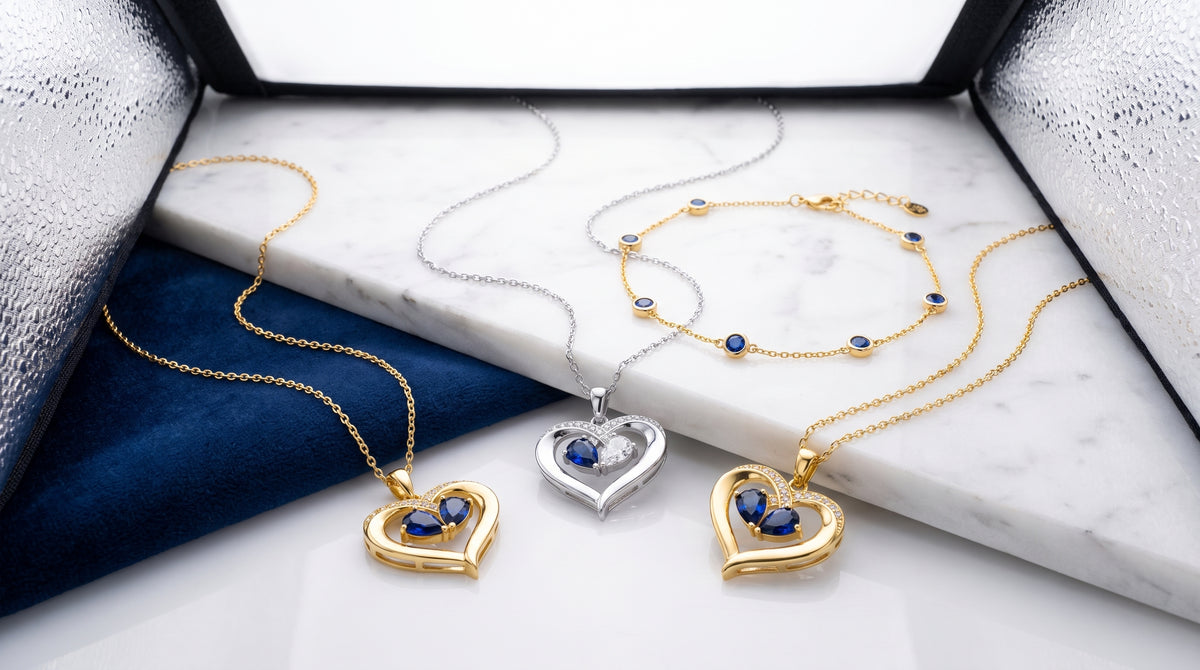
If you're working within the sapphire-blue aesthetic, the September birthstone collection gathers simulated sapphire pieces across rings, pendants, earrings, and bracelets, which makes tonal matching considerably easier than assembling from separate sources. For pieces built entirely in gold, the solid gold collection is the place to look, while the broader birthstone jewelry collection is useful if you're gifting across multiple birth months. Specific styles worth knowing as reference points include The Arisara Cushion Ring in 18K gold vermeil for the vintage-leaning cushion silhouette, The Azurea Radiant Ring in S925 sterling silver for a crisp white-metal frame, The Thalyssa Pear Pendant in sterling silver and The Azurise Pear in 18K gold vermeil for the elongating pear shape in two different metal tones, Teardrop Sapphire Earrings as a low-commitment color test, and the September Sapphire Birthstone Bracelet in S925 sterling silver for birthday gifting.
Engagement Rings: The Special Case
If your sapphire is going to be an engagement ring, the calculus shifts, because this is the one piece that must survive decades of uninterrupted wear.
Prioritize durability over drama. Avoid irradiated stones and be cautious with fracture-filled ones — neither belongs in a ring worn daily for years. Favor settings that shield the stone's girdle and edges rather than exposing them. Keep the profile low enough that the ring passes comfortably under gloves and through pockets.
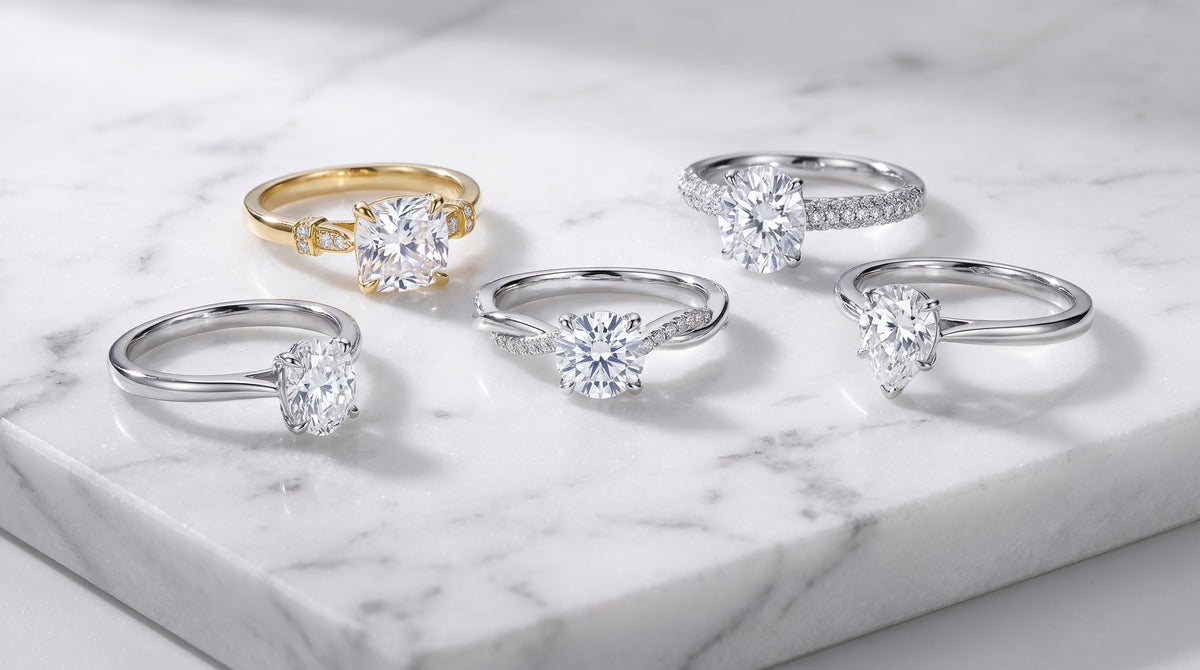
On metal: white gold and platinum sharpen blue's saturation and give the most classic look, while yellow gold pushes the ring toward antique-inspired warmth — a look that has been steadily gaining ground. Rose gold with blue sapphire is the most unconventional of the three, and genuinely striking when the stone leans slightly violet.
Size deserves a reality check. Because sapphire is denser than diamond, budgeting by carat weight will consistently disappoint. Ask for millimeter dimensions and, where possible, view the ring on a hand rather than in a studio close-up.
Finally, buy from someone who will tell you plainly whether the stone is natural, lab-grown, or simulated, and what treatments it has undergone. Willingness to answer that question directly is the most reliable trust signal in the category. For more on karat selection and stone type in gold settings specifically, especially if you are considering a sapphire gold ring engagement style, see our guide to choosing a sapphire ring in gold.
Care, Cleaning, and Long-Term Wear
Sapphire's hardness makes it forgiving, but the setting and metal around it are not.
Routine cleaning
Warm water, a few drops of mild dish soap, and a soft toothbrush handle the vast majority of buildup — lotion, skin oils, soap residue. Work gently around the underside of the stone, where film accumulates and dulls light return, then rinse and dry thoroughly with a soft cloth.
Avoid harsh chemicals and bleach entirely. They can degrade gold alloys over time and are especially unkind to plated and vermeil finishes.
Ultrasonic cleaners: when and when not
Ultrasonic cleaning is generally safe for untreated and standard heat-treated sapphires in secure settings. It is not safe for fracture-filled stones or stones with significant surface-reaching inclusions, where vibration can propagate a crack. It's also a poor idea for intricate settings with many accent stones, and for vermeil, where aggressive cleaning accelerates surface wear. When in doubt, use the soap-and-brush method.
Storage
Store sapphire pieces separately — soft pouches or a fabric-lined box with compartments. At Mohs 9, sapphire will scratch nearly everything else in your jewelry box, and diamonds will scratch your sapphire. For sterling silver, airtight storage meaningfully slows tarnish.
Periodic inspection
Once or twice a year, have prongs, clasps, and jump rings checked professionally — particularly on rings and pendants worn daily. Prongs thin gradually and invisibly; catching one before it fails is the difference between a five-minute repair and a lost stone.
Everyday habits that extend life
Put jewelry on last, after perfume, lotion, and hairspray. Take rings off before cleaning with chemicals, gardening, or lifting weights. Remove vermeil and plated pieces before swimming — chlorine is uniquely destructive to surface finishes. None of this is fussy; it's about thirty seconds of habit that adds years.
A Quick Buying Checklist
Before you purchase any sapphire piece, run through these:
- Stone type. Is it described as natural, lab-grown, or simulated? Is that stated in writing?
- Treatment. Heat-treated is fine and normal. Diffusion, glass-filling, or irradiation should be disclosed and priced accordingly.
- Color. Medium to medium-dark tone, strong saturation, no gray or brown cast.
- Cut. Check the photos for windowing, extinction, and uneven color zoning.
- Size. Ask for millimeter dimensions, not just carat weight.
- Metal. Solid gold, vermeil, or sterling silver — and does it match what you'll ask of the piece?
- Construction. Soldered jump rings, secure clasp, solid chain, protective setting for anything worn daily.
- Certification. Only necessary when you're paying a premium tied to an unheated or origin claim.
Sapphire rewards patient buyers more than almost any other gemstone, because the difference between a dull stone and a brilliant one is visible to anyone once they know what to look for — and because at Mohs 9, a good choice stays a good choice for a very long time. Start with color, match your metal to the life you actually lead, and build a set one considered piece at a time. If you're narrowing in on a September birthday specifically, our guide to the September birthstone ring in gold takes the metal question further.

Leave a comment
This site is protected by hCaptcha and the hCaptcha Privacy Policy and Terms of Service apply.