
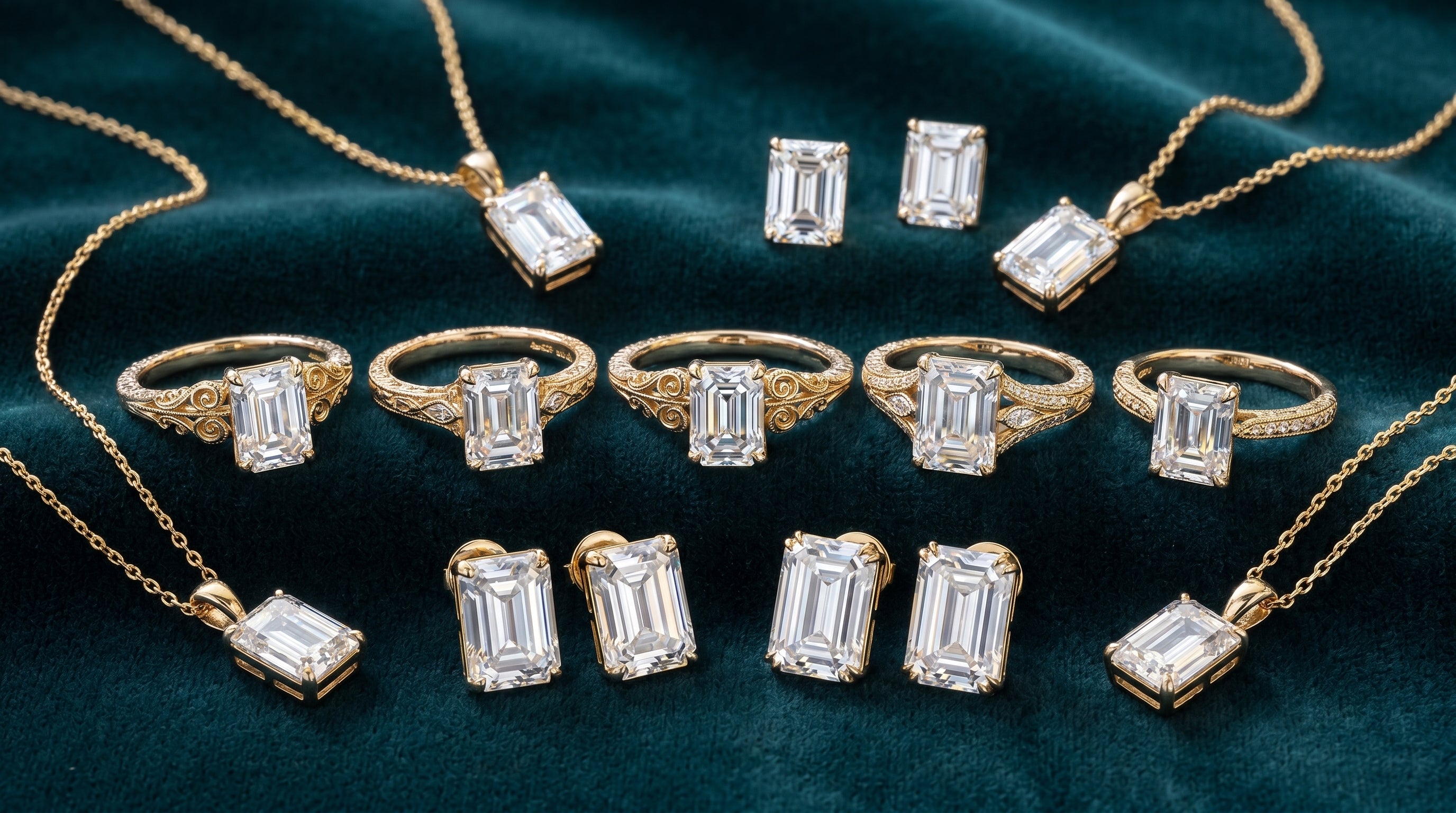
Ein antiker Diamant im Smaragdschliff funkelt nicht so, wie die meisten Menschen es von einem Diamanten erwarten. Er glüht. Das Licht sammelt sich in diesen langen, gestuften Facetten und reflektiert in breiten, dramatischen Blitzen zurück – ein Spiegelsaal-Effekt, den Brillantschliffe einfach nicht nachbilden können. Wenn Sie sich von dieser geometrischen Präzision und dem stillen Selbstvertrauen des Art-Déco-Designs angezogen fühlen, sind Sie hier genau richtig. Dieser Leitfaden behandelt alles: was echte Antiquitäten von modernen, Vintage-inspirierten Alternativen unterscheidet, was Sie im Jahr 2026 tatsächlich bezahlen werden und welche Ringe diese historische Magie ohne die Zerbrechlichkeit einer jahrhundertealten Fassung liefern.

Was Sie vor dem Kauf eines antiken Diamanten im Smaragdschliff wissen sollten
Bevor Sie einen antiken Diamanten im Smaragdschliff kaufen, sollten Sie den Unterschied zwischen echten Antiquitäten, Vintage-Stücken und modernen, von Vintage inspirierten Reproduktionen verstehen. Echte Antiquitäten zeichnen sich durch handgeschliffene Facetten und zeittypische Metalle aus, während moderne Alternativen überragende Haltbarkeit, präzise Schnittsymmetrie und eine ethische Beschaffung bieten, die den Werten von 2026 entspricht.
Die Geschichte des Smaragdschliffs wurzelt in der Art-Déco-Bewegung der 1920er und 1930er Jahre. Juweliere dieser Epoche wandten sich entschieden von den weichen, romantischen Kurven des viktorianischen und edwardianischen Designs ab und setzten stattdessen auf kühne, architektonische Linien. Ein authentischer Art-Déco-Diamantring im Smaragdschliff zeichnet sich durch seine abgeschnittenen Ecken und konzentrischen Reihen paralleler Facetten aus. Anstelle des „Crushed-Ice-Funkelns“ von Brillantschliffen erzeugt der Smaragdschliff diesen faszinierenden Spiegelsaal-Effekt – breite, lineare Lichtblitze, die absolute Klarheit im Stein erfordern.
Hier ist die Sache: Der Kauf einer echten Antiquität bedeutet, eine komplexe Landschaft aus historischer Herkunft und Materialabbau zu navigieren. Ein vor einem Jahrhundert gefertigter Ring hat ein volles Leben hinter sich. Platin- oder Goldfassungen weisen oft mikroskopische Materialermüdung auf. Die Krappen, die den kostbaren Mittelstein halten, können hauchdünn abgenutzt sein. Die Geschichte ist unbestreitbar romantisch. Die Realität, ein 100 Jahre altes Stück jeden Tag zu tragen, ist etwas ganz anderes – man muss ständig vor versehentlichen Stößen schützen, die einen empfindlichen, handgeschliffenen Gürtel beschädigen könnten.
Genau deshalb sind moderne, Vintage-inspirierte Ringe im Jahr 2026 so beliebt geworden. Sie erhalten die exakte Ästhetik – zarte Milgrain-Kanten, geometrische Halos, gestufte Facetten – ohne die strukturellen Nachteile einer Antiquität zu erben. Für einen tieferen Einblick, wie diese modernen Steine Licht einfangen, erklärt Der ultimative Leitfaden für Moissanitringe im Smaragdschliff: Zeitlose Eleganz trifft auf moderne Brillanz die optische Wissenschaft hinter diesem berühmten Spiegelsaal-Effekt.
Schlüsselfaktoren: Antike vs. Vintage-inspirierte moderne Ringe
Die Wahl zwischen einem echten antiken und einem modernen, Vintage-inspirierten Ring bedeutet, historische Herkunft gegen Alltagstauglichkeit abzuwägen. Antike Fassungen leiden oft unter Materialermüdung und erfordern spezielle Pflege, während moderne Moissanit-Alternativen die exakte historische Ästhetik mit verbesserter struktureller Integrität und konfliktfreier Herkunft bieten.
Betrachten wir die praktischen Realitäten. Echte antike Steine wurden von Hand geschliffen, was bedeutet, dass ihnen oft die mathematische Symmetrie fehlt, die wir heute erwarten. Facetten können leicht ungleichmäßig sein, Proportionen tiefer – was einen 1 Karat Smaragdschliff-Diamantring von oben sichtbar kleiner aussehen lässt als einen modernen Stein gleichen Gewichts. Und antike Diamanten wurden unter anderen Lichtverhältnissen bewertet. Ein Stein, der 1925 bei Kerzenschein perfekt weiß aussah, kann unter dem grellen Neonlicht von 2026 deutliche gelbe oder braune Farbtöne aufweisen.
Moderne, Vintage-inspirierte Ringe, insbesondere solche, die hochwertigen Moissanit verwenden, eliminieren diese Variablen vollständig. Moissanit ist auf optische Perfektion ausgelegt. Er erreicht auf der Mohs-Härteskala 9,25 – härter als Saphir, nur Diamant ist härter – und hat einen Brechungsindex von 2,65–2,69, verglichen mit Diamanten von 2,42. Dieser höhere Brechungsindex ist der Grund, warum Moissanit ein so intensives Feuer und Brillanz erzeugt. Sein Dispersionswert von 0,104 ist 2,4-mal so hoch wie der von Diamanten (0,044), was bedeutet, dass Sie bei direktem Sonnenlicht echte Regenbogenblitze über die Steinoberfläche tanzen sehen werden. Und jedes Stück ist völlig frei von ethischen Bedenken, die mit dem historischen Diamantenabbau verbunden sind.
| Merkmal | Echter antiker Diamant | Vintage-inspirierter Moissanit |
|---|---|---|
| Symmetrie & Schliff | Handgeschliffen, oft asymmetrisch | Präzisionsschliff, mathematisch perfekt |
| Haltbarkeit | Anfällig für Absplitterungen; Materialermüdung in der Fassung | Sehr haltbar (9,25 Mohs); brandneue Fassung |
| Reinheit | Oft mit sichtbaren Einschlüssen | Feinste oder VVS-Reinheit Standard |
| Ethische Beschaffung | Unbekannte Herkunft, historischer Bergbau | 100 % konfliktfrei, im Labor hergestellt |
| Pflege | Erfordert spezialisierte Antiquitätenjuweliere | Standardmäßige Schmuckpflege |
Die Ruhe, die mit einer neu gegossenen Fassung einhergeht, kann nicht hoch genug eingeschätzt werden. Sie müssen sich nie fragen, ob eine frühere Größenanpassung die Integrität des Bandes beeinträchtigt hat. Sie können einfach die atemberaubende Schönheit von Vintage-Ringen im Smaragdschliff genießen, ohne die Angst, ein Museumsstück an Ihrem Finger zu bewahren.

Preisspannen und Wert im Jahr 2026
Im Jahr 2026 erzielt ein echter antiker Diamant im Smaragdschliff einen erheblichen Aufpreis, der eher auf historischer Herkunft als auf gemmologischer Qualität allein basiert. Moderne, von Vintage inspirierte Moissanitringe bieten die gleiche luxuriöse Art-Déco-Ästhetik zu einem Bruchteil der Kosten und maximieren Ihr Budget, ohne die visuelle Wirkung zu beeinträchtigen.
Wenn Sie den Preis eines verifizierten antiken 1 Karat Smaragdschliff-Diamanten recherchieren, sind die Zahlen aufgrund der Seltenheit stark überhöht. Sie zahlen nicht nur für den Kohlenstoffkristall – Sie zahlen für die Geschichte, die Epoche und das Überleben des Stücks. Ein echter Ring aus den 1920er Jahren mit dokumentierter Herkunft kann Zehntausende von Dollar kosten, selbst wenn der Diamant sichtbare Einschlüsse oder eine warme Farbstufe aufweist.
Auch bei neu abgebauten Steinen bleibt der Preis für einen 1-Karat-Smaragdschliff hoch. Stufenschnitte erfordern eine hohe Reinheit des Rohmaterials, da sie Fehler nicht hinter einer brillanten Facettierung verbergen können. Ein erheblicher Teil des Rohdiamanten geht beim Schleifen verloren, was die Kosten pro Karat erheblich in die Höhe treibt. Und ehrlich gesagt? Man zahlt oft mehr für das, was der Stein nicht zeigt, als für das, was er zeigt.
Hier wird der Wertvorschlag von Moissanit unübersehbar. Für einen Bruchteil der Kosten eines geschürften Diamanten können Sie einen makellosen, zutiefst faszinierenden Moissanit im Smaragdschliff erwerben, der die historische Ästhetik perfekt einfängt. Jeder Stein wird mit einer GRA-Zertifizierung und einer lebenslangen Garantie geliefert. Sie investieren Ihr Budget in sichtbare Schönheit – die aufwendige Fassung, die Qualität des Goldes oder Platins, die schiere Präsenz des Mittelsteins – anstatt einen Aufpreis für historische Seltenheit zu zahlen. Unser Leitfaden „Moissanit vs. Diamant Preis: Wofür Sie wirklich bezahlen“ bietet einen transparenten Einblick, wie sich diese Kosten genau aufschlüsseln.
Qualität und Authentizität erkennen
Um Qualität bei einem Smaragdschliff zu erkennen, muss man sich auf Reinheit und Schnittpräzision konzentrieren. Da Stufenfacetten wie klare Fenster in den Stein wirken, sind alle Einschlüsse sofort sichtbar. Achten Sie auf saubere Zentren und symmetrische Ecken – Merkmale außergewöhnlicher Handwerkskunst sowohl bei echten Antiquitäten als auch bei hochwertigen modernen Alternativen.
Der Smaragdschliff ist notorisch unversöhnlich. Ein runder Brillantschliff kann einen kleinen Einschluss in einem Funkeln verbergen. Ein Smaragdschliff stellt alles zur Schau. Die große, offene Tafelfacette wirkt wie ein Glasfenster, das direkt in das Herz des Edelsteins blickt. Klarheit ist von größter Bedeutung. Beim Betrachten eines Vintage-Rings mit Smaragdschliff-Diamanten achten Sie genau auf dunkle Flecken oder Federn in der Nähe des Zentrums. Bei echten Antiquitäten werden diese Einschlüsse oft als „Charakter“ akzeptiert – sie können jedoch die strukturelle Integrität des Steins im Laufe der Zeit beeinträchtigen.
Farbe ist eine weitere faszinierende Dimension von Stufenschliffen. Da sie das Licht nicht so intensiv reflektieren wie Brillantschliffe, zeigen sie ihre wahre Körperfarbe leichter. Antike Steine haben oft einen warmen, leicht gelblichen oder champagnerfarbenen Farbton. Wenn Sie einen eisigen, hellweißen Look wünschen, ist ein moderner, im Labor hergestellter Stein die überlegene Wahl. Punkt.
Viele Käufer suchen bei High-End-Marken nach Inspiration. Der klassische Diamantring im Smaragdschliff im Tiffany-Stil beispielsweise verlässt sich auf absolute Einfachheit, um die Geometrie des Steins für sich sprechen zu lassen – ein Meisterwerk der Zurückhaltung. Bei der Bewertung eines Vintage-inspirierten Stücks sollten Sie die Ecken genau prüfen. Sie sollten perfekt abgeschnitten sein und eine achteckige Kontur bilden, die den Stein vor Absplitterungen schützt und gleichzeitig seine architektonische Anziehungskraft verstärkt. Die parallelen Facetten sollten präzise ausgerichtet sein und eine rhythmische, kaskadierende Lichtreflexion erzeugen, die sich beim Bewegen der Hand verschiebt.

Beste Eheringe für Ringe im Smaragdschliff
Die besten Eheringe für Ringe im Smaragdschliff zeichnen sich durch konturierte Profile oder ergänzende Stufensteine aus, die bündig an den geraden Kanten des Verlobungsrings anliegen. Baguette-Eternity-Bänder, zarte Milgrain-Vintage-Bänder oder schlichte polierte Metallringe verstärken die geometrische Schönheit eines Smaragdschliff-Mittelsteins, ohne mit ihm zu konkurrieren.
Die Kombination eines Eherings mit einem Verlobungsring im Smaragdschliff erfordert einen durchdachten geometrischen Ansatz. Die starken, geraden Linien des Smaragdschliffs verlangen nach einem Band, das entweder diese Struktur aufgreift oder einen bewussten, eleganten Kontrast bildet. Die richtige Wahl hängt oft vom Profil der Fassung Ihres Verlobungsrings ab.
Wenn Ihr Verlobungsring eine hochprofilierte Fassung hat, die es ermöglicht, ein Band darunter zu schieben, ist ein gerades Baguette-Eternity-Band eine spektakuläre Wahl. Die rechteckigen Facetten der Baguettes spiegeln die Stufenschnitte Ihres Mittelsteins wider und schaffen so eine kohäsive, hocharchitektonische Stapelung. Dieser Look dominiert die Brautmodetrends von 2026 für seine klare, moderne Interpretation von Vintage-Glamour.
Wenn Ihr Verlobungsring tief am Finger sitzt – ein häufiges Merkmal bei echten antiken Fassungen – benötigen Sie ein konturiertes oder gebogenes Eheringband. Ein sanfter Chevron oder eine individuelle Kerbe ermöglicht es den beiden Ringen, bündig zu sitzen, ohne an den zarten Krappen des Mittelsteins zu reiben. Für diejenigen, die die Vintage-Ästhetik lieben, fügt ein Band mit zarten Milgrain-Details und kleinen, abwechselnden runden und Marquise-Formen eine wunderschöne Texturschicht hinzu, die die strenge Geometrie des Smaragdschliffs mildert. Unser umfassender Ultimativer Leitfaden für Eheringe untersucht, wie verschiedene Ringstile viel detaillierter zusammenwirken.
Unsere Top-Empfehlungen für Vintage-Ringe im Smaragdschliff
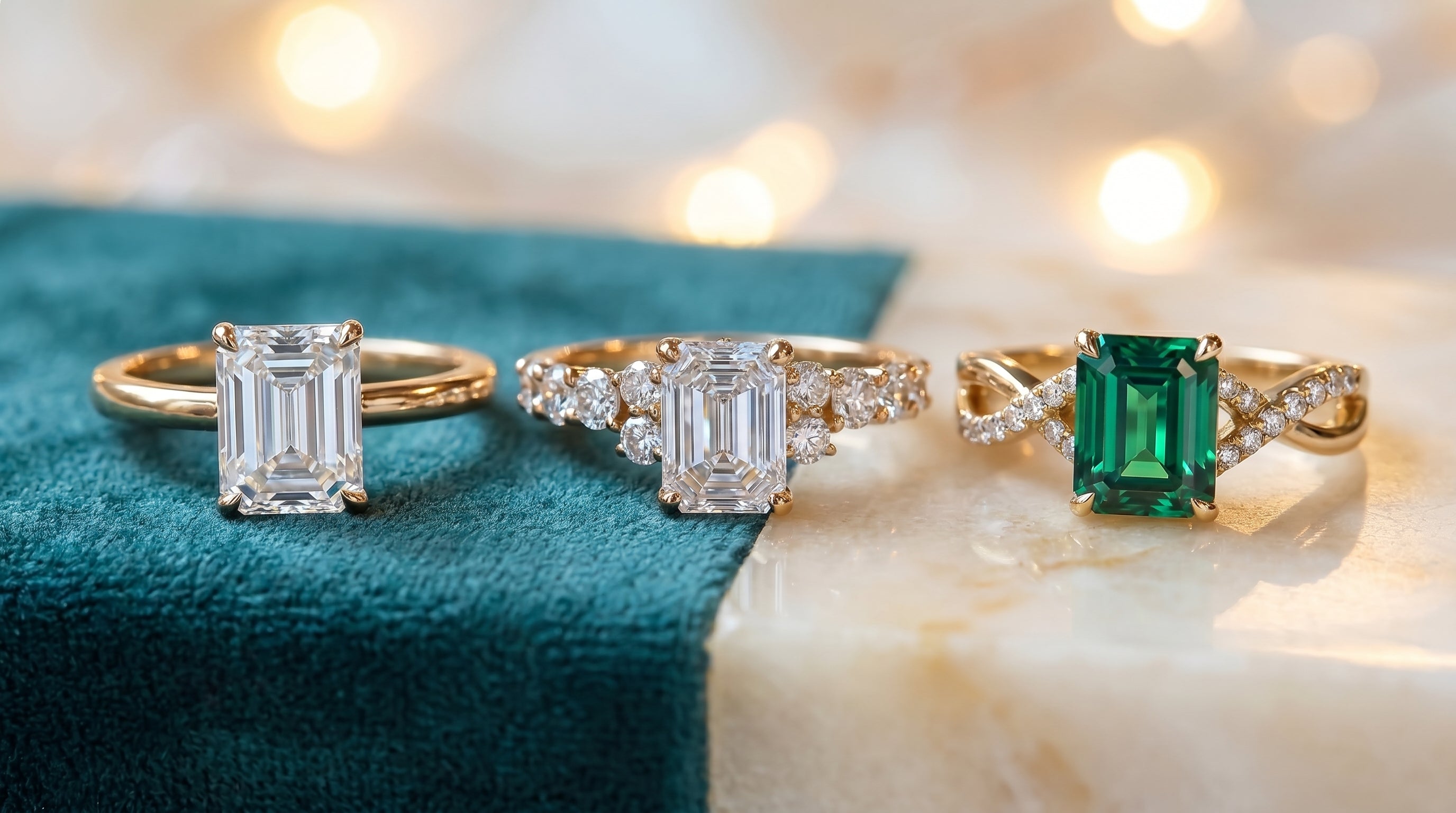
Unsere kuratierte Auswahl an Vintage-inspirierten Ringen im Smaragdschliff kombiniert die romantische Geometrie der Art-Déco-Ära mit der unübertroffenen Haltbarkeit modernen Moissanits. Diese sorgfältig gefertigten Stücke liefern den atemberaubenden Spiegelsaal-Effekt und gewährleisten gleichzeitig ethische Beschaffung und außergewöhnliche Alltagstauglichkeit.
Wir haben über 250.000 Kunden geholfen, ihr perfektes Stück zu finden, und wir haben Jahre damit verbracht, Designs zu perfektionieren, die die Seele der 1920er Jahre einfangen und gleichzeitig die modernsten gemmologischen Fortschritte des Jahres 2026 nutzen. Jeder Ring wird mit GRA-Zertifizierung, einer lebenslangen Garantie und einem 30-tägigen Rückgaberecht geliefert – denn Sie sollen sich Ihrer Wahl vollkommen sicher sein. Hier sind unsere beliebtesten Stücke, die die antike Ästhetik in die moderne Ära bringen.
The Adelina Rae – Vintage Moissanitring
Wenn Sie von der filigranen Metallarbeit der Edwardianischen und Art-Déco-Epoche fasziniert sind, ist The Adelina Rae ein Meisterwerk des Designs. Dieser Ring verfügt über einen atemberaubenden Mittelstein im Smaragdschliff, umgeben von einem Kranz aus zarten, brillantgeschliffenen Akzenten. Das Band selbst ist ein Kunstwerk – Vintage-inspirierte Milgrain-Details und geometrische Ausschnitte lassen das Licht aus jedem Winkel auf die Steine treffen. Es besitzt die ganze Erbstückqualität einer echten Antiquität, aber mit der makellosen Klarheit und dem Regenbogenfeuer von Premium-Moissanit.
The Bella Jewel – Vintage Moissanitring
Für diejenigen, die eine kühnere, architektonischere Aussage bevorzugen, bietet The Bella Jewel eine spektakuläre Präsenz. Der Mittelstein im Smaragdschliff wird von perfekt proportionierten Seitensteinen flankiert, die ein gestuftes Profil schaffen, das den Glamour der 1920er Jahre mit Autorität kanalisiert. Die Fassung ist robust und sicher, so konzipiert, dass sie die Ecken der Steine schützt und gleichzeitig ihre Lichtexposition maximiert. Es ist ein Ring, der Blicke auf sich zieht – und das Gefühl eines hochwertigen Vintage-Fundes vermittelt, ohne das Vintage-Preisschild.

The Camilla - Vintage Moissanitring
Manchmal sind die auffälligsten Vintage-Designs jene, die mit Licht spielen, anstatt mit ihm zu konkurrieren. The Camilla nimmt die klassische Smaragdschliff-Silhouette und veredelt sie mit atemberaubenden Details. Die Art und Weise, wie die Stufenfacetten mit der Fassung interagieren, erzeugt ein dynamisches Spiel der Szintillation, das sich sowohl historisch als auch völlig frisch anfühlt. Es ist die perfekte Wahl für die Braut, die einen Ring mit Geschichte, aber einem unverkennbaren Blick in die Zukunft wünscht.
Der Caterina Moissanitring im Smaragdschliff
Einfachheit ist die ultimative Raffinesse. The Caterina verzichtet auf Überflüssiges, um sich ganz auf die faszinierende Schönheit des Smaragdschliffs zu konzentrieren. Eingefasst in eine klassische, elegante Fassung, lässt dieser Ring den Spiegelsaal-Effekt in den Mittelpunkt treten. Er erinnert an die klaren, kraftvollen Designs, die von Stil-Ikonen der Mitte des Jahrhunderts bevorzugt wurden – und bietet eine zeitlose Eleganz, die in fünfzig Jahren genauso atemberaubend aussehen wird wie heute.
Farbexploration: The Alouelle und The Alouette
Während weiße Steine traditionell sind, harmoniert die Vintage-Ästhetik wunderbar mit lebendigen Farben. The Alouelle präsentiert einen atemberaubenden 4-Karat-Moissanit im Smaragdschliff in Pink, der der klassischen Form eine sanfte, romantische Note verleiht. Für ein wirklich dramatisches Statement bietet The Alouette einen tiefen, leidenschaftlichen 3-Karat-Moissanit im Smaragdschliff in Rot. Diese farbigen Moissanite bieten die satten, gesättigten Farbtöne seltener antiker Edelsteine – ohne die astronomischen Preise oder ethischen Bedenken.

The Blossom und The Astraea
Wenn Sie die Idee von Blumenmotiven in Kombination mit geometrischen Schnitten lieben, bietet The Blossom einen atemberaubenden 3 Karat Smaragdschliff, umgeben von zarten, von der Natur inspirierten Details. Alternativ bietet The Astraea ein himmlisches, luftiges Gefühl – sie schwebt den Smaragdschliff in einer Fassung, die über dem Finger zu schweben scheint. Beide Ringe beweisen, dass Vintage-Inspiration viele schöne Formen annehmen kann.
Häufig gestellte Fragen
Die Nuancen antiker und Vintage-inspirierter Smaragdschliff-Ringe werfen spezifische Fragen zu Pflege, Größe und visuellen Unterschieden auf. Hier sind die häufigsten Fragen, die wir von Käufern erhalten, die ihr perfektes geometrisches Meisterwerk im Jahr 2026 finden möchten.
Sehen Smaragdschliffe größer aus als Rundschliffe?
Smaragdschliffe wirken oft größer als runde Brillantschliffe mit gleichem Karatgewicht, da ihre längliche Form mehr Oberfläche am Finger einnimmt. Die lange, rechteckige Tafelfacette lenkt den Blick nach oben und unten und erzeugt so die Illusion einer größeren Größe. Echte antike Smaragdschliffe haben manchmal tiefere Pavillons, die Gewicht unter der Oberfläche verbergen. Moderne Moissanite im Smaragdschliff sind präzise geschliffen, um die von oben sichtbare Größe und Brillanz zu maximieren, sodass Sie jeden Millimeter visueller Wirkung erhalten, den Ihr Karatgewicht bieten kann.
Wie reinige ich einen Ring im Smaragdschliff im Vintage-Stil?
Da die Stufenfacetten eines Smaragdschliffs wie klare Fenster wirken, ist es unerlässlich, den Stein sauber zu halten, um seinen Spiegelsaal-Effekt zu bewahren. Bei modernen, vintage-inspirierten Moissanitringen weichen Sie den Ring in warmem Wasser mit ein paar Tropfen mildem Spülmittel ein und schrubben ihn dann vorsichtig mit einer weichen Zahnbürste. Gründlich abspülen und mit einem fusselfreien Tuch trocknen. Vermeiden Sie scharfe Chemikalien oder Scheuermittel. Wenn Sie ein echtes Antikstück besitzen, vermeiden Sie Ultraschallreiniger vollständig – die Vibrationen können alte, zerbrechliche Krappen lockern.
Ist Moissanit eine gute Alternative zu einem antiken Diamanten?
Absolut. Moissanit ist eine außergewöhnliche Alternative, besonders im Jahr 2026. Sein Brechungsindex von 2,65–2,69 übertrifft den von Diamanten (2,42) und erzeugt ein unglaubliches Feuer und Brillanz. Wenn er im Smaragdschliff geschliffen wird, reproduziert Moissanit perfekt die historischen, geometrischen Lichtblitze, die mit der Art-Déco-Ära verbunden sind. Er ist mit 9,25 auf der Mohs-Skala auch sehr haltbar, konfliktfrei und GRA-zertifiziert – so können Sie den luxuriösen Vintage-Look zu einem Preis erzielen, der zu Ihrem Leben passt.
Kann ich einen Smaragdschliff-Ring täglich tragen?
Ja. Smaragdschliffe sind praktisch für den täglichen Gebrauch. Die abgeschnittenen Ecken wurden ursprünglich entworfen, um Absplitterungen zu verhindern, wodurch der Stein von Anfang an strukturell solide ist. Wenn Sie einen modernen Moissanitring wählen, profitieren Sie von einem Stein, der außergewöhnlich hart und kratzfest ist – er wird an Ihrem zehnten Jahrestag genauso brillant aussehen wie am ersten Tag. Wenn Sie ein echtes 100 Jahre altes Antikstück tragen, müssen Sie aufgrund der potenziellen Materialermüdung der ursprünglichen Fassung erheblich vorsichtiger sein.
Letzter Rat für Ihren perfekten Ring
Die Sicherung Ihres Traumrings mit Smaragdschliff bedeutet, Ihre Liebe zur historischen Ästhetik mit praktischen Überlegungen für den täglichen Gebrauch in Einklang zu bringen. Indem Sie ein hochwertiges, vintage-inspiriertes Moissanit-Schmuckstück wählen, fangen Sie die Romantik der Vergangenheit ein und genießen gleichzeitig die Haltbarkeit, die ethische Unbedenklichkeit und den brillanten Wert moderner Handwerkskunst.
Der Reiz des antiken Diamanten im Smaragdschliff liegt in seiner stillen Zuversicht. Er muss nicht mit blendendem Glanz schreien. Er zieht Sie mit faszinierender Tiefe und architektonischer Anmut in seinen Bann – ein Stil, der ein Jahrhundert wechselnder Modetrends überlebt und dabei seine absolute Zeitlosigkeit bewiesen hat.
Und das wissen wir, nachdem wir über 250.000 Kunden geholfen haben, ihr perfektes Schmuckstück zu finden: Ihr Ring sollte eine Quelle der Freude sein, nicht der Angst. Sie verdienen Schmuck, den Sie selbstbewusst tragen können, während Sie an Ihrem Schreibtisch tippen, die Welt bereisen und Ihre eigene Geschichte schreiben. Ein modernes, vintage-inspiriertes Design ehrt die atemberaubende Kunstfertigkeit der 1920er Jahre und passt perfekt zu Ihrem Leben im Jahr 2026. Das ist kein Kompromiss. Das ist die klügere Wahl.
Wir laden Sie ein, unser gesamtes Sortiment an geometrischen Meisterwerken zu erkunden. Entdecken Sie die perfekte Mischung aus Geschichte und moderner Brillanz in unserer Kollektion Moissanitringe mit Smaragdschliff, oder durchsuchen Sie unsere breitere Auswahl an Verlobungsringen, um das Schmuckstück zu finden, das Ihre einzigartige Liebesgeschichte direkt anspricht. Wenn Sie unsere beliebtesten Designs suchen, ist unsere Kollektion Bestseller der perfekte Ausgangspunkt für Ihre Reise zu einem Ring, den Sie für immer schätzen werden.

Hinterlasse einen Kommentar
Diese Website ist durch hCaptcha geschützt und es gelten die allgemeinen Geschäftsbedingungen und Datenschutzbestimmungen von hCaptcha.