


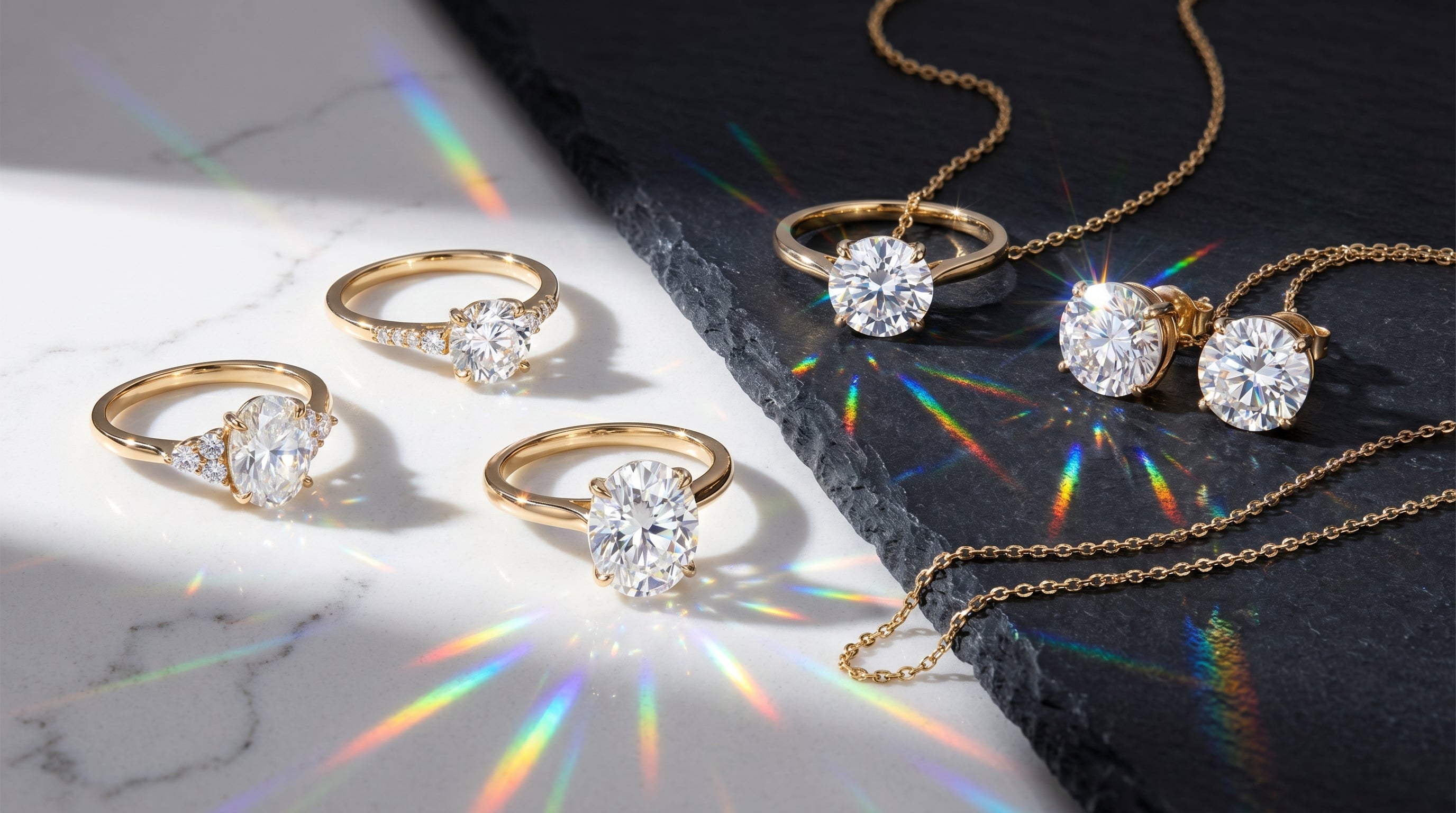
If you're trying to decide between moissanite vs zirconia, here's what nobody tells you upfront: these two stones look similar in a product photo and almost nothing alike after six months on your finger. One stays flawless for decades. The other clouds, scratches, and quietly loses its sparkle while you're busy living your life. This guide cuts through the noise so you know exactly which stone deserves a permanent place on your hand—and which one belongs in a vacation jewelry pouch.

What to Know Before Buying: Moissanite vs Zirconia
Moissanite is a lab-grown silicon carbide gemstone with a Mohs hardness of 9.25 and a refractive index of 2.65–2.69. It maintains its fire and clarity for a lifetime. Cubic zirconia is a synthetic zirconium dioxide crystal that scores 8.0–8.5 on the Mohs scale and clouds permanently with daily wear.
To understand why these two stones perform so differently on your finger, you have to look at how they're made. Moissanite has a genuinely romantic origin story. French scientist Henri Moissan first discovered it in 1893 inside a meteorite crater—a gemstone literally born from the stars. Because natural moissanite is extraordinarily rare, every stone used in fine jewelry today is grown in advanced laboratories. This process creates silicon carbide with exceptional thermal stability and structural toughness. And because it's lab-grown, it completely bypasses the environmental devastation of traditional diamond mining, making moissanite rings the premier choice for the ethically conscious buyer.
Cubic zirconia has a far more utilitarian background. It's a fully synthetic crystalline form of zirconium dioxide that doesn't occur naturally in gem-quality form anywhere on Earth. Commercial CZ production began in the 1970s with one goal: create a cheap, mass-produced diamond imitation. It looks bright and clear straight out of the box. But its softer chemical structure means it can't withstand the friction and impacts of everyday life. You'll find CZ in fast-fashion accessories and temporary travel rings—rarely in pieces meant to last a lifetime.
Key Factors: Durability, Sparkle, and Longevity
The core differences between moissanite and cubic zirconia come down to hardness and light performance. Moissanite scores 9.25 on the Mohs scale and produces intense rainbow fire through double refraction. Cubic zirconia scores 8.0–8.5 and loses its initial shine to surface scratches within months of daily wear.
Hardness and Scratch Resistance
Durability is what separates a temporary fashion accessory from a true heirloom. The Mohs scale ranks minerals from 1 to 10 based on scratch resistance. Diamonds sit at a perfect 10. Moissanite follows at 9.25—one of the hardest gemstones known. You can wear a moissanite engagement ring every single day, knock it against a granite countertop, or brush it against a doorframe, and the stone stays pristine.
Cubic zirconia ranks between 8.0 and 8.5. That gap might sound small, but the Mohs scale isn't linear. The difference between 8.5 and 9.25 represents an exponential leap in real-world scratch resistance. Household dust alone—which often contains quartz particles at Mohs 7—creates micro-abrasions on CZ surfaces over time. Those microscopic scratches accumulate, dulling the sharp facet edges that gave the stone its original sparkle. The damage is gradual, invisible at first, and ultimately permanent.
Brilliance and Fire
Here's where it gets interesting. Moissanite's refractive index of 2.65–2.69 actually exceeds a natural diamond's 2.42. That number measures how dramatically a stone bends light—and a higher index means more brilliance. But moissanite goes further: it's doubly refractive, splitting incoming light into two separate rays. The result is an intense, colorful rainbow fire that dances in direct sunlight with a dispersion rate of 0.104—that's 2.4 times the dispersion of a diamond at 0.044. Watch a moissanite ring catch afternoon light and you'll understand immediately why 250,000+ customers have chosen it.
Cubic zirconia has a refractive index of just 2.15–2.18 and is singly refractive, returning light in a much simpler, less dynamic way. A brand-new CZ looks bright and starkly white under jewelry store spotlights. In natural daylight, it takes on a glassy, slightly artificial appearance. It lacks the deep internal fire that makes moissanite so visually arresting—and that difference becomes more obvious, not less, as time passes.
Clouding and Long-Term Wear
One of the most common complaints about cubic zirconia is that it turns cloudy after a few months of wear. This isn't a chemical reaction—it's physical damage. Because CZ is softer, its surface accumulates thousands of tiny scratches that trap hand sanitizer residue, skin oils, and everyday grime. Once the facet junctions are worn down, no amount of cleaning restores the stone's original brilliance. The damage is permanent.
Moissanite is non-porous and hard enough to resist that kind of surface degradation entirely. Dirt and oils sit on the surface rather than embedding in it. When your moissanite ring looks a little dull from lotion or soap buildup, a quick soak in warm water with mild dish soap and a soft brush brings back its day-one sparkle instantly. It won't cloud. It won't fog. It won't change color. Ever.
| Feature | Moissanite | Cubic Zirconia (CZ) | Natural Diamond |
|---|---|---|---|
| Composition | Silicon Carbide (Lab-grown) | Zirconium Dioxide (Synthetic) | Carbon (Mined) |
| Mohs Hardness | 9.25 (Extremely durable) | 8.0 - 8.5 (Prone to scratching) | 10 (Maximum durability) |
| Refractive Index | 2.65 - 2.69 (Highest brilliance) | 2.15 - 2.18 (Moderate brilliance) | 2.42 (High brilliance) |
| Light Performance | Intense rainbow fire, double refraction | Glassy shine, single refraction | Classic white and colored sparkle |
| Long-Term Clarity | Never clouds; lifetime brilliance | Clouds and dulls over time | Never clouds; lifetime brilliance |
Price Ranges and Value: Moissanite vs Cubic Zirconia Price
Moissanite costs between $250 and $300 per carat—a precision-engineered, lifetime-durable gemstone at a fraction of diamond pricing. Cubic zirconia often costs under $30 per carat, but its tendency to scratch and cloud means frequent replacement quickly erodes that initial savings.
The moissanite vs cubic zirconia price gap reflects the vast difference in quality, manufacturing complexity, and longevity. High-quality moissanite runs in the low hundreds of dollars per carat. You're paying for a precision-engineered gemstone grown in advanced laboratory conditions—an accessible luxury that lets you secure a breathtaking, flawless-looking 2-carat center stone without draining your savings.
Cubic zirconia occupies the absolute lowest tier of jewelry pricing. Individual CZ stones often cost just a few dollars, meaning the primary cost of a CZ ring is usually the metal setting rather than the gem itself. That's tempting for impulse buys or trendy fashion pieces. But value requires looking beyond the initial checkout. Because CZ scratches and clouds so easily, a ring worn daily needs its center stone replaced within a year or two. Factor in replacement stones, jeweler labor fees, and the frustration of a dull ring, and CZ's price advantage disappears fast.
And honestly? The moissanite vs lab diamond price comparison is just as compelling. Lab-grown diamonds have dropped significantly in recent years, but they still command a real premium over moissanite. A high-quality 2-carat lab diamond runs between $1,500 and $3,000. A visually comparable moissanite stone offers roughly 70–80% savings—money you can put toward a heavier solid gold setting, a honeymoon, or simply your future together.

Moissanite vs Cubic Zirconia vs Diamond: The Ultimate Showdown
When comparing moissanite vs cubic zirconia vs diamond, moissanite delivers the best balance of extreme durability, ethical origins, and affordability. Diamonds carry traditional prestige at a steep cost. Cubic zirconia works as temporary fashion jewelry but lacks the structural integrity for a lifelong piece.
The modern jewelry market is shifting fast. Spend any time in moissanite vs lab diamond reddit threads and you'll notice a clear cultural change among buyers in 2026. Younger consumers are actively rejecting the inflated costs and murky ethical histories of mined diamonds. They want transparency, sustainability, and undeniable beauty. Moissanite delivers all three.
In the moissanite vs diamond debate, the choice often comes down to tradition versus modern practicality. Mined diamonds carry historical prestige and a perfect 10 on the Mohs scale, but they come with a staggering price tag and significant environmental baggage. Moissanite provides 90% of a diamond's physical durability, exceeds a diamond's brilliance, and costs a fraction of the price. Many buyers now proudly embrace moissanite not as a "fake diamond" but as a unique, legitimate gemstone with its own stellar properties and ethical pedigree. For a closer visual comparison, explore our guide on Moissanite vs Diamond Side by Side.
When you expand the conversation to moissanite vs lab diamond vs cubic zirconia, the hierarchy becomes clear. Lab diamonds offer the exact carbon structure of mined diamonds for those who insist on absolute chemical authenticity—but they still carry a premium. Moissanite hits the sweet spot: tough enough for a lifetime of daily wear, visually spectacular, and highly affordable. Cubic zirconia simply falls out of the running for serious engagement rings or heirloom pieces. It's a fine material for a $30 pair of vacation earrings. It's not a symbol of lifelong commitment.
How to Spot Quality in Moissanite Rings
High-quality moissanite rings feature stones graded D–F for colorless brilliance and VVS1 or VVS2 for exceptional clarity. Look for brands that provide GRA certification, laser-inscribed stone identification, and a lifetime warranty—these are the non-negotiable markers of a stone that will never cloud or lose its fire.
Not all moissanite is created equal. Because it's grown in laboratories, manufacturers control the environment to produce stones across a range of qualities. If you want your moissanite to look as crisp and premium as a flawless diamond, color and clarity grading matter.
Premium moissanite is graded on a scale mirroring GIA diamond standards. Look for "Colorless" stones—D, E, or F grades—which face up icy white without the subtle yellow or green undertones found in older or lower-quality moissanite. Clarity matters equally. The best moissanite achieves VVS1 or VVS2 (Very, Very Slightly Included), meaning even under 10x magnification the stone is virtually flawless, allowing light to travel through the crystal without obstruction.
Trust and verification are non-negotiable. Reputable direct-to-consumer brands provide GRA certification for their center stones, with a microscopic laser inscription on the girdle that matches the certification report. This guarantees you're receiving a genuine, high-grade silicon carbide gemstone—not a CZ imitation dressed up in a premium setting. For a full breakdown of how pricing and quality intersect, see our guide on Moissanite vs Lab Grown Diamond Price.
Our Top Recommendations for 2026
These top picks combine D-color, VVS-clarity moissanite with solid precious metal settings—each one backed by a lifetime warranty and crafted for daily wear. They represent everything that makes moissanite the smarter, more beautiful choice over cubic zirconia.
At Awareness Avenue, we've helped over 250,000 customers find their perfect piece. We source only D-color, VVS-clarity moissanite, every stone GRA-certified and laser-inscribed. Here are the pieces that best demonstrate exactly why moissanite wins this comparison—every time.
The Opaline 2ct Oval Cut Moissanite Engagement Ring
Oval cuts are dominating the bridal landscape in 2026, and The Opaline executes this shape flawlessly. The elongated silhouette flatters the finger while the brilliant faceting maximizes moissanite's natural fire—that rainbow scintillation that catches light at every angle. Set in a secure, elegant mounting, this ring delivers massive visual impact without the price tag of a comparable diamond. It's the definitive answer for anyone seeking timeless elegance with modern ethical standards.

The Adelina Rae 2ct Emerald Cut Moissanite Ring
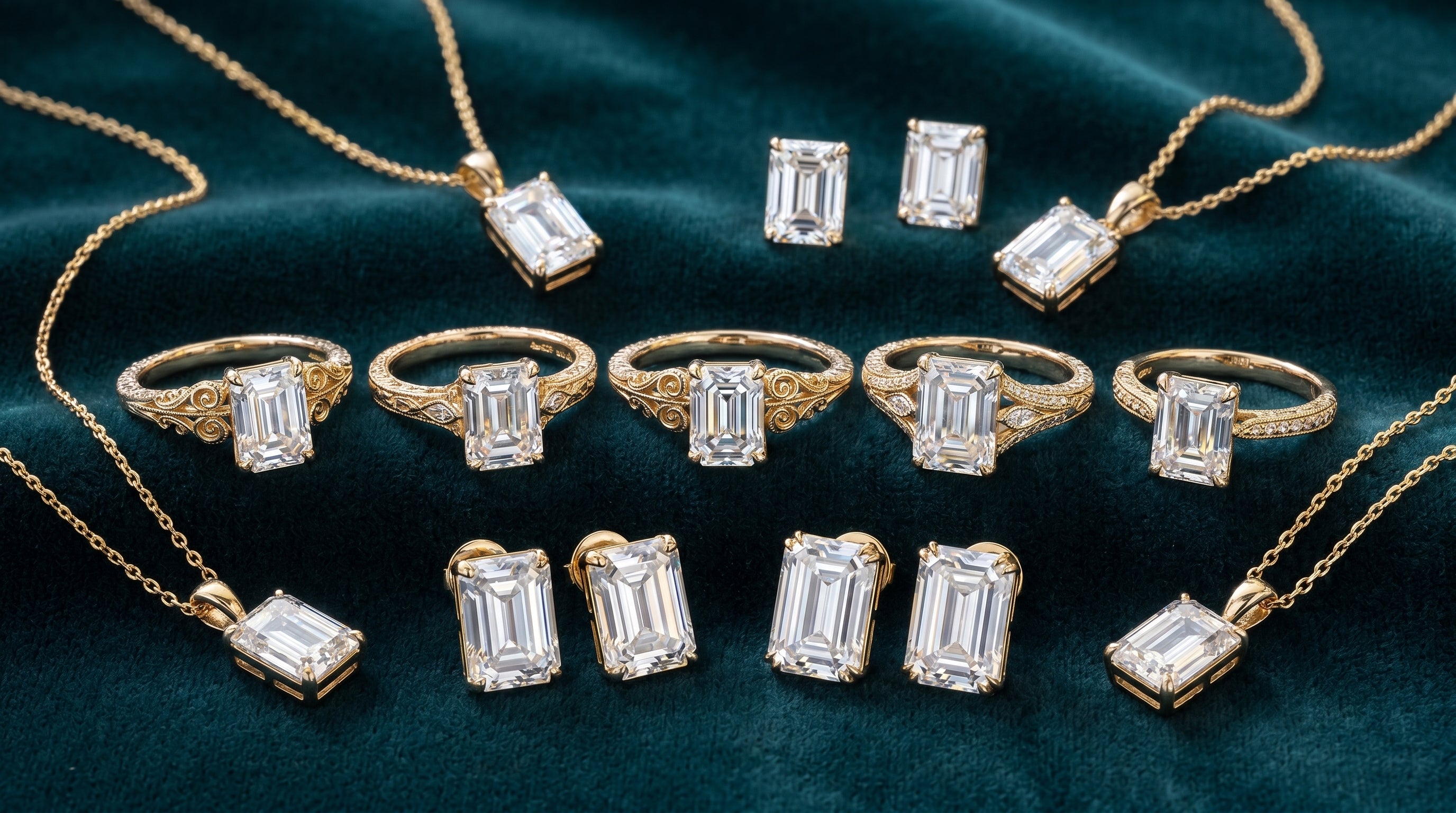
Step cuts demand perfection. The emerald shape's long, open facets act like a hall of mirrors—any inclusion is immediately visible. Because our moissanite is VVS clarity, The Adelina Rae presents a mesmerizing, flawless depth that draws the eye straight into the stone. It's a quiet, architectural luxury that cubic zirconia can't replicate. CZ's softer edges blur the crisp geometric lines an emerald cut requires, and that blurring only gets worse with wear.

The Camilla - Round Cut
You can't go wrong with a classic round brilliant. The Camilla is engineered specifically to highlight moissanite's 2.65 refractive index—light enters, splits, and returns as a fiery display of brilliance and scintillation that catches eyes from across the room. It's the ultimate everyday piece. Durable enough for your busiest days, pristine enough for your most important ones, and icy-white year after year without a single trip to the jeweler.

The Luna - Rose Gold Moissanite Ring
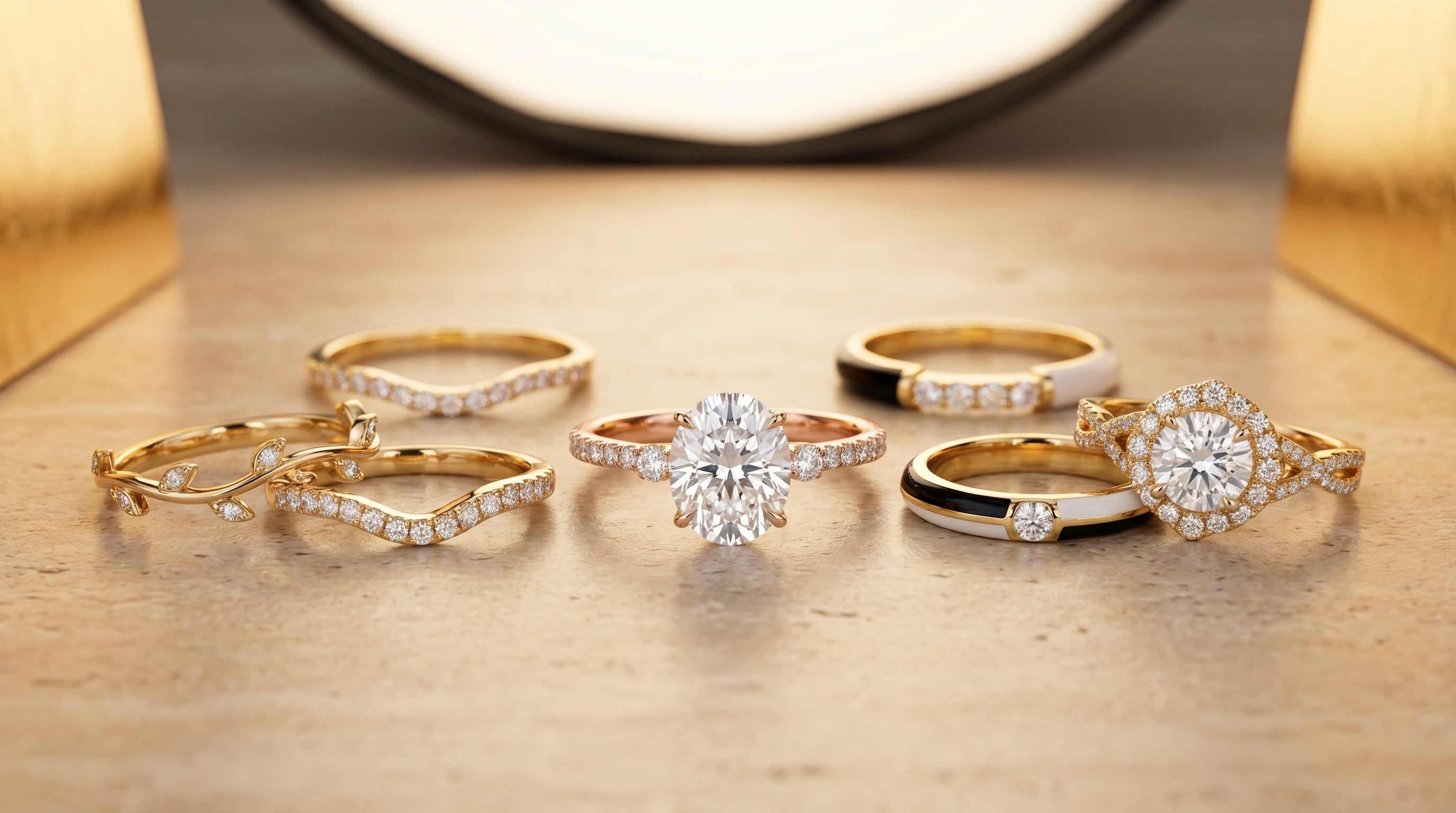
Warm metals are having a major moment, and The Luna in rose gold delivers a stunning contrast to the icy brilliance of a D-color moissanite center stone. The romantic, vintage-inspired hue of the metal plays beautifully against the stone's rainbow fire in direct sunlight—a combination that feels both timeless and deeply personal. This ring proves you don't have to sacrifice durability or ethics to achieve a look that's entirely your own.

Frequently Asked Questions
Does moissanite get cloudy like cubic zirconia?
No. Moissanite won't permanently cloud, fog, or lose its brilliance. Cubic zirconia clouds because its softer surface sustains microscopic scratches that trap dirt and permanently dull the stone. Moissanite's 9.25 Mohs hardness prevents those scratches from forming in the first place. If your moissanite looks dull, it's surface oils from lotion or soap—a quick wash with warm soapy water restores its original fire completely.
Can jewelers tell the difference between moissanite and cubic zirconia?
Yes, easily. Cubic zirconia is heavier, softer, and singly refractive. Moissanite is doubly refractive—it splits light into two rays, creating a distinct rainbow fire that CZ can't produce. Jewelers also use electrical conductivity testers: moissanite conducts electricity slightly, while cubic zirconia doesn't. Under a loupe, the crisp facet edges of moissanite stand in stark contrast to the abraded, worn edges of a CZ stone that's seen daily use.
Is moissanite a fake diamond?
Calling moissanite a "fake diamond" is scientifically inaccurate. Moissanite is its own distinct gemstone composed of silicon carbide. Diamonds are made of carbon. While moissanite is often chosen as a diamond alternative because of its similar visual appearance and high durability, it's a legitimate, highly respected gemstone in its own right—prized for its ethical lab-grown origins, superior fire, and dispersion rate 2.4 times that of a diamond.
How does moissanite vs lab diamond vs cubic zirconia compare for engagement rings?
For an engagement ring meant to last a lifetime, cubic zirconia should be avoided entirely—its low durability and tendency to scratch make it unsuitable for daily wear. The real choice is between moissanite and lab diamonds. Lab diamonds offer the exact chemical makeup of mined diamonds for those who want absolute carbon authenticity. Moissanite offers greater savings, superior brilliance, and near-identical durability, making it the smartest choice for buyers who want maximum visual impact and ethical peace of mind without the diamond price tag.
Final Advice for Your Jewelry Journey
The right gemstone balances brilliant sparkle with real-world durability. Moissanite delivers both—a stunning, ethical, lifetime-lasting alternative to fragile cubic zirconia and expensive mined diamonds that keeps its fire from the day you put it on to the day you pass it down.
Your jewelry should be a source of joy, not a source of stress. When you choose moissanite over zirconia, you're investing in peace of mind. You're choosing a stone that looks exactly as breathtaking on your fiftieth anniversary as it does the moment you first slide it onto your finger. You bypass the ethical concerns of traditional mining, avoid the inflated markups of the diamond industry, and escape the frustrating cycle of replacing cloudy, scratched fashion jewelry. That's not a compromise—that's an upgrade.
We invite you to experience this brilliance for yourself. Explore our curated collection of moissanite engagement rings to find the perfect symbol of your love, or browse our best-selling moissanite rings to discover the ultimate everyday statement piece. Your lifetime of guilt-free, flawless sparkle awaits.

Leave a comment
This site is protected by hCaptcha and the hCaptcha Privacy Policy and Terms of Service apply.