


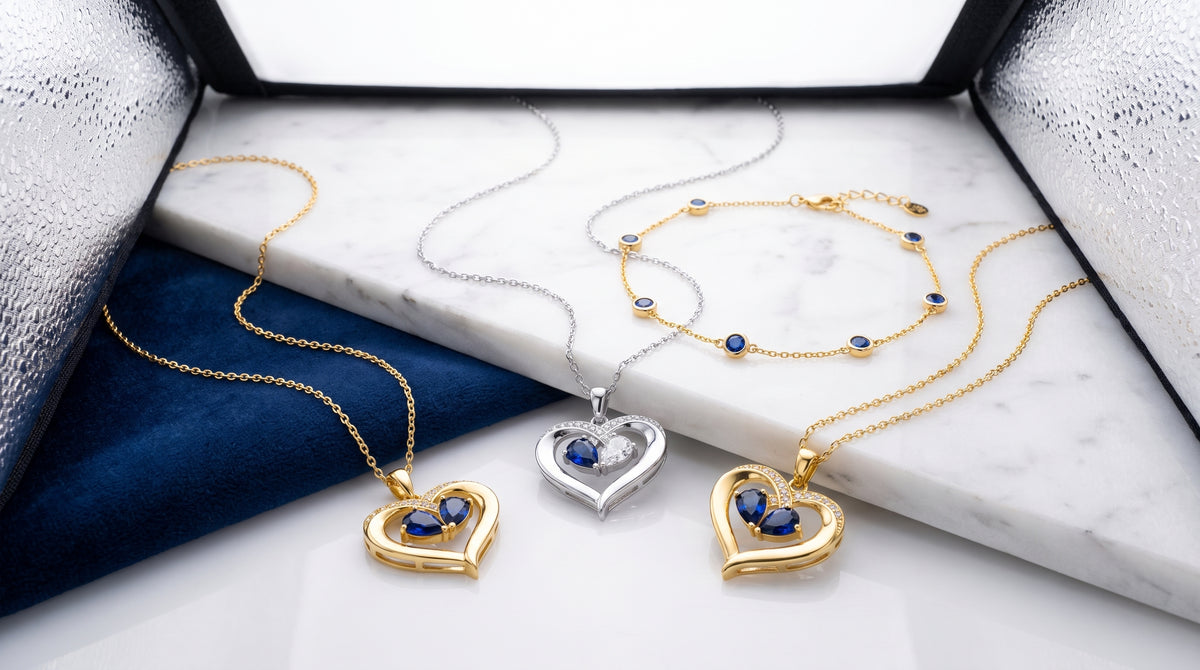
Sapphire sits at 9 on the Mohs hardness scale, according to the Gemological Institute of America — second only to diamond among natural gemstones. That single number is the most useful thing a gift buyer can know, because it quietly answers the question most birthstone gift guides skip: will this piece survive a mother who cooks, gardens, wrangles car seats, types all day, and never takes her necklace off? For a September mom, the answer is unusually good. Sapphire is one of the few birthstones that can genuinely handle a ring on a working hand.
This guide is built around that practical reality rather than around a generic lineup of twelve stones. Below: what sapphire actually is, what its symbolism does and does not claim, which jewelry formats suit it, how to place it alongside softer family birthstones, and exactly what to confirm on a product page — including stone type — before you personalize anything.
What sapphire actually is, and why that matters for a gift
GIA describes sapphire as a variety of the mineral corundum — the same species as ruby — with a Mohs hardness of 9, a specific gravity of roughly 4.00, and birefringence between 0.008 and 0.010. GIA also notes that sapphire is the birthstone for September and the gem associated with the fifth and forty-fifth wedding anniversaries, which makes it a double-duty choice if your mother's September birthday happens to fall near a milestone anniversary.
Hardness means scratch resistance, not indestructibility
This distinction gets flattened in most gift content. Hardness measures resistance to scratching. It does not mean a stone cannot chip, fracture, or work loose from a setting after a hard knock on a door frame or granite countertop. Gemological sources are explicit about this caveat, and they add a second point worth remembering: because sapphire is harder than most other gems, it can scratch softer stones if pieces are tossed into the same dish or pouch. If she already owns opal, pearl, or moonstone jewelry, the sapphire piece should live in its own pocket or slot.
Blue is the default, not the rule
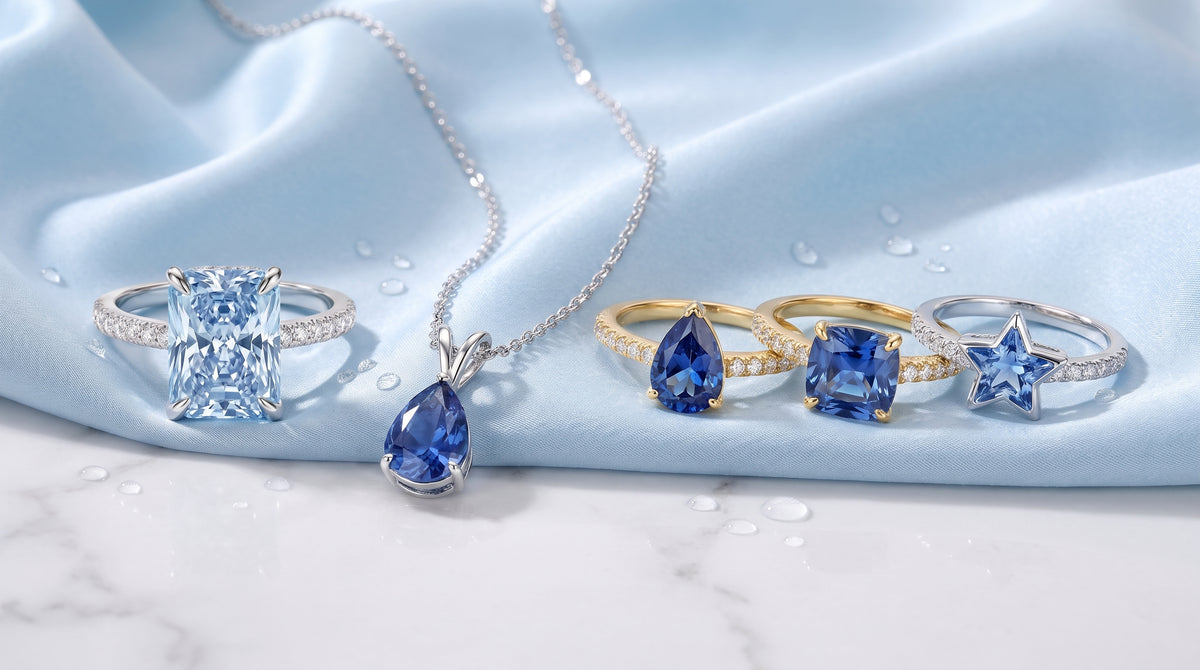
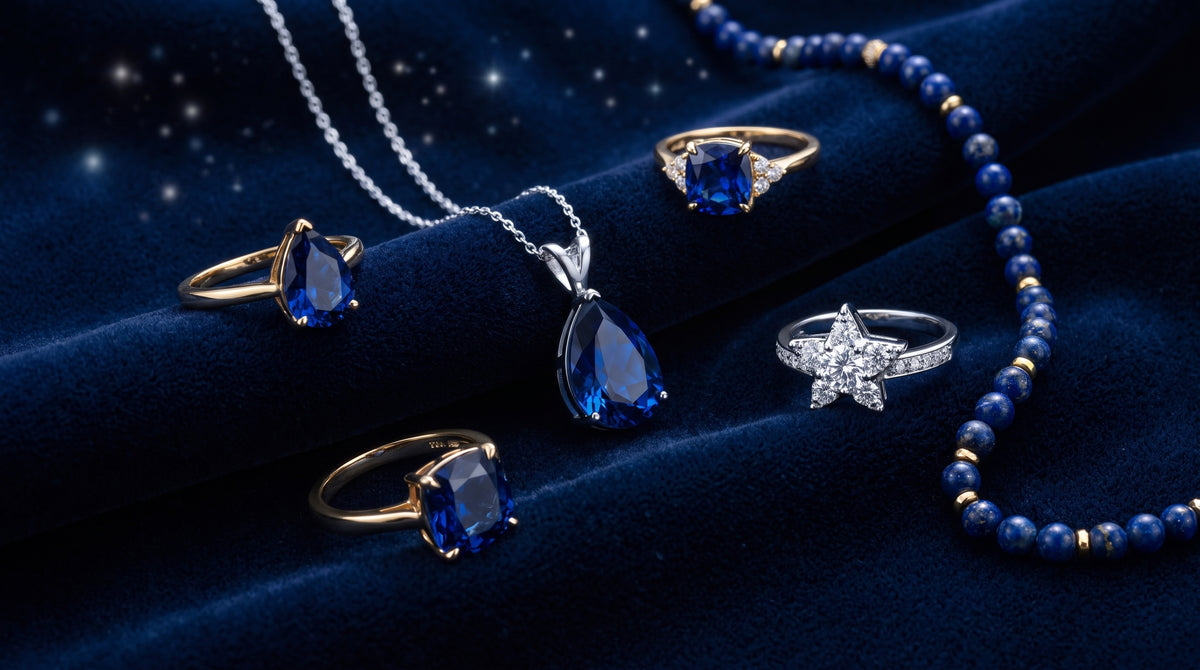
Sapphire occurs naturally in a wide color range — pink, yellow, green and more — even though blue is what most people picture and what most September birthstone jewelry uses. That matters if your mother's wardrobe leans warm or if she already wears a lot of blue. A September birthstone piece doesn't have to be cobalt; it simply has to read as sapphire in the design's intent. If you want to explore the color question in more depth before choosing, our buyer's guide to sapphire color, metal, and sets covers how tone interacts with gold versus silver-colored metals.
The meaning behind September's stone — tradition versus marketing
Birthstone symbolism sells, so it's worth separating what is documented tradition from what is contemporary brand storytelling.
A month that never switched stones
Sapphire appears as September's gem on both the modern and traditional birthstone lists. Birthstone reference sources note that September did not change stones when the American list was standardized in 1912, which is why nearly every retailer, gemological body, and jeweler agrees on it. Compared with months where modern and traditional lists diverge, September is refreshingly unambiguous — you are not going to pick the "wrong" September stone.
Wisdom, loyalty, truth, protection
The documented symbolic threads around sapphire are consistent across gemological and birthstone references: wisdom, virtue, loyalty, truth, and good fortune. Its celestial blue made it a stone of royalty and clergy, worn as a sign of divine favor and protection. The International Gem Society records older associations too — sapphires linked to Zeus and Apollo in ancient Greece, worn by oracles to sharpen foresight, and connected by ancient Persians to the color of the sky itself.
Those traditions map onto motherhood readily enough: a stone of wise counsel, steadfastness, and protection is a defensible tribute to a mother who has been all three. What you'll see elsewhere — sapphire described as representing "motherly affection" — is a modern marketing interpretation rather than a historical tradition. Use it if it resonates in a card; just know which is which.
Where the symbolism stops
These are cultural associations, not verified effects. Sources that document sapphire's protective lore say so plainly. Wearing sapphire will not make anyone wiser, luckier, or safer, and no reputable gemological source claims therapeutic properties. Present the piece as a symbol and it holds up. Present it as a promise and it doesn't.
Choosing the format: necklace, ring, bracelet, or earrings
Format is where sapphire's hardness earns its keep. The standard guidance across jewelry buying guides is that stones rated Mohs 7 and above are appropriate for daily-wear rings, while softer stones belong in pendants and earrings — partly because ordinary household dust contains microscopic quartz particles that abrade anything below that threshold. Sapphire clears the bar with room to spare.
Necklaces: the safest default
A pendant needs no sizing, fits every body, and lives in a lower-contact zone than a ring. It's also the easiest format for multi-stone family designs. For a mother who wears one piece continuously, a sapphire or September-birthstone pendant on a sturdy chain is the lowest-risk, highest-wear-rate choice. Our broader guide to choosing stones, formats, and settings she'll actually wear walks through how to read her existing habits before you commit.
Rings: possible, but sizing is the gamble
Sapphire is one of the few birthstones you can confidently put into an everyday ring. The obstacle isn't the gem; it's the size. Unless you can borrow a ring she wears on the correct finger, or the piece is resizable, a ring introduces a return-and-exchange step that a pendant avoids. If you go this route, prioritize the setting over the carat weight — see the next section.
Bracelets: highest contact, most family capacity
Bracelets take more abuse than any other format: desks, steering wheels, kitchen counters. Sapphire handles that. The complication arises in family bracelets, where sapphire sits beside softer birthstones like pearl or opal that will scuff long before it does. For multi-stone wrists, look at clasp security and adjustable range as carefully as the stones themselves.
Earrings: size-independent and low-risk
Earrings sidestep sizing entirely and see very little abrasion. They're a quiet, practical option for a September-born mother — and a common choice as a gift marking the birth of a September baby.
Sapphire as her stone, or sapphire among the family's stones
There are two entirely different buying scenarios hiding inside the phrase "sapphire birthstone jewelry for mom," and they lead to different products.
Scenario one: she was born in September
Here sapphire is the anchor. A single blue stone, cleanly set, with her name or initial engraved, keeps the meaning obvious and the design uncluttered. One stone also means one thing to get right at checkout.
Scenario two: sapphire represents a child
Just as often, the mother's own birthday is in another month and sapphire enters the design because a child, stepchild, or grandchild was born in September. In that case, the piece becomes a family record rather than a portrait — a format many buyers describe as a wearable family tree. Two-stone pieces work well for a mom with two children, or for her stone paired with one child's; our guide to choosing the right pair of birthstones covers how to order and balance them. For larger families, see the walkthrough on four-stone birthstone necklaces.
Balancing sapphire's visual weight
Deep blue is a heavy color. Next to pale stones — March aquamarine, April clear, June pearl-toned — it will dominate unless you plan for it. Two workable approaches: place sapphire at the center and treat lighter stones as a halo around it, or alternate dark and light stones so the eye reads rhythm rather than one dominant dot. If several family members share cool tones, warm metal (yellow or rose gold) restores contrast.
Metal, setting, and chain: the specs that decide whether she wears it
A gemstone gift fails on hardware far more often than on stone choice. Three specs deserve attention.
Metal
Jewelry guidance commonly treats 14k gold as the everyday standard for a mother's piece because it balances color, strength, and scratch resistance, with platinum positioned as the heirloom-tier option. Sterling silver tarnishes over time due to its copper content, which is why rhodium-plated sterling is worth seeking out if she won't polish it. Stainless steel is the workhorse for high-contact, low-maintenance wear. Awareness Avenue's own guidance on personalized mother's jewelry makes a related point: look for explicit material language such as ".925 Sterling Silver," "14K Solid Gold," or "Surgical Grade Stainless Steel," rather than vague phrasing like "silver-toned" or "gold-colored." If she has sensitive skin, favor hypoallergenic metals.
Setting
A bezel setting — a continuous rim of metal wrapping the stone's girdle — protects the vulnerable edges and creates a smooth profile that won't snag on sweaters, scarves, or a toddler's hair. For a mother's everyday piece, that's usually the better call than tall, exposed prongs, even with a stone as hard as sapphire. If prongs are used, they should be substantial rather than delicate.
Chain and clasp
Box and cable chains are generally the more durable everyday choices; rope and serpentine styles are more prone to kinking and breaking under constant wear. Whatever the style, the clasp is the single most common failure point on a necklace worn around the clock — check that it's a secure lobster-style mechanism rather than a light spring ring on a heavier pendant.
Natural, lab-grown, or simulated: read the stone label
This is the disclosure most gift guides skip, and it's the one that prevents disappointment later. "Sapphire" on a product page can mean several different things, and reputable listings say which.
- Natural sapphire is mined corundum. GIA notes that sapphire is commonly treated — heat treatment to improve color and clarity is routine — and such treatments should be disclosed. For higher-value purchases, buying guides recommend asking for treatment disclosure and independent certification.
- Lab-grown sapphire is corundum grown in controlled conditions; it shares the chemistry of mined material.
- Simulated sapphire is a stand-in stone chosen to match sapphire's color, used widely in personalized birthstone jewelry where the point is the symbolism of the month rather than the gemological identity of the stone.
Awareness Avenue labels its September pieces transparently: the relevant collection is titled September Birthstone — Simulated Sapphire, so the blue stone in those designs represents September rather than being a mined sapphire. For a keepsake whose meaning lives in the engraving and the birth month, that's a reasonable trade-off — but you should know it before you order, not after. Always confirm the stone description on the individual product page.
Where sapphire fits in Awareness Avenue's mom pieces
Because sapphire is a color choice within customizable designs here rather than a fixed inclusion, the relevant question is which piece structure fits her family — then you select September for the appropriate stone slot.
- Two stones, one heart. The Beautiful Mom Custom 2 Birthstones Heart Necklace pairs two birthstones in a single pendant — suited to her stone plus a child's, or two children. A solid gold version of the same design is available if you want warm metal against sapphire blue.
- Four stones, engraved. The Custom Silver Heart Birthstone Necklace with 4 Engraved Gems handles a larger family without becoming crowded, and lets a September stone sit among siblings' months.
- Names plus stones. The Personalized Family Heart-Shaped Birthstone Necklace with Names in stainless steel pairs each stone with an engraved name — useful when the birthstone alone doesn't make the connection obvious, and a practical metal for constant wear.
- If she doesn't wear gemstones. Some mothers simply prefer plain metal. A piece like the Celestelle Heart Bracelet in S925 sterling silver keeps the sentiment without the color. A gift she wears daily beats a birthstone she admires in a drawer.
You can browse the full birthstone jewelry collection to compare stone capacity across necklaces, rings, and bracelets before choosing a structure.
What to verify before you place a custom order
Awareness Avenue's own guidance on personalized mother's jewelry recommends confirming metal quality, checking sizing, and reviewing customization timelines before purchase — that guide describes a production window of roughly seven to fourteen business days before a custom piece ships, and elsewhere frames custom work as commonly taking two to three weeks end to end. Treat that as general brand guidance and check the specific product page and policy pages for current details on your item, since timing, materials, and return terms are set per product. The same guidance suggests judging quality by clear metal hallmarks, secure stone settings, and precise engraving.
Practical checklist before checkout: spell every name exactly as she'd want it engraved; confirm each birth month against an actual calendar rather than memory; note chain length (16–18 inches sits at or just below the collarbone for most wearers); and give yourself buffer time beyond the stated production window if the gift is tied to a date.
Caring for it once she's wearing it
Sapphire is forgiving, and routine care is simple. Standard guidance for most gemstone necklaces is warm (not hot) water with a mild, phosphate-free dish soap and a soft-bristled toothbrush, followed by a thorough rinse and a pat dry with a lint-free cloth. Two caveats apply to family pieces specifically:
- Mixed-stone designs follow the softest stone. If a pearl, opal, or turquoise sits beside the sapphire, use the gentler protocol the delicate stone requires — avoid soaking, ultrasonic cleaners, and abrasives.
- Store it separately. Sapphire's hardness means it will scratch softer gems and softer metals if everything shares one box. A soft pouch or a lined compartment solves this permanently.
Beyond that, the usual habits extend a piece's life: take it off before swimming or applying lotions and perfumes, and have prongs or clasps checked occasionally if she wears it every day.
The short version
Sapphire is September's birthstone on both the modern and traditional lists, it has carried associations with wisdom, loyalty, truth, and protection for centuries, and at Mohs 9 it is one of the few birthstones tough enough for genuinely everyday wear. Decide first whether sapphire represents her or one of her children; choose the format that matches her daily contact level and sidesteps sizing if you're unsure; prioritize a protective setting, a durable chain, and clearly stated metal; and read the stone description so you know whether you're buying natural, lab-grown, or simulated. Get those five decisions right and the piece will still be on her when the engraving is the least remarkable thing about it.

Leave a comment
This site is protected by hCaptcha and the hCaptcha Privacy Policy and Terms of Service apply.