


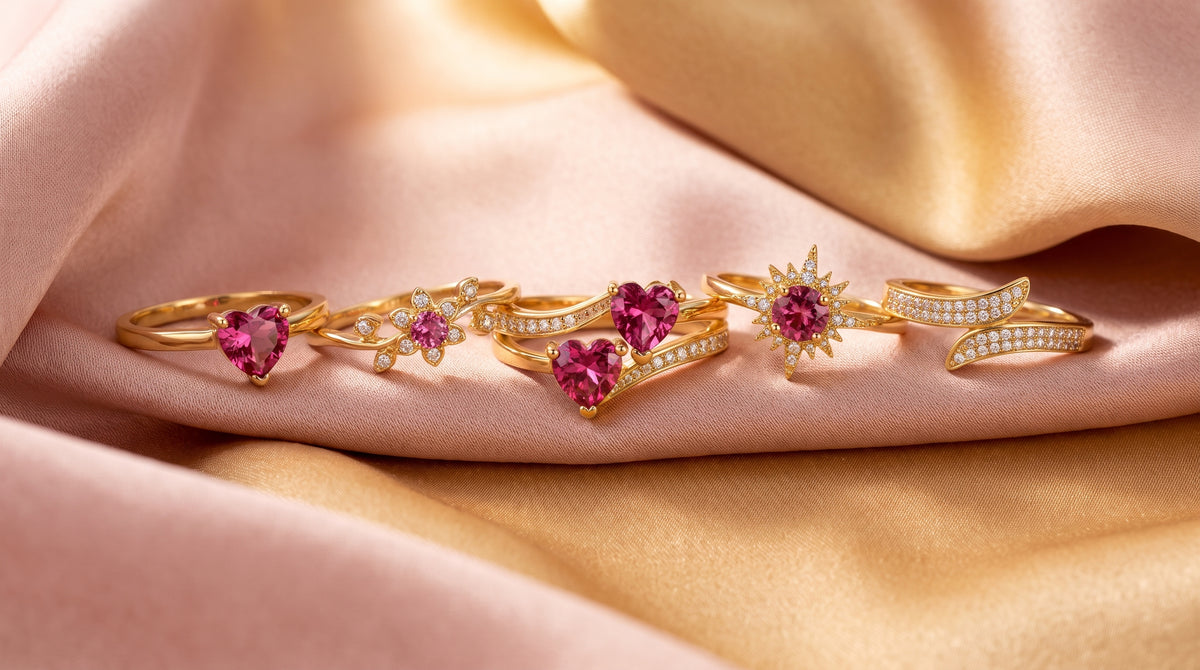
Two rings can both answer the search "pink tourmaline ring gold," and be almost nothing alike. One is a vintage 9ct gold cluster hallmarked 375, holding an oval pink tourmaline of roughly 0.25 carats ringed by about 0.05 carats of diamonds, measuring around 9 mm top to bottom. The other is a 1970s 18k yellow gold cluster listed with a 6.30-carat round-cut pink tourmaline framed by twelve old European cut diamonds totaling about 0.60 carats. Same gem species, same metal family, wildly different presence on the hand. That spread — roughly twenty-five times the center-stone weight — is exactly why this category confuses shoppers, and why carat weight alone tells you almost nothing about which ring is the better buy.
This guide maps what is actually on the market, then gives you the gemological criteria that decide whether a pink or green tourmaline in a gold setting looks alive or flat. Everything below is either standard gemological guidance from the Gemological Institute of America (GIA) and the International Gem Society (IGS), or a specification as described by the retailer or dealer offering the piece. Where something is a marketing descriptor rather than a verified fact, it is labeled as such.
What the "pink tourmaline ring in gold" market actually looks like
Understanding the tiers saves you from comparing a delicate accent ring to a cocktail statement piece and wondering why the numbers look so strange.
Designer and luxury pieces
At the top of the market, pink tourmaline is usually treated as a colored center stone in a high-karat gold or platinum setting, with diamonds playing a supporting role. Tiffany & Co. lists a Soleste pink tourmaline ring in platinum with diamond accents. Fabergé describes a Colours of Love fluted ring made in 18k rose gold, set with one oval pink tourmaline of 1.00 carat, two round diamonds totaling 0.030 carats, and a small Gemfields Mozambique ruby of 0.015 carats. A Bulgari diamond and pink tourmaline ring is described as solid 18k yellow gold with a maximum width of about 1.15 cm and a weight of 10.6 grams — a genuinely substantial ring by weight.
Worth clearing up, because the two queries get tangled: the Tiffany T family is a diamond-and-metal collection, not a tourmaline one. The Tiffany T Diamond Wire Ring is described as 18k yellow gold set with round brilliant diamonds totaling 0.13 carats, and the collection is positioned by the brand as a homage to a motif dating to 1975. If you arrived looking for a Tiffany pink tourmaline ring, Soleste is the relevant line, not T.
Mid-market and independent jewelers
This tier is where the widest variety of pink tourmaline rings in gold lives. Brown Goldsmiths describes a ring with an emerald-cut pink tourmaline of approximately 4.92 carats bezel-set in 14k yellow gold, with 16 diamonds totaling about 0.16 carats along a tapered shank and a total ring weight of 5.54 grams. Humes Jewelers describes a diamond and pink tourmaline engagement ring in 14k white gold with more than 60 round diamonds totaling 0.77 carats and a 0.52-carat round diamond center, with pink tourmalines the jeweler states are from Africa and sourced from Barker & Co. at the Tucson AGTA Gem Show. Glamira lists a ring called Mindy in 14k rose and white gold with a pink tourmaline of roughly 0.06 carats, labeled "AAA" quality. Helzberg's pink tourmaline engagement ring category includes a multi-shape design in 10k yellow gold that combines pink morganite, pink tourmaline, red garnet, and white topaz.
Two takeaways. First, "pink tourmaline ring" can mean a near-5-carat center stone or a 0.06-carat accent — always read the carat figure, not the headline. Second, "AAA" is a retailer-defined label. GIA does not grade tourmaline, so a triple-A designation is a merchandising shorthand, not a laboratory grade.
Vintage and estate listings
Estate pieces are their own market. Beyond the 1970s 18k cluster described above (listed with F–G color, SI–I clarity old European cut diamonds, 6.31 grams, US size 6 and resizable), a 1980s estate ring is described as 14k white gold set with a 2.06-carat antique cushion cut tourmaline in a "vivid pine green" color, accompanied by 14 baguette diamonds totaling 0.52 carats. Vintage rings frequently use lower-karat gold — the 9ct British example above is 37.5% pure gold — and lean on cluster or halo layouts that create visual scale from modest stone weights.
Color and saturation: the single biggest value driver
GIA is unambiguous that color is the most important quality factor for tourmaline, a gem that shows one of the widest color ranges of any species, spanning an enormous span of saturations and tones. The most valuable material shows highly saturated color without dark black areas, and bright, pure tones of red, blue, and green are generally the most prized. Copper-bearing tourmaline in electric vivid green to blue shades — commonly marketed as Paraíba — is described by GIA as exceptional and in a class of its own. IGS makes the commercial consequence explicit: colors with low saturation will always carry lower prices.
How to judge pink in practice
Look for the pink to read clearly and evenly across the whole face of the stone, without a muddy or blackish zone in the center. Less saturated, softer "earth" tones are, per GIA, genuinely popular for aesthetic reasons even though they command less on the market — which is a legitimate reason to buy one, as long as you know you are buying for looks rather than for value density. Ask for photographs and video in both daylight and indoor lighting, because screen calibration and photo editing shift perceived pink more than almost any other hue.
Bi-color and green tourmaline
If you are considering a bi-color stone, IGS recommends checking distribution and the boundary: ideally each color covers about half the stone, with a sharp, crisp contact line between zones rather than a smeared transition. For green tourmaline rings, the same saturation logic applies, and the vintage listing language of "vivid" green versus a duller olive is a meaningful distinction rather than a stylistic flourish. If a bright green stone is what you're after, our roundup of green and emerald cut ring looks is a useful visual comparison point for how green center stones behave in different metals.
Cut, carat, and the shape of the finished ring
GIA advises not compromising on cut: a well-cut tourmaline should sparkle in a lively way and reflect light back evenly across the entire gem, while poorly cut stones are far less marketable and sell at a discount. This matters more for tourmaline than shoppers expect, because a large stone cut too deep or too shallow will show a pale "window" through the middle that no setting can fix.
Matching cut to the effect you want
Step cuts like the emerald cut — as in the 4.92-carat bezel-set example above — give broad, calm flashes of light and emphasize the body color of the stone, which flatters a clean, saturated pink. Round brilliants, like the 6.30-carat vintage cluster center, maximize scintillation and sit naturally inside halo and cluster designs. Antique cushion cuts, like the 2.06-carat green tourmaline in the 1980s estate ring, give softer corners and a gentler, more period-correct light return. None is objectively better; choose based on whether you want color depth or sparkle to lead.
Setting profile and everyday practicality
Bezel settings surround the girdle in metal, which is why the 14k yellow gold bezel ring is marketed as a good everyday choice — that is a design judgment from the jeweler rather than a tested durability claim, but the protective logic is sound. High-profile prong and pavé mountings, like a mounting carrying more than 60 small diamonds, deliver more light and more sparkle but expose more of the stone and more small prongs to knocks. Vintage cluster rings with large centers can sit tall on the finger, which is worth considering if you type, lift, or wear gloves daily.
Choosing the karat, the gold color, and the metal itself
The rings surveyed here span 9ct, 10k, 14k, and 18k gold plus platinum, and the karat you choose changes color, feel, and maintenance.
Karat, in plain terms
9ct gold is 37.5% pure and reads noticeably paler; 10k is 41.7%; 14k is 58.5% and is the workhorse of the mid-market examples above; 18k is 75% and delivers the richest, most saturated gold color, which is why Fabergé and Bulgari use it for colored-stone pieces. Higher purity means a warmer tone and a slightly softer alloy, so 18k tends to pick up fine surface marks a little more readily than 14k. Platinum, used in the Tiffany Soleste pink tourmaline ring, is dense and holds stones securely, which is part of why it recurs in high-value center-stone settings. If you're weighing the higher-karat route specifically for a proposal, our 18k gold engagement ring buying guide goes deeper on that trade-off.
Which gold color flatters which stone
There is no rule here, only observable convention. Rose gold is paired with pink tourmaline by Fabergé, and the warm copper tone reinforces the pink. Yellow gold is the choice in the Brown Goldsmiths, Bulgari, and 1970s vintage cluster examples, and it makes pink read richer and more traditional. White gold appears in the diamond-centered engagement ring and in the vivid green estate ring, where a neutral metal keeps the green crisp and cool. If you want the warm-metal look without committing to a colored center stone yet, browsing a solid gold collection is a practical way to test yellow versus rose against your own skin tone first.
New versus vintage, and where engagement rings fit
What you gain and give up with vintage
Vintage and estate tourmaline rings offer period character that new production rarely replicates: old European cut diamonds, baguette frames, cluster architecture, and era labeling such as 1970–1979 or the 1980s. In exchange, you accept lower-karat alloys in some markets, condition that ranges from excellent to visibly worn, sizing that may need alteration (the 1970s cluster is listed as resizable, which is not guaranteed for every antique mounting), and grading that generally comes from a dealer appraisal rather than a report reproduced in the listing. Ask specifically whether any diamond color and clarity grades came from an independent laboratory.
Pink tourmaline as an engagement stone
Tourmaline engagement rings are an established category — Helzberg maintains a pink tourmaline engagement ring section, and IGS publishes selection criteria specifically for tourmaline engagement rings, focused on saturation, color distribution, and clean color boundaries. The honest caveat is durability context: GIA notes tourmaline is generally stable to light and chemicals but that heat can damage it, and that color produced by irradiation can fade with exposure to heat or bright light. That is manageable for daily wear with sensible habits, but it is a different care profile from diamond or sapphire.
Two structural approaches show up in the market. One puts tourmaline in the center, as in the designer pieces. The other, as in the 14k white gold ring with a 0.52-carat diamond center, keeps a diamond as the focal stone and uses pink tourmaline as color accent — a useful compromise if one partner wants color and the other wants a classic center. If you are designing rather than buying off the shelf, our overview of custom ring options and cost drivers covers how center-stone choice ripples through the rest of the build.
A note on Awareness Avenue's own rings
To be straightforward: the ring styles listed on this site are sterling silver, solid gold, and moissanite designs — they are not natural tourmaline pieces, and we are not going to pretend otherwise on a page about tourmaline. If what drew you here was the warm-gold color story rather than the gemstone specifically, the Stellaris Bypass Ring in solid gold is a metal-forward alternative, and the Alcyone Moissanite Ring sits in the non-diamond center-stone category. Treat both as adjacent options, not substitutes for a tourmaline ring. For the gemstone itself, our companion piece on choosing a pink tourmaline ring by color, setting, and value goes further into stone-level evaluation.
How to read specs, labels, and lab reports before you pay
What a GIA report will and won't tell you
GIA evaluates tourmaline but does not grade it. Its Colored Stone Identification Report assesses characteristics including weight, measurements, shape, cutting style, and color, states whether the stone is natural or laboratory-grown, and names any detectable treatments. For copper-bearing material, a Colored Stone Identification & Origin Report is available, and GIA notes that fine-quality tourmalines with documented Paraíba origin from an independent laboratory command a premium. GIA also cautions that every mine produces a wide range of quality, so a famous source name on its own does not make a stone fine.
A short pre-purchase checklist
- Center stone weight, stated separately from total carat weight — a listing that only gives a combined figure is hiding the size of the main gem.
- Exact metal: 9ct, 10k, 14k, 18k, or platinum, plus color. Hallmarks such as 375 for 9ct are a useful confirmation on vintage pieces.
- Treatment disclosure in writing, since only a laboratory report can substantiate an "all natural" or untreated claim.
- Cut assessment in your own eyes: even light return, no pale window through the table.
- Resizing feasibility before purchase, especially on cluster and estate mountings.
- Quality labels in context: "AAA," "luminous," "vivid," and "ideal for everyday wear" are seller descriptors, not standardized grades.
Caring for a tourmaline ring in gold
Care is where tourmaline differs most from a diamond ring, and getting it wrong is the fastest way to damage a stone you just bought.
Cleaning
GIA identifies warm, soapy water as the safest cleaning method for tourmaline. Specialist care guidance citing GIA advises against ultrasonic and steam cleaning, because heat can stress internal fractures and some tourmaline is sensitive to vibration, which can cause a stone to crack or break. A safe home routine: mix lukewarm water with a mild dish soap, soak for five to ten minutes to loosen oils and dirt, brush the setting and stone lightly with a soft brush without pressing hard near prongs or delicate mounts, rinse under lukewarm running water over a strainer or with the sink stopper in, then dry with a soft lint-free cloth and finish with a microfiber polish. Skip paper towels, which can scratch metal and stone, and avoid prolonged soaking or any contact with saltwater.
Storage and daily habits
Store tourmaline pieces separately in soft padded pouches or individual compartments so the stone is not rubbing against harder gems, with velvet or microfiber linings to reduce wear. Keep them away from UV light, heat, and harsh chemicals — lighter-colored stones can fade over time with direct sunlight or heat exposure, which aligns with GIA's warning about irradiation-related color fading. Remove the ring for exercise, household cleaning, and swimming, particularly where strong chemicals are involved, and use a padded travel case rather than a loose pocket when you travel. Keep humidity in check after cleaning to avoid moisture issues in the setting.
Putting it together
For most buyers, the decision sequence that produces the fewest regrets is: settle the color you genuinely love first, judge saturation and cut second, then let carat weight fall where your budget allows, and only then pick karat and metal color to flatter the stone. A 1.00-carat oval in 18k rose gold and a 4.92-carat emerald cut bezel-set in 14k yellow gold are both legitimate answers to the same search — they are simply answers to different questions about how visible you want the ring to be. Ask for treatment disclosure in writing, get a laboratory report on any high-value or origin-claimed stone, and hold seller adjectives at arm's length. If you want to see how colored center stones behave across other gem families before committing, our guide to gold birthstone rings and karat selection covers the same metal decisions with a wider stone range.

Leave a comment
This site is protected by hCaptcha and the hCaptcha Privacy Policy and Terms of Service apply.